
You’ll create a calm, lived-in home by pairing warm neutrals, soft textures and a few sculptural accents. Start with a layered base—creamy walls, honey-toned wood, natural rugs—then add rounded furniture, tactile ceramics and hidden storage so each piece can breathe. These 22 ideas show how to make minimalism feel cozy and personal, with practical tips on materials, lighting and seasonal swaps that actually improve daily life.
Choose a Warm Neutral Base With Layered Tones
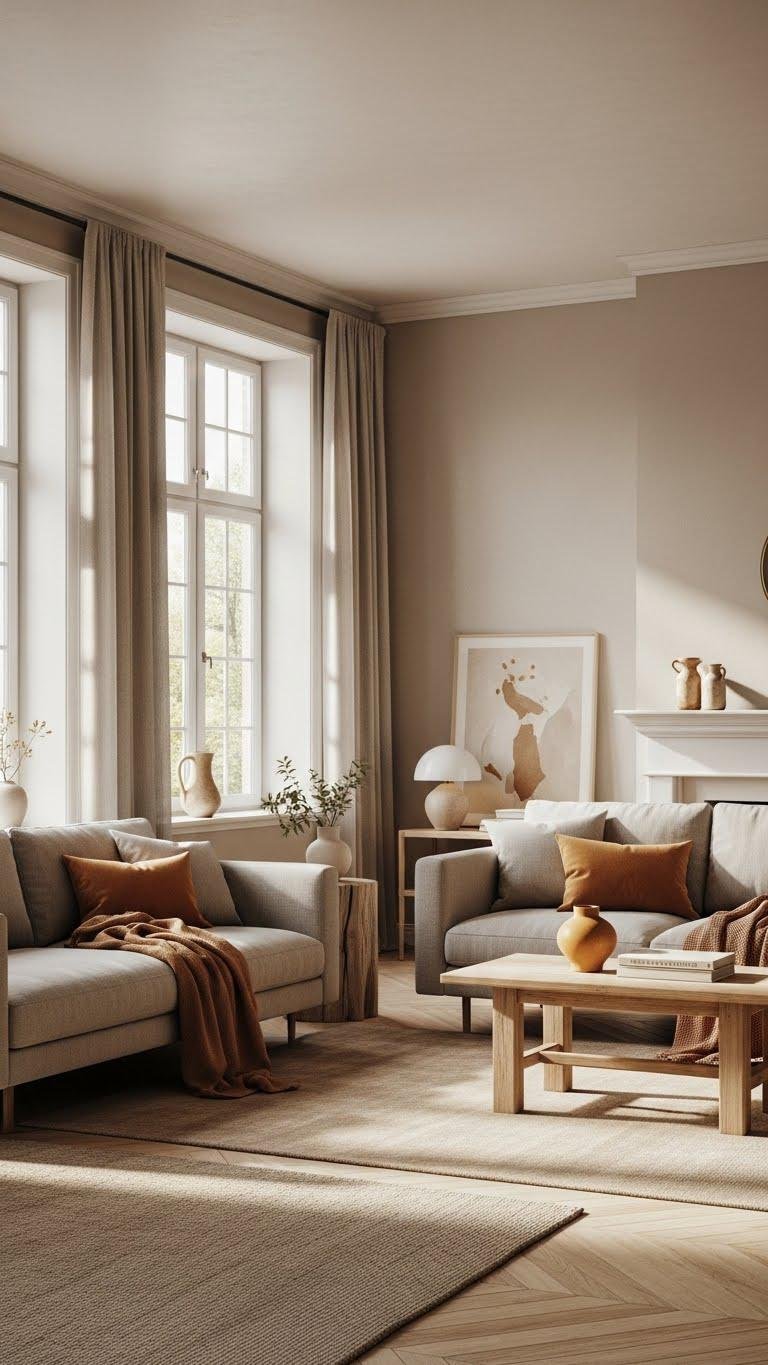
Start with a warm neutral base—think creamy taupes, soft greiges, or muted sandy beiges—and layer tones to create depth without clutter. You’ll balance sunset undertones in textiles and walls, adding restrained ochre accents for warmth. Keep furnishings simple, textures varied, and negative space generous so the room breathes. This lets you craft a calm, liberated aesthetic that feels intentional and welcoming.
Add Rounded Furniture Silhouettes
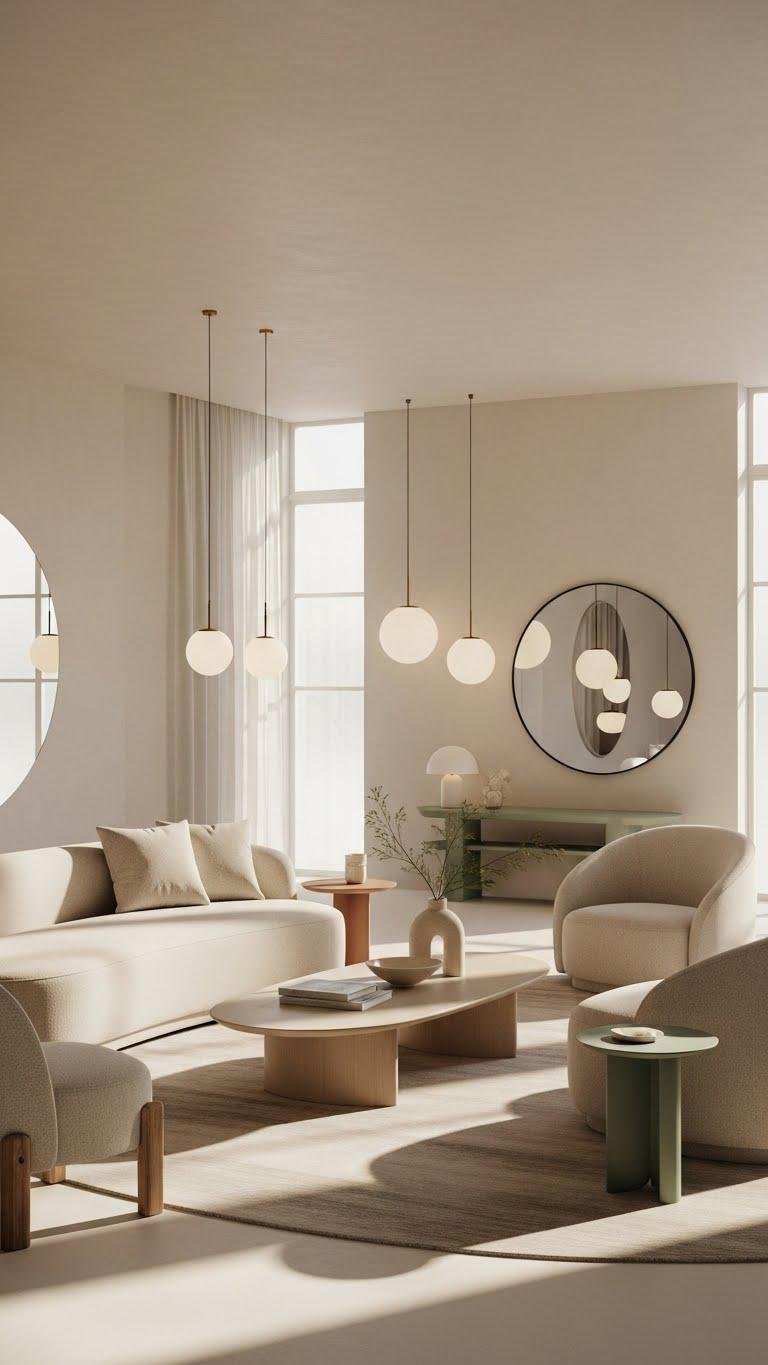
When you introduce rounded furniture silhouettes, the room instantly feels softer and more approachable—curved sofas, armless lounge chairs, and oval coffee tables reduce visual tension and invite movement.
You’ll pair those pieces with rounded lighting and curved mirrors to amplify flow, creating a liberated, calm atmosphere.
Choose simple textures, balanced scale, and uncluttered placement so each curve breathes and welcomes you.
Prioritise Quality Over Quantity
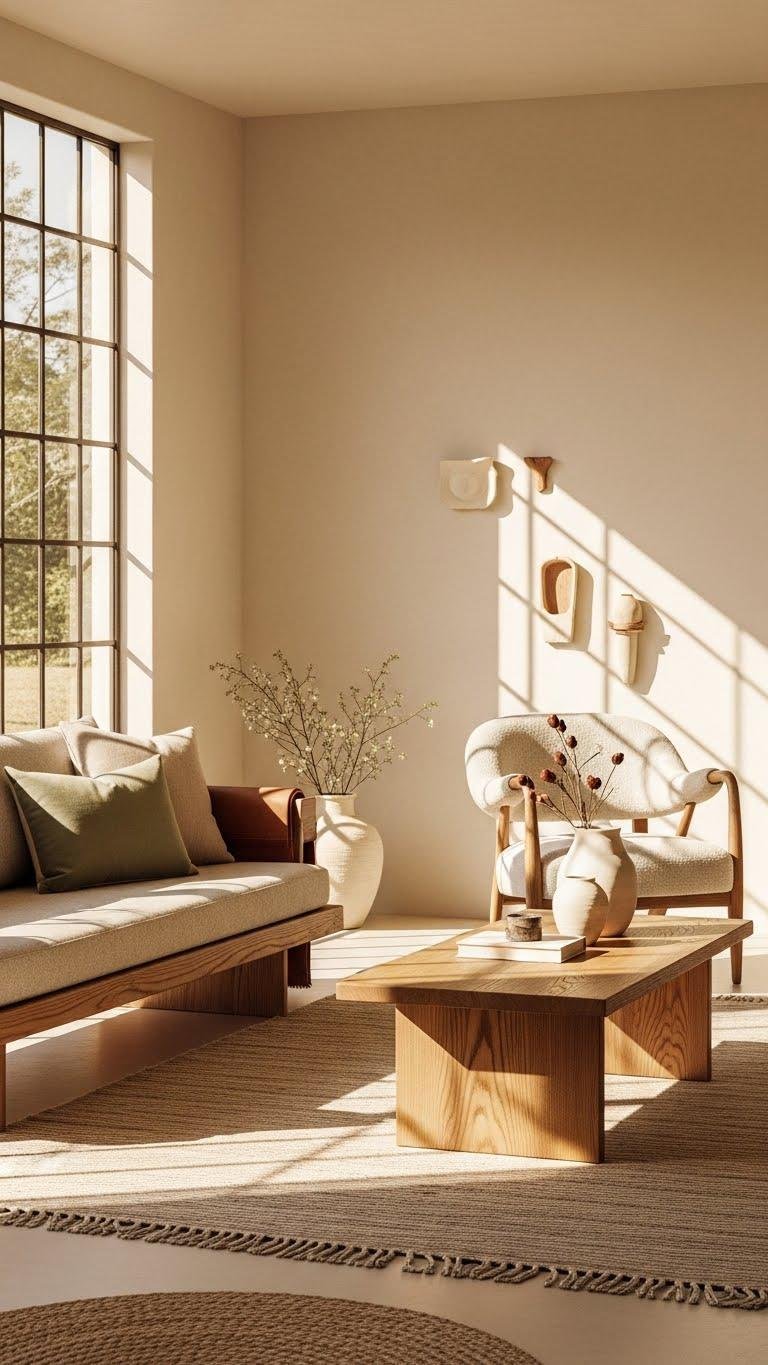
Choose fewer pieces you truly love and you’ll create a calmer, more refined space—quality over quantity means investing in well-made furniture, timeless finishes, and materials that age gracefully rather than filling the room with fleeting trends.
You’ll embrace artisan craftsmanship, practice slow shopping, and curate objects that serve function and joy. This approach frees you from clutter and fast-design pressure.
Introduce Warm Wood Finishes
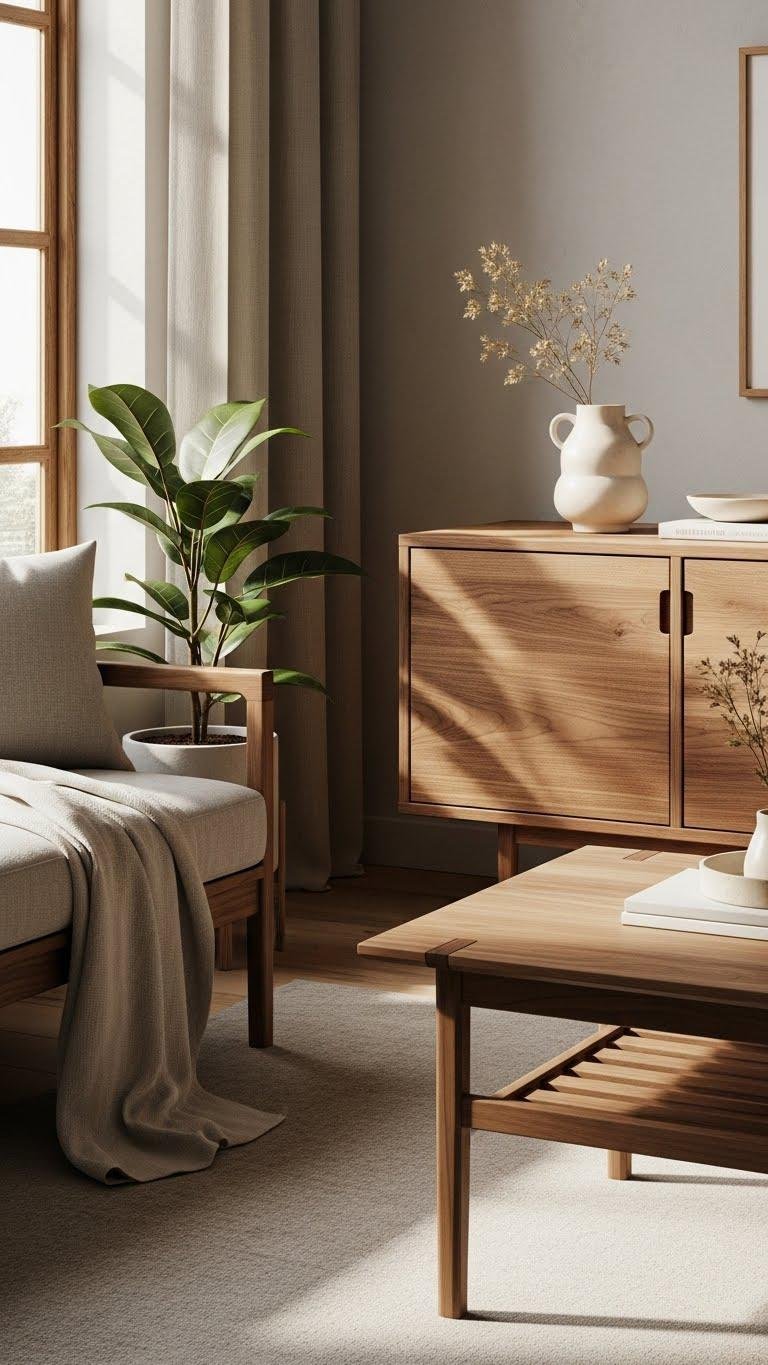
Though minimalism often leans cool and spare, introducing warm wood finishes instantly softens the room and grounds the palette; you’ll get tactile depth and lasting character without clutter.
Choose pieces with sustainable joinery and pay attention to grain orientation to enhance flow. Let honeyed tones and simple silhouettes define space, so you feel liberated, intentional, and connected to material warmth.
Use Matte Plaster or Limewash Walls
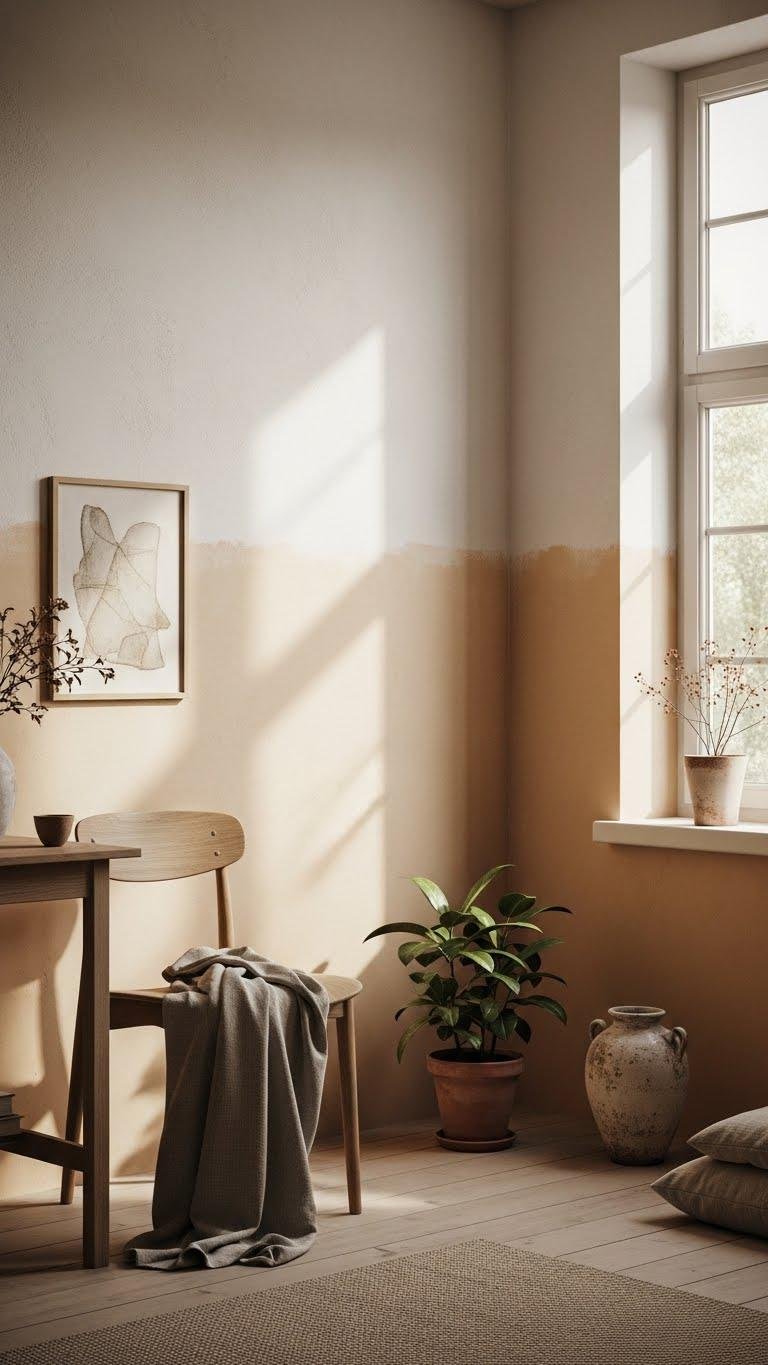
If you want walls that feel tactile and quiet, matte plaster or limewash gives you that subtle, lived-in depth without visual noise. You’ll choose finishes that age gracefully, embrace imperfections, and free the room from glossy distraction. Learn simple limewash application and basic matte plastercare to protect texture. The result is restrained warmth that invites calm, clarity, and effortless personal expression.
Layer Natural Textiles for Softness
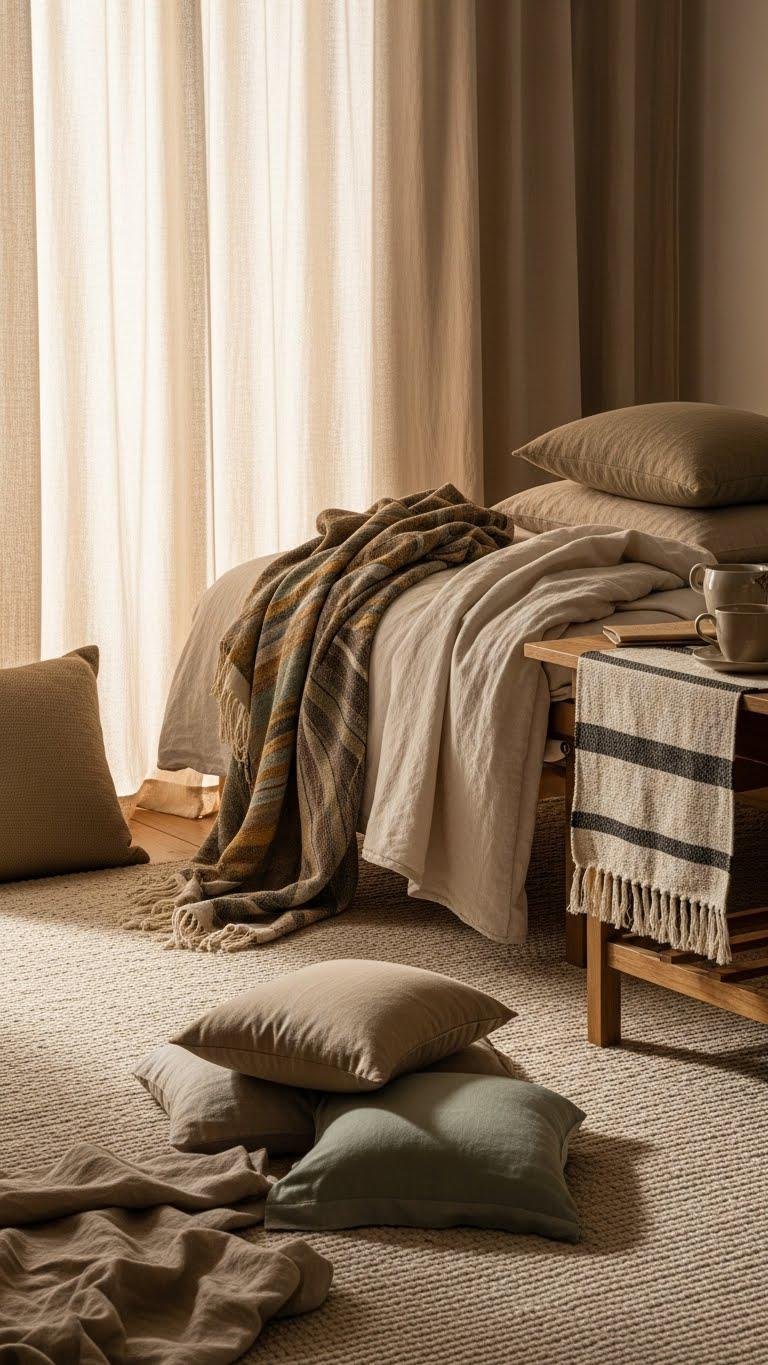
Layering natural textiles brings immediate tactile warmth to a room, so start with a simple hierarchy: large, breathable pieces (linen or cotton curtains and a wool rug), mid-scale items (woven throws and cotton-linen bedding), then small accents (hemp or silk cushions, a handwoven table runner). You’ll favor organic dyeing, mix textures confidently, and use thermal layering to create effortless, intentional comfort that frees movement.
Incorporate Woven Storage and Accents
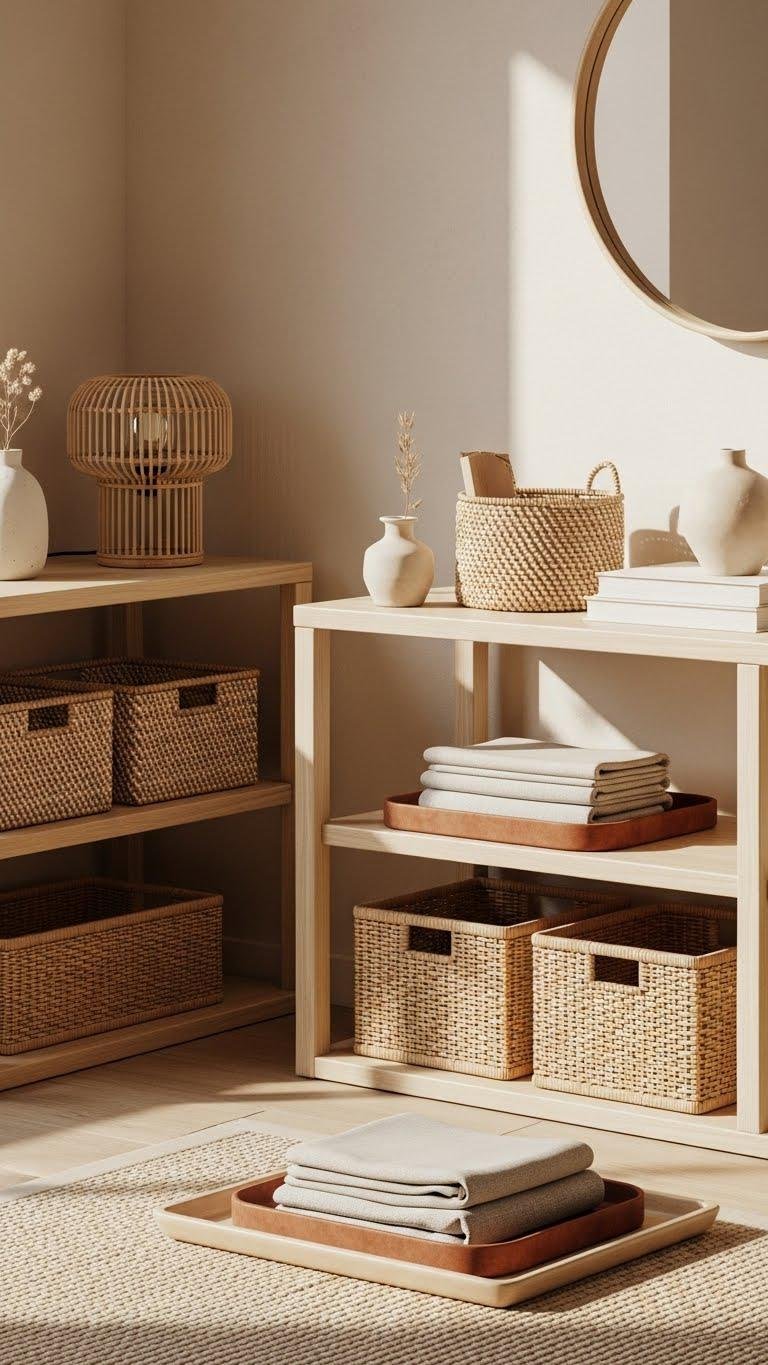
Woven baskets and trays bring sculptural warmth and practical order to a warm-minimalist space, so choose pieces that balance form and function.
You’ll use woven baskets to hide clutter, display textiles, and define zones without heavy furniture. Add subtle rattan accents—lamp bases, mirror frames—for tactile contrast.
Keep arrangements intentional and spare so your rooms feel open, calm, and free.
Select Earthy Accent Hues Sparingly
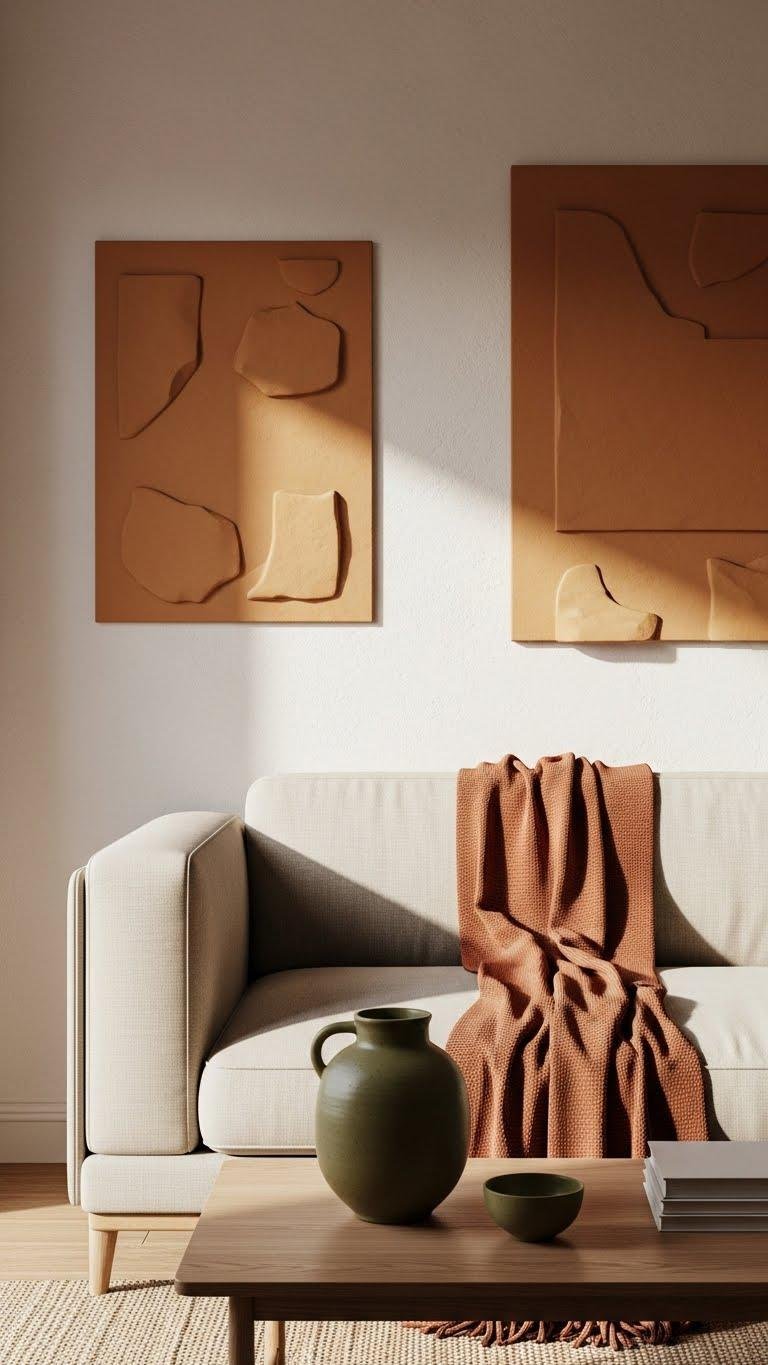
When you choose earthy accent hues sparingly, they become deliberate focal notes rather than background noise, so pick one or two warm tones—terracotta, ochre, or olive—and stick to them throughout the room.
Use earthy contrasts to give depth: a single clay vase, a throw, or framed art.
Practice micro accenting to keep the palette calm, intentional, and liberating.
Anchor Rooms With Large, Low-Profile Seating
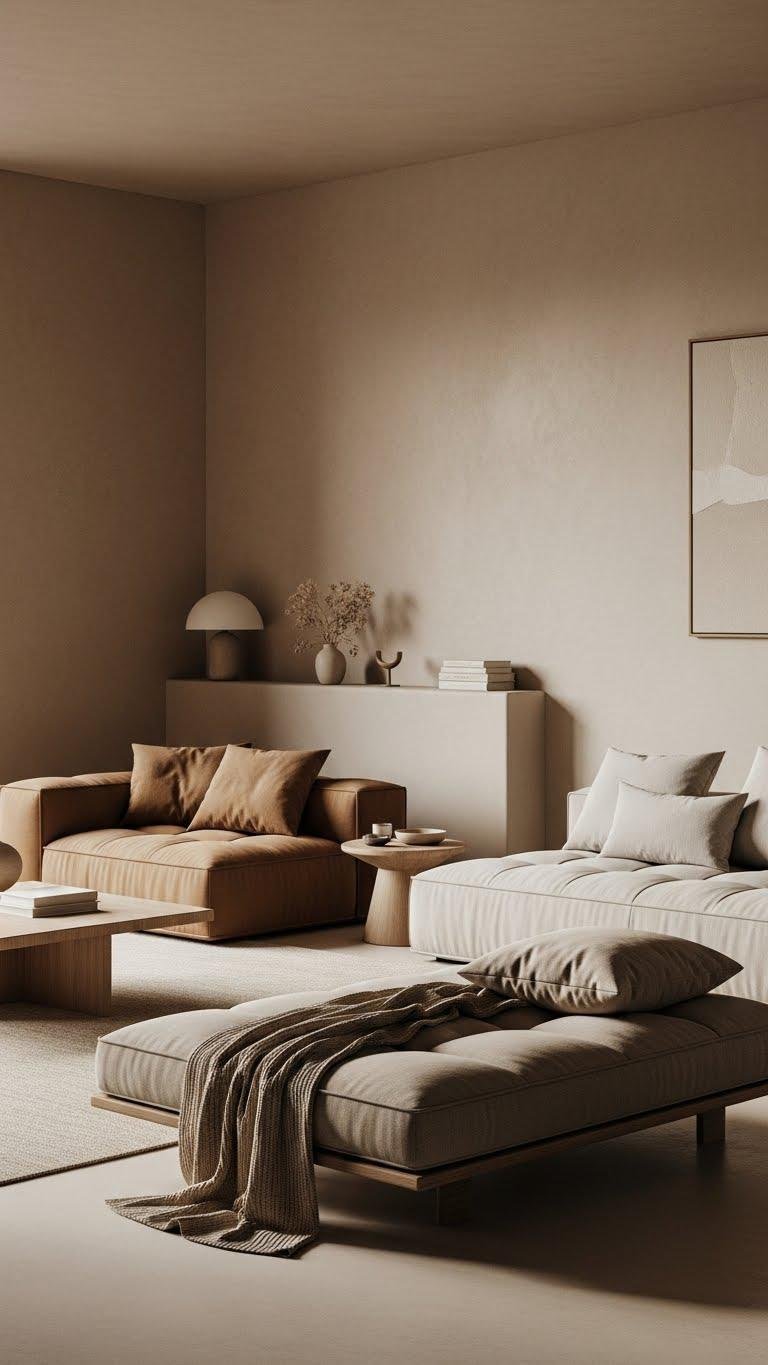
Choose large, low-profile seating to ground a warm minimalist room—think a wide, low sofa or a deep daybed with clean lines that keep the sightlines open and the space feeling expansive. You’ll favor low seating and modular loungers to create flexible zones without clutter.
Pick natural fabrics, muted tones, and restrained proportions so the room breathes and you move freely.
Integrate Hidden and Closed Storage
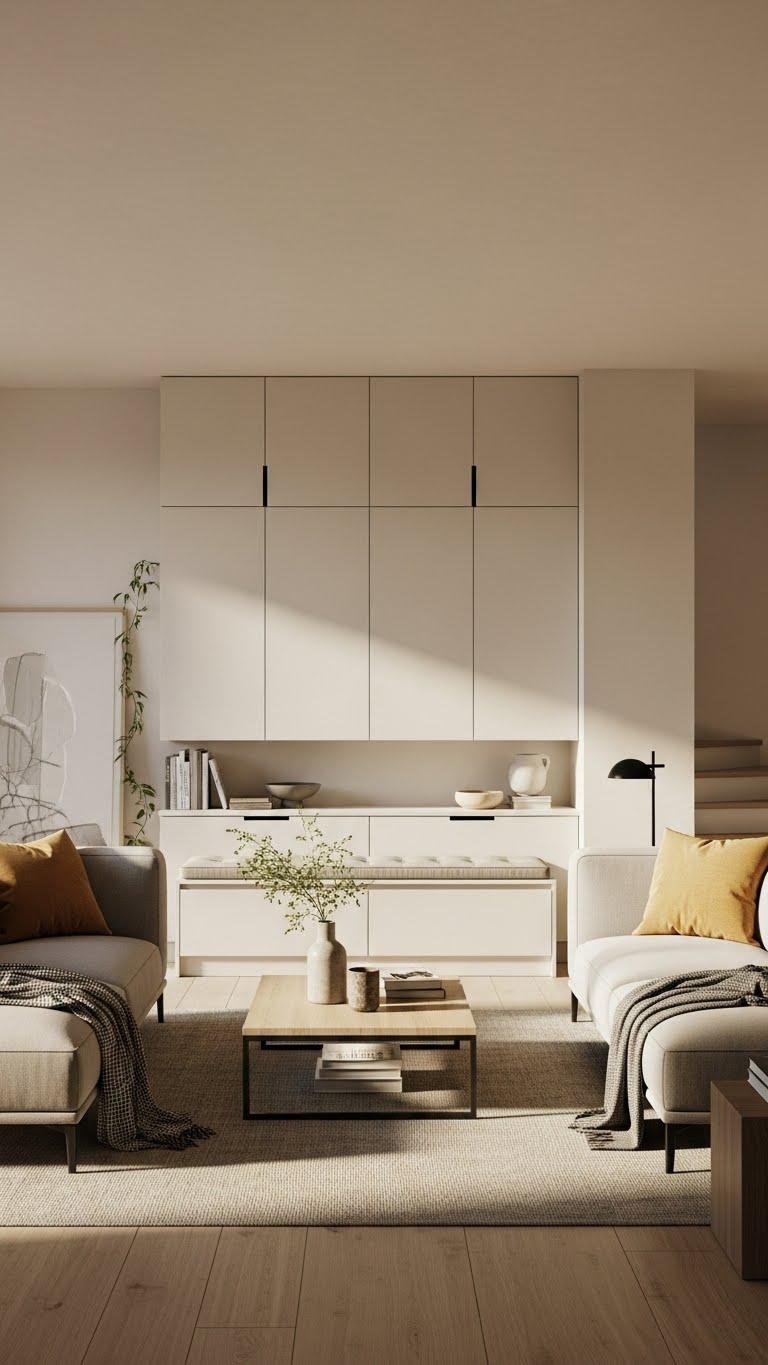
After anchoring the room with low-profile seating, keep the calm by hiding clutter out of sight—closed storage helps maintain those clean sightlines and the airy feel you’ve created.
Use a concealed bench for seating and storage, choose pared-back cabinets, and tuck essentials into under stair cabinetry.
You’ll preserve open surfaces, simplify routines, and enjoy a freer, uncluttered home.
Create a Layered Lighting Scheme
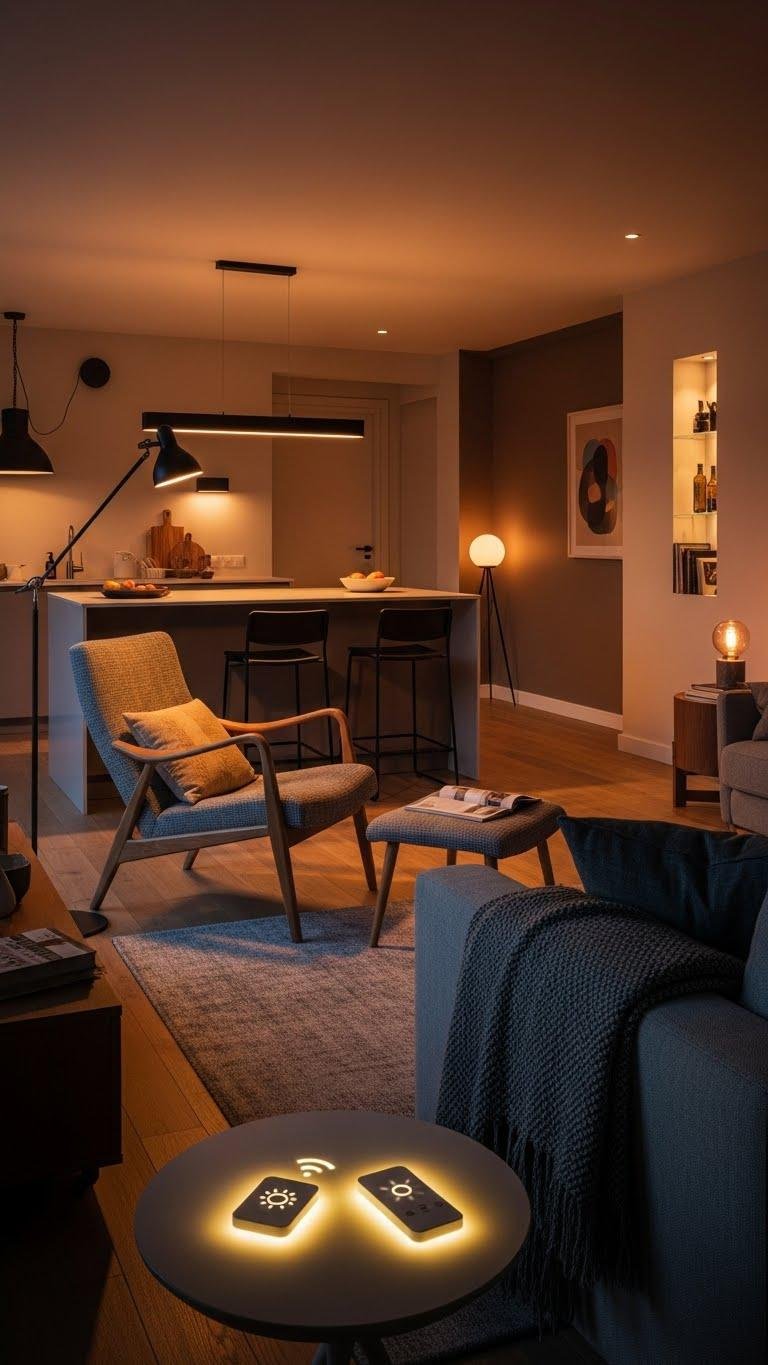
Because light shapes how you feel in a room, layering illumination gives you control over mood, function, and focus without cluttering the space. Mix ambient, task, and accent sources so each zone supports use and relaxation. Use simple fixtures, warm finishes, and mood zoning to define areas. Add wireless control for effortless scenes, letting you shift atmosphere and freedom with one tap.
Fit Dimmable Warm-Temperature Bulbs
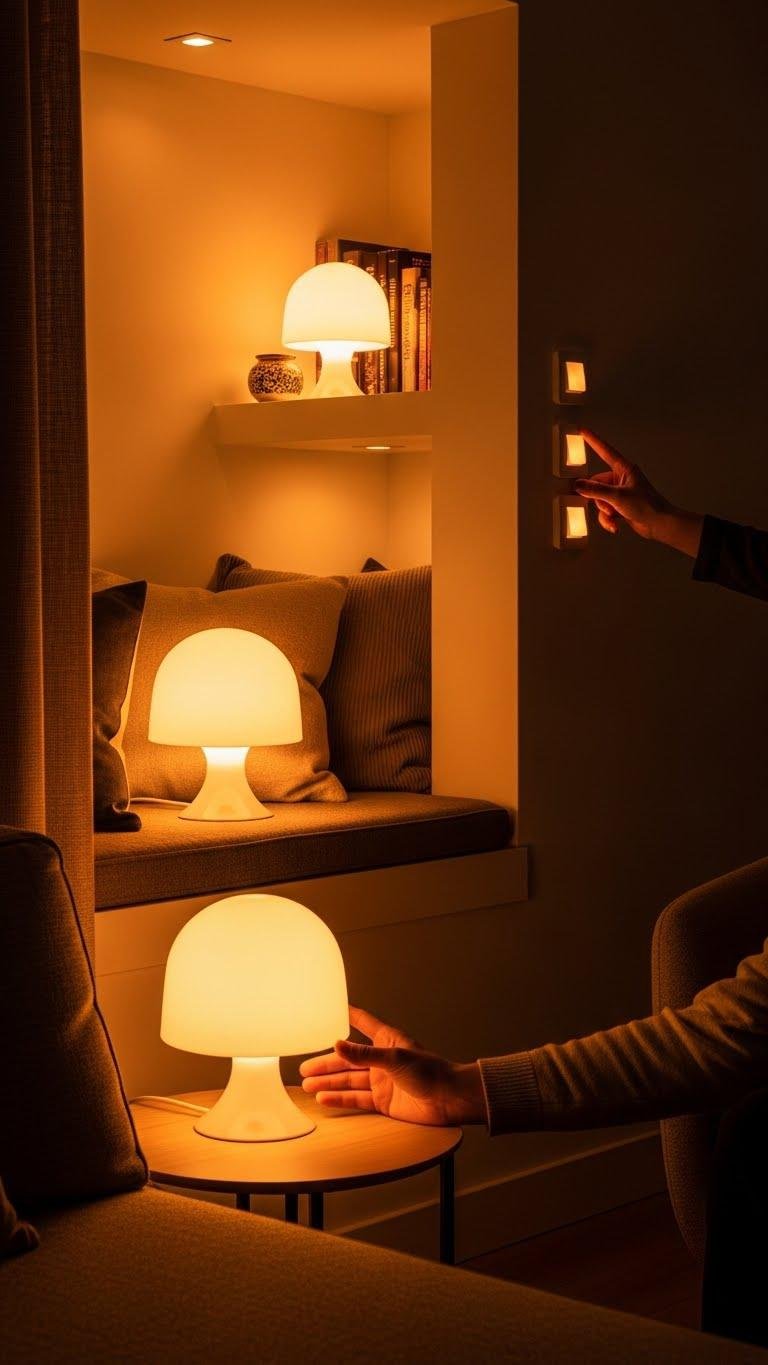
Once you’ve layered ambient, task, and accent lights, pick dimmable warm-temperature bulbs to control mood without changing fixtures. You’ll create a cozy base with soft glow lamps and warm LEDs, then fine-tune scenes with ambient dimmer switches.
Choose bulbs with high CRI and lower kelvin for natural skin tones. This gives you flexible, inviting light that feels effortless and liberating.
Use Pendant Globes and Paper Shades
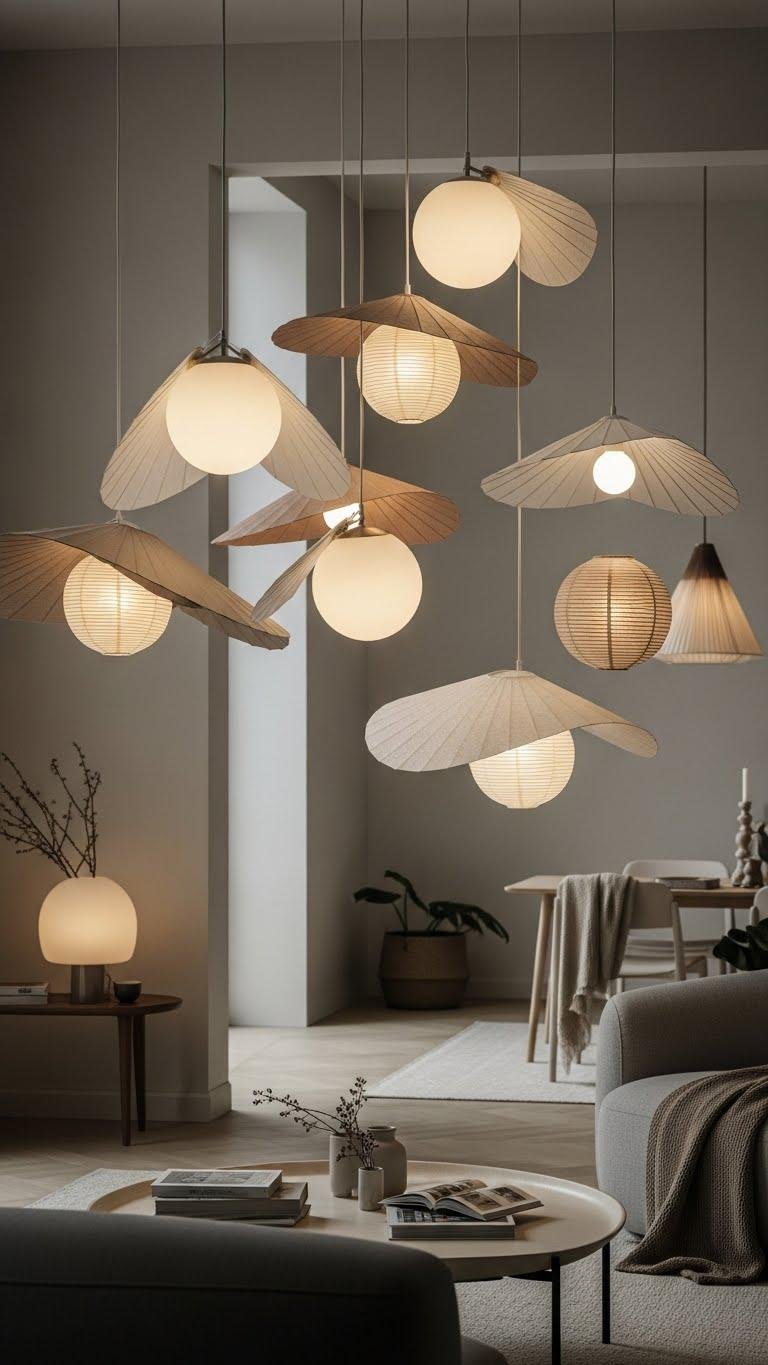
Swap in pendant globes and paper shades to soften overhead light and add sculptural calm to your space. You’ll choose soft globes for even, forgiving illumination and pair them with textured shades to introduce quiet depth without clutter.
Hang varying heights to create movement, keep profiles minimal, and let gentle light shape rooms that feel open, intentional, and freely lived in.
Highlight Textures With Accent Illumination
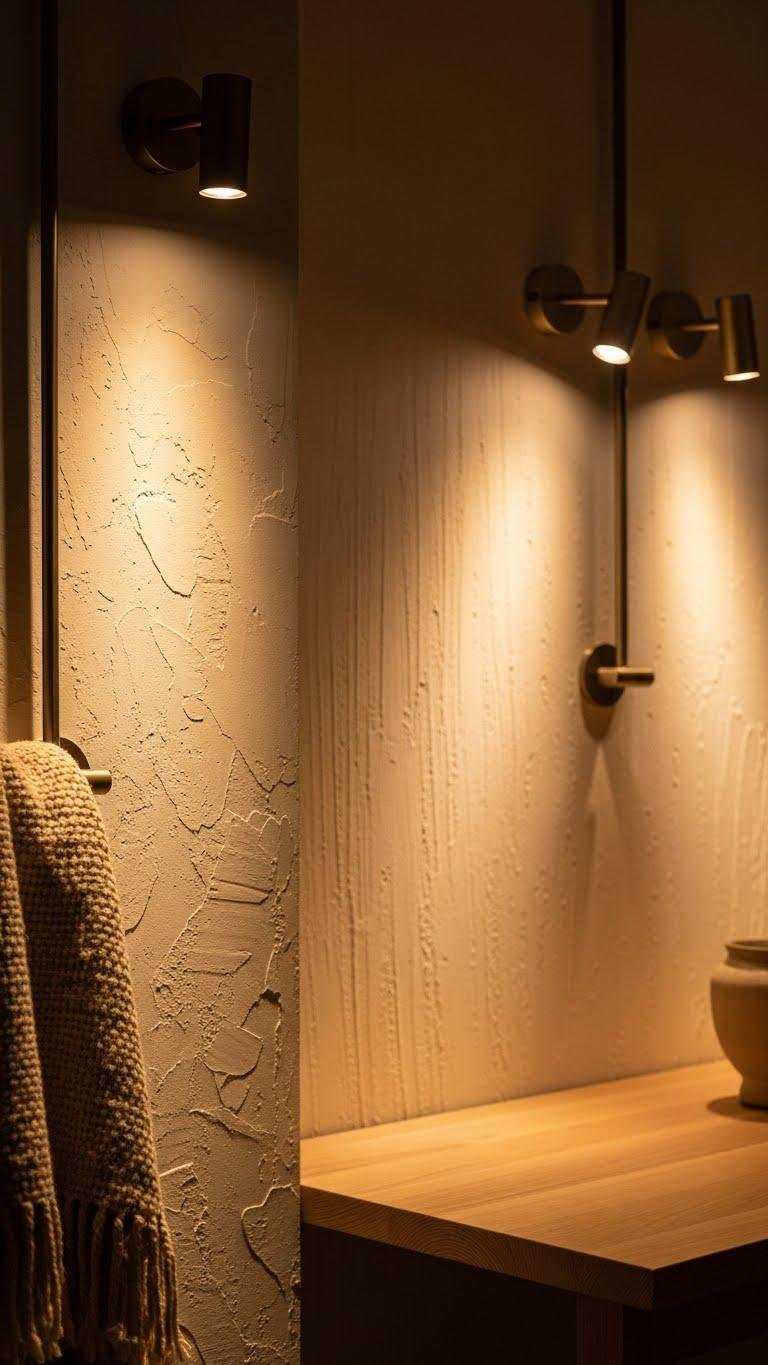
Bring textures to the foreground with targeted accent illumination that sculpts surfaces and adds quiet drama to a warm minimalist room.
You’ll position low-angle accent lighting to reveal weave, grain and plaster, creating tactile contrast that invites touch without clutter.
Choose adjustable fixtures and warm bulbs so you control mood and focus, letting materiality speak and your space feel liberated, calm and intentional.
Maximise Daylight With Sheer Treatments
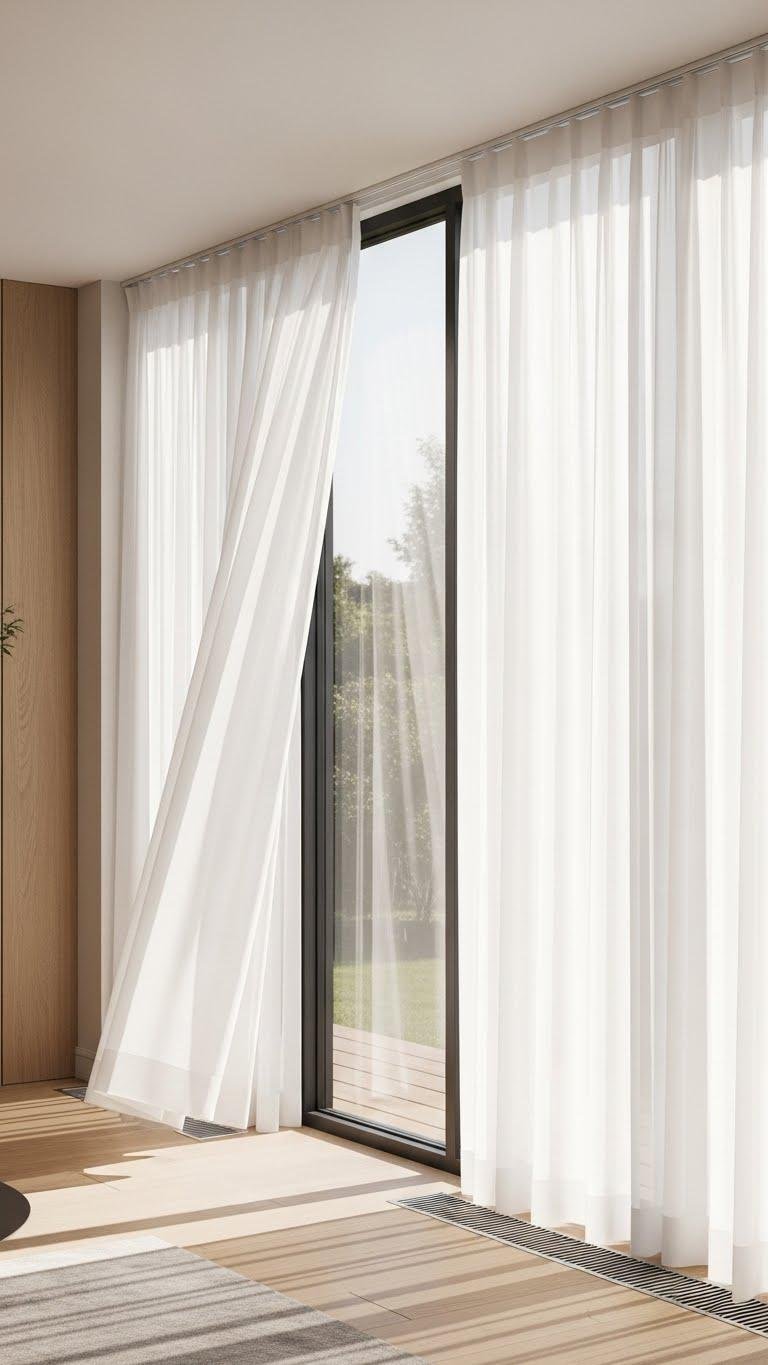
How much light do you really need to feel a room breathe? Let sheer treatments soften glare and frame views while letting you control mood.
Choose quality sheer hardware for effortless movement and clean lines. Layer optional thermal lining for insulation without blocking radiance.
You’ll preserve privacy, boost warmth efficiency, and keep spaces airy — minimalist, warm, and free.
Display a Few Meaningful Objects
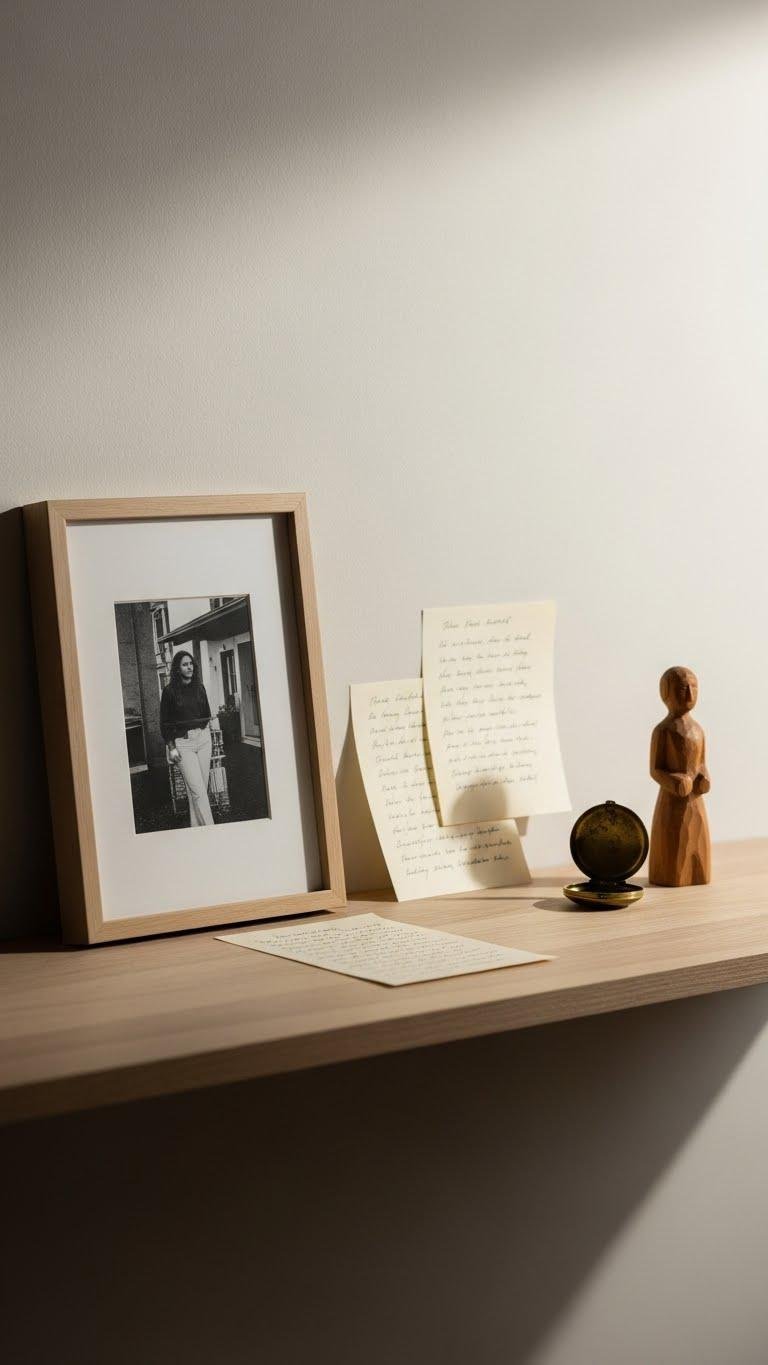
You don’t need a crowded mantel to make a room feel personal—choose a handful of objects that matter and let them breathe. Display a mix of handwritten notes, a framed photo, and select heirloom trinkets on a shelf or console. Keep spacing intentional, rotate pieces seasonally, and let each item tell a simple story so your space feels curated, calm, and free.
Add Handcrafted Ceramics and Pottery

After you’ve pared down to a few meaningful objects, introduce handcrafted ceramics and pottery to add warmth and tactility.
Choose pieces with handbuilt glaze variations and micaceous clay, so each vessel feels alive. You’ll arrange bowls and vases sparingly, letting surface texture and muted tones speak.
These objects invite touch, encourage slower routines, and give your minimalist space soulful, unforced character.
Layer Rugs for Acoustic Comfort
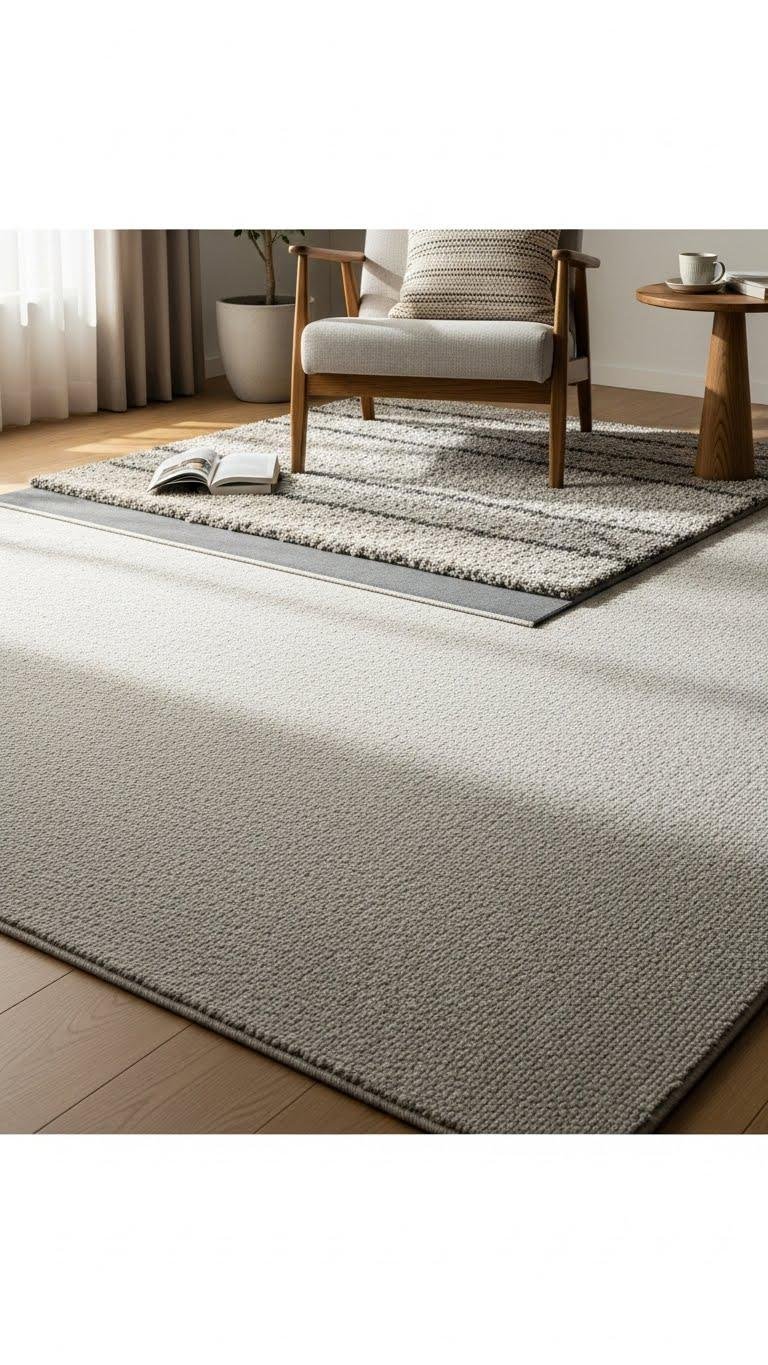
Layering rugs softens footsteps and dials down echo without sacrificing that pared-back aesthetic—start with a low-pile foundation rug for coverage, then add a smaller, textured piece on top where you want warmth and visual focus.
Use a soundproof underlay beneath the base layer, choose neutral tones, and experiment with patterned rug pairs to create rhythm and freedom while keeping the room calm and intentional.
Bring in Intentional Greenery
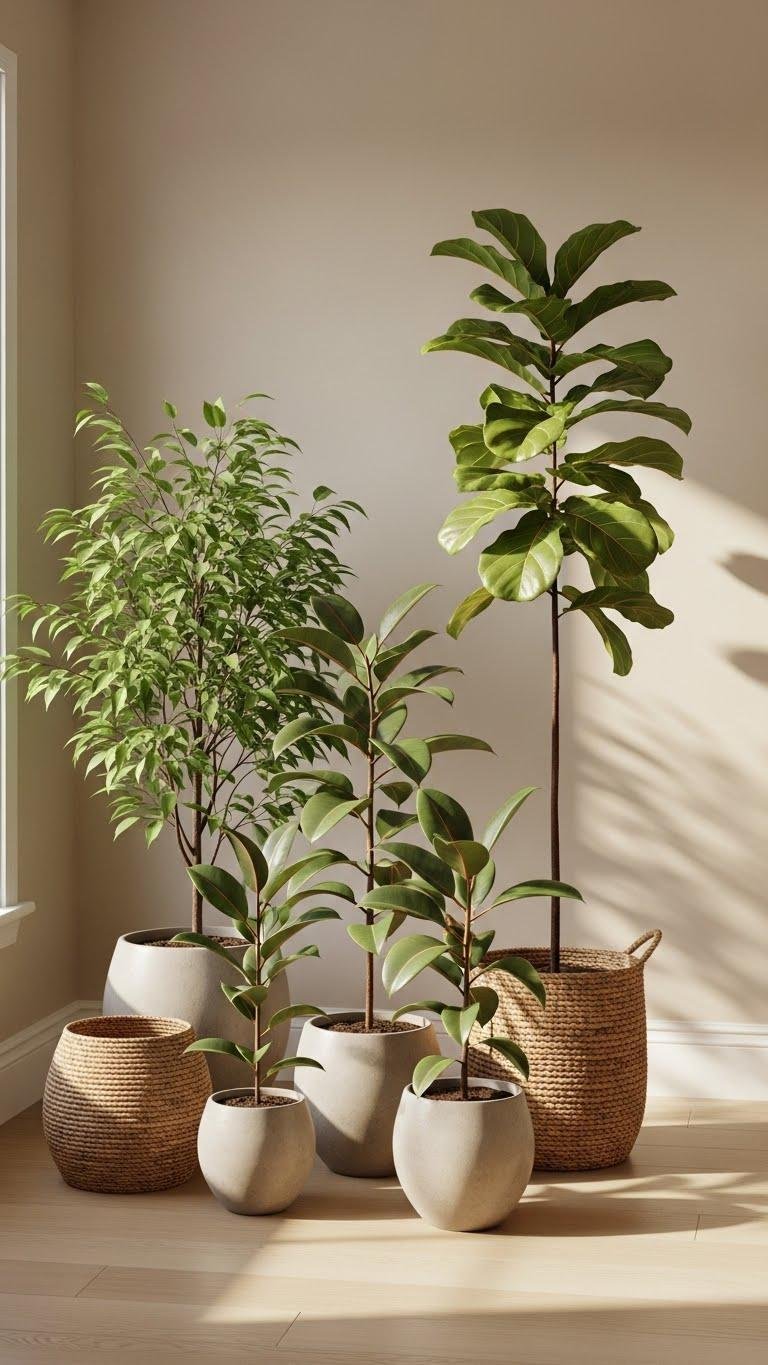
Why not let a few well-chosen plants do the heavy lifting for mood and air quality? You choose sculptural foliage that complements warm neutrals, practicing precise plant styling to balance scale and texture.
Opt for simple container selection—natural clay, matte ceramic, woven fiber—that honors space without clutter. Place plants where they breathe and invite calm, letting greenery feel intentional, not accidental.
Keep Cord Management Out of Sight
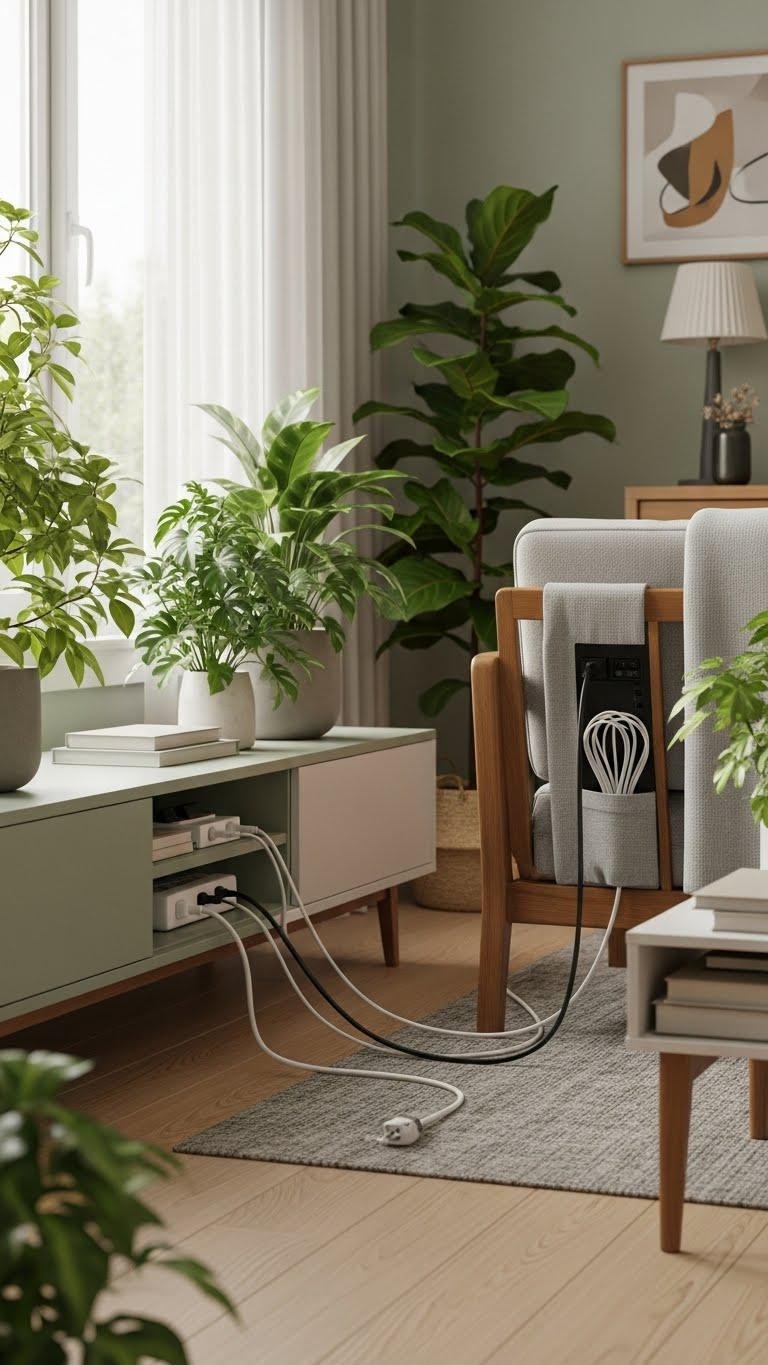
Bringing plants into a room settles the eye, so don’t let cords undo that calm. Tuck cables into hidden channels behind furniture, run power strips under consoles, and bundle loose wires with sleek cord sleeves.
You’ll keep surfaces clean and movement effortless, so your space feels open and intentional. These small systems give you control without clutter, freeing the room and your mind.
Rotate Artworks and Accessories Seasonally
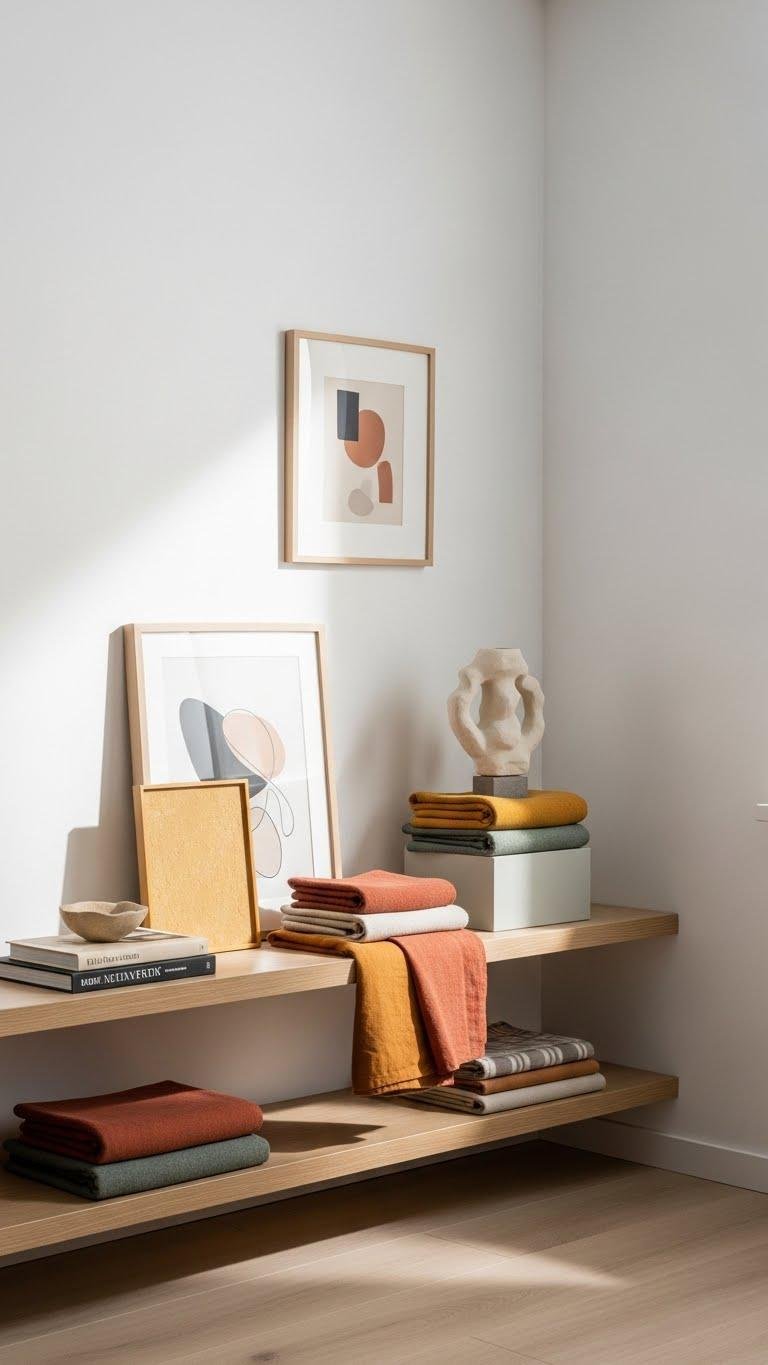
Swap out a few key pieces each season to keep your space feeling fresh and intentional.
You’ll create a curated rotation of artworks and accessories that reflects changing light, mood, and activity.
A minimal seasonal swap—swap frames, textiles, and a single sculptural object—lets you express freedom without clutter.
Edit boldly; let each piece earn its place and breathe.
Invest in Durable Foundation Pieces
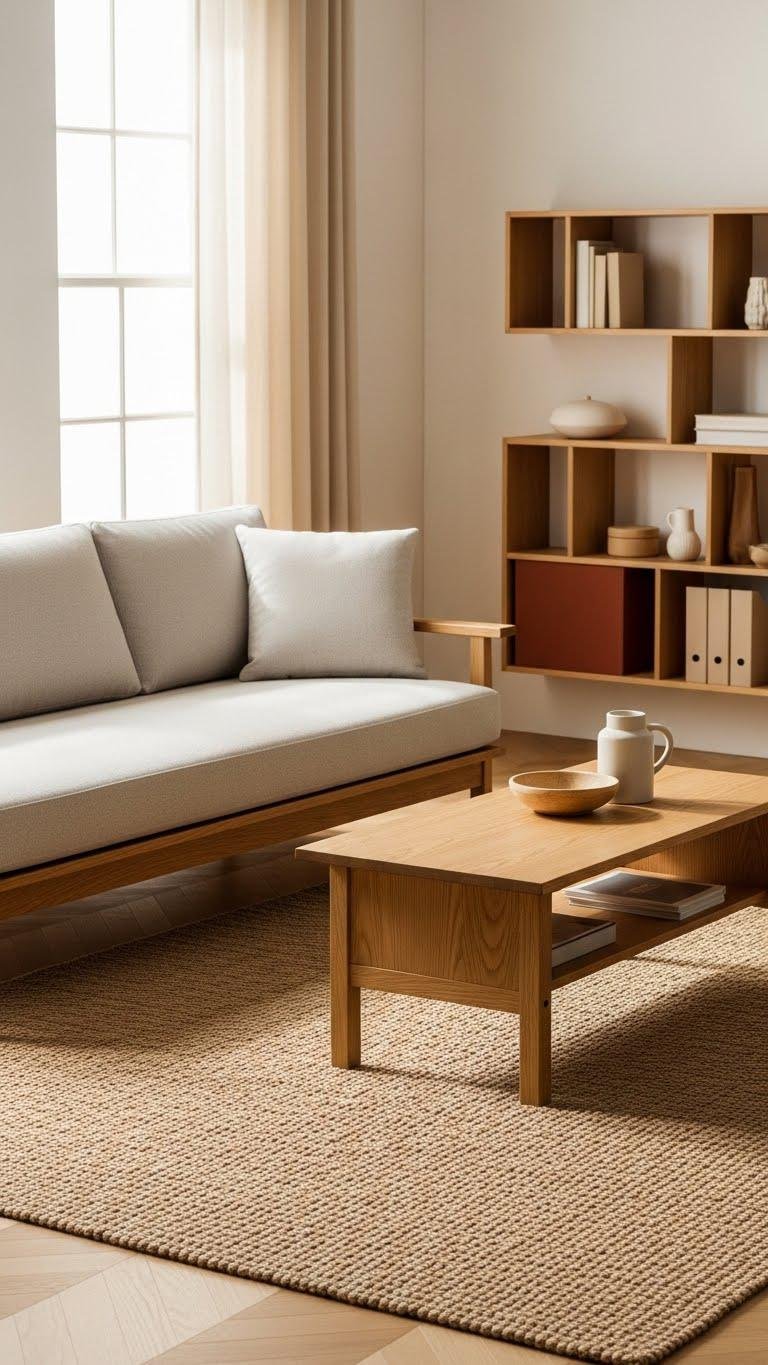
Start with pieces that last: choose sofas, rugs, tables, and shelving built to withstand daily life so the rest of your minimal scheme can stay calm and uncluttered.
You’ll invest in timeless upholstery and solid frames, freeing you from constant replacement. Select modular storage that adapts as needs change, so your space stays simple, warm, and liberating without sacrificing comfort or durability.