
You’ll get practical, space-saving strategies that make small rooms feel larger and work harder. Think vertical shelving, built-in benches with hidden drawers, slim multifunctional furniture, and pocket doors that free up floors. I’ll show simple swaps — from murphy beds to curved sofas and charging-integrated pieces — that improve flow and storage without clutter. Keep this close if you want a home that breathes and still fits everything.
Maximize Vertical Storage With Floor-To-Ceiling Shelving

When floor space is tight, go up: install floor-to-ceiling shelving to reclaim vertical real estate and keep surfaces clear.
You’ll layer open shelves with baskets, use industrial pipeworks for sturdy framing, and add plant ladders to bring greenery without clutter.
Place everyday items within reach, store extras high, and maintain clean sightlines so your space feels free, airy, and deliberately organized.
Install Built-In Benches With Hidden Drawers

If you’re short on floor space but still want comfortable seating, install a built-in bench with hidden drawers to combine a cozy perch and generous storage without adding clutter.
You’ll carve a clean line along a wall, use storage benches for linens, shoes or gear, and choose hinged seating for easy access.
Keep finishes light and handles minimal to preserve airy freedom.
Use Murphy Beds for Flexible Sleeping Areas

Because a Murphy bed folds up into the wall, you’ll reclaim floor space for daytime living without sacrificing a comfy night’s sleep.
Choose vertical wall mounted systems with integrated shelving to keep clutter off the floor.
Select space saving bedding and quick-release linens so you can transform a studio into an open plan retreat in seconds, giving you freedom and focused functionality.
Choose Slim-Profile and Low-Profile Furniture

Although compact rooms demand smart choices, slim-profile and low-profile furniture lets you keep function without crowding visual space. Choose slim proportion seating to maintain flow and sightlines, pairing tapered legs and narrow arms for comfort that feels airy. Add low profile credenzas for storage under windows or TV, keeping surfaces uncluttered so you can move freely and enjoy open sight paths.
Create Zones With Area Rugs in One-Room Layouts
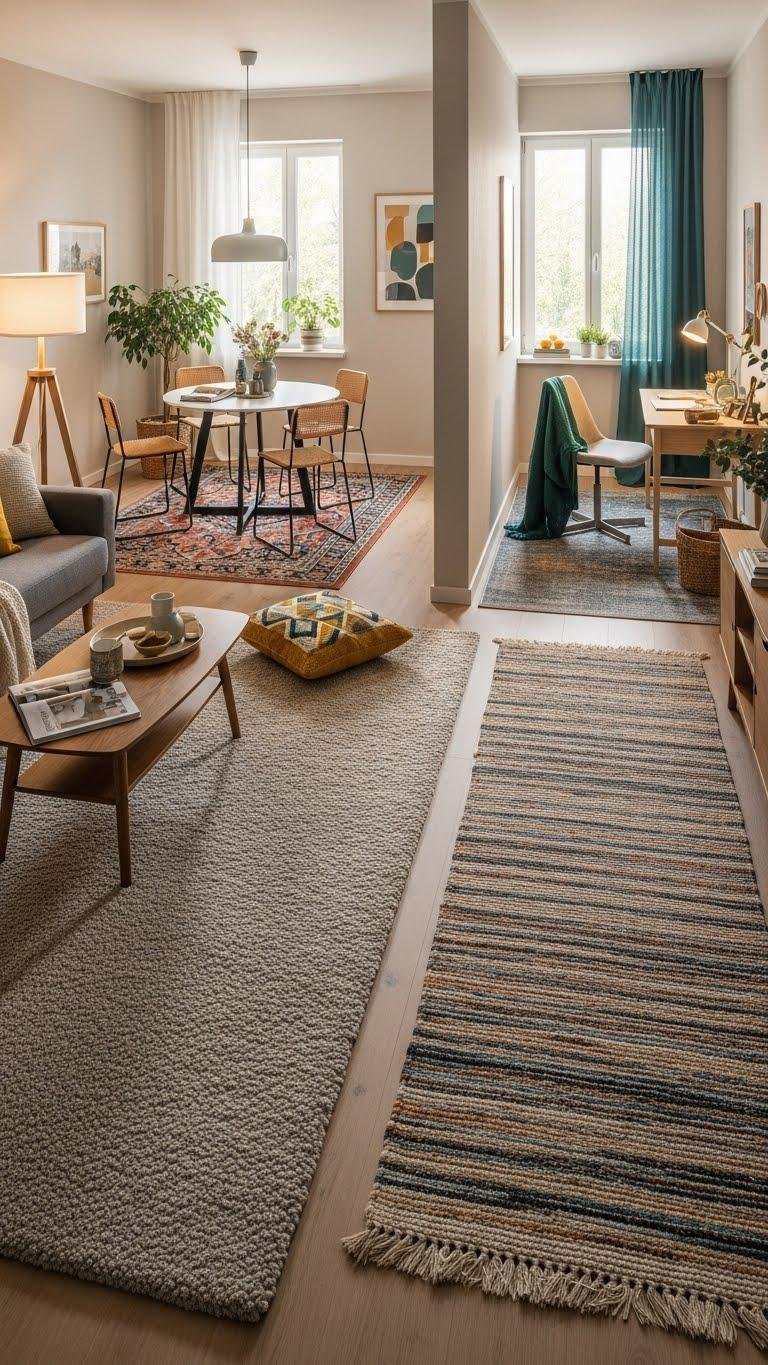
In open one-room layouts, area rugs act like invisible borders that tell your eye how to move through the space and what each zone does.
Use layered rugs to define living, dining, and work areas—mix sizes, textures, and patterns. Anchor furniture so pathways stay clear. Pair rugs with zoned lighting to strengthen function and mood while keeping the layout airy and flexible.
Add Wall Rails, Pegboards, and Multi-Tier Hooks
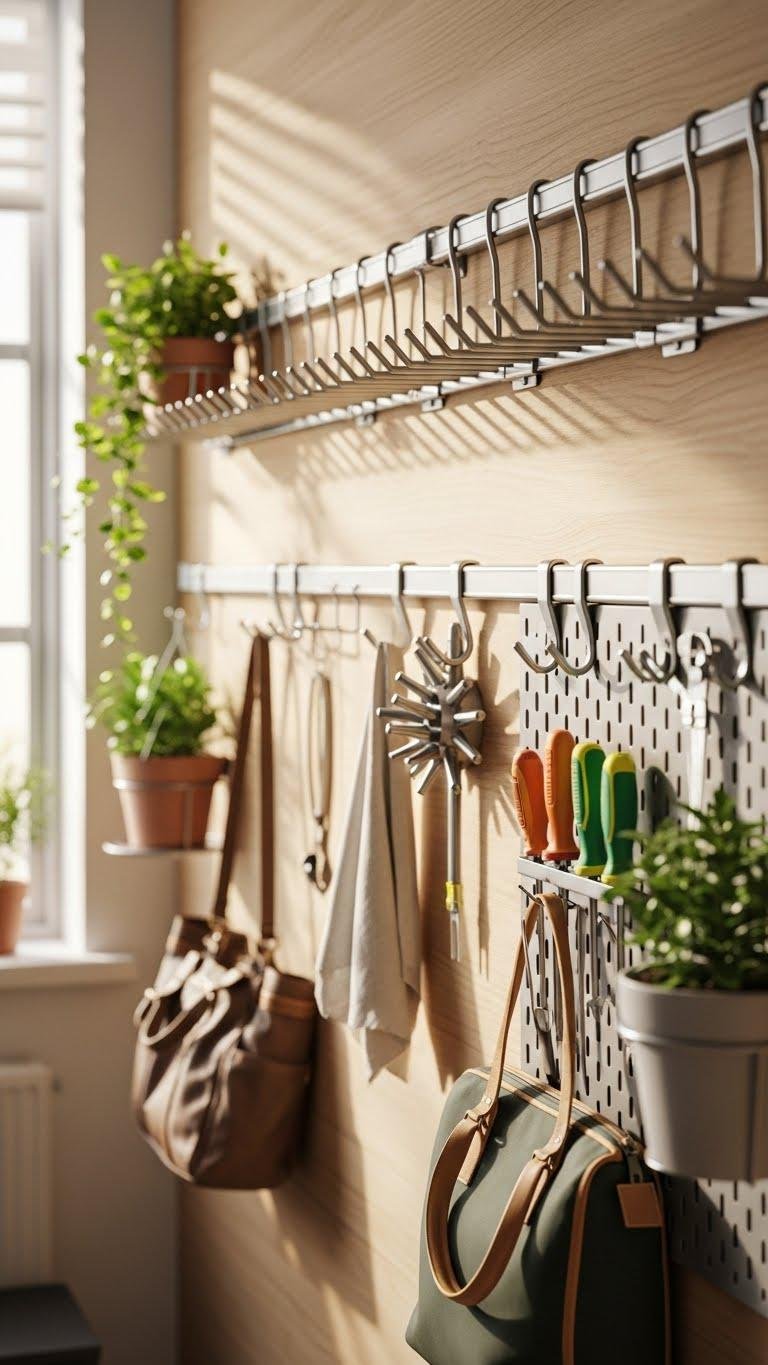
When you mount wall rails, pegboards, and multi-tier hooks, you free up floors and keep items visible, within reach, and off cluttered surfaces.
Use metal railways with peg hooks and tier prongs to arrange tools, bags, and plants. Add wall bins for mail and small gear. You’ll gain calm, instant order and the freedom to move without obstacles.
Select Multifunctional Sofa Beds and Daybeds

Mounting rails and pegboards clears floor space so you can think vertically about seating too — pick a sofa bed or daybed that tucks functionality into a small footprint. Choose convertible futons for instant guest-ready beds, or compact chaises for lounging without bulk. Look for hidden storage, clean lines, and light frames so you keep movement and freedom in your living plan.
Layer Lighting for Depth and Functionality

Because layered light shapes how you use and feel in a small space, plan three complementary types: ambient for overall brightness, task for reading and work, and accent to highlight art or architectural features.
You’ll mix dimmable pendants for mood control, layered sconces to free floor space, and targeted task lamps.
Aim for adjustable, energy-smart fixtures that enhance flow and ease.
Use Mirrors to Amplify Light and Perceived Space
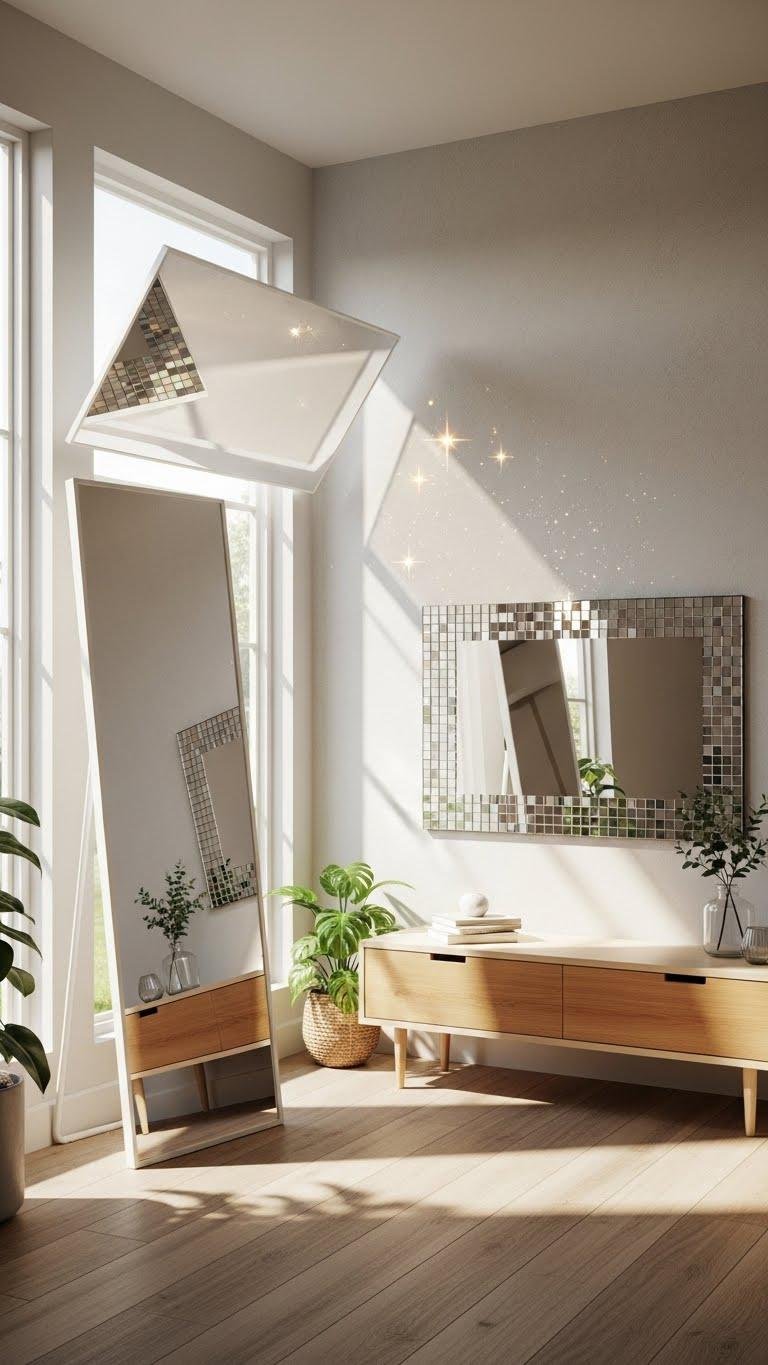
If you place mirrors strategically, they’ll bounce natural and artificial light into dark corners and instantly widen sightlines so a small room feels brighter and more open. Hang angled mirrors to direct sunlight across walls, use mosaic mirrors as focal texture, and lean a tall mirror against a wall to double perceived depth.
You’ll create airy, liberated spaces without clutter or heavy furniture.
Opt for Open-Leg and Transparent Tables
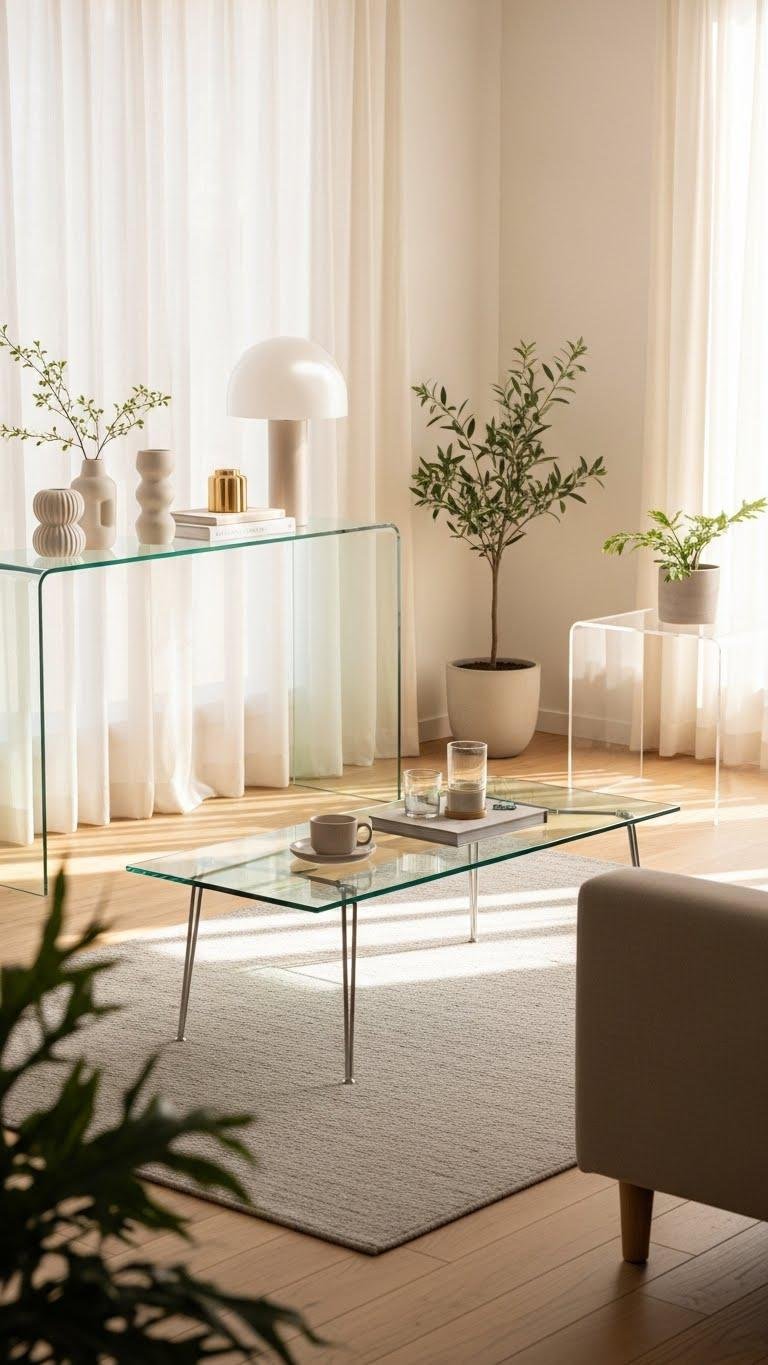
Featuring slim silhouettes and see-through surfaces, open-leg and transparent tables keep sightlines unobstructed so your small room feels airier and less crowded.
Choose leggy glass console or coffee tables to showcase rugs and plants; pick airy acrylic side tables to float accessories without visual weight. You’ll move freely, arrange light layers, and maintain a minimal, breathable layout that supports relaxed living.
Employ Nesting and Folding Tables for Dining Flexibility
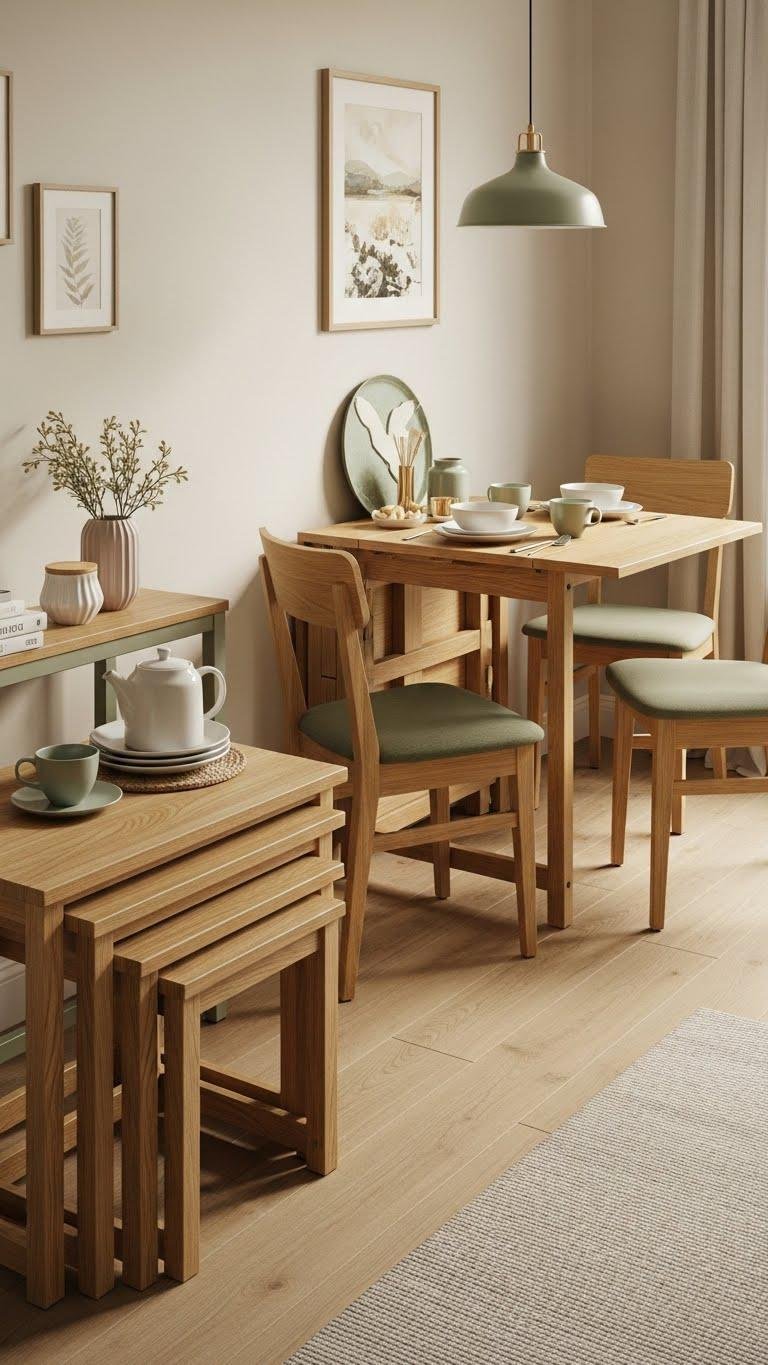
When space is tight, nesting and folding tables give you dining flexibility without permanent clutter: pull out a matching set of nesting tables to serve a meal, tuck them back under a console when you’re done, or unfold a compact drop-leaf table against the wall to create an instant dining surface. Choose lightweight pieces, use compact nesting for layered serving, and embrace folding dining for spontaneous gatherings.
Build Window-Seat Storage Nooks
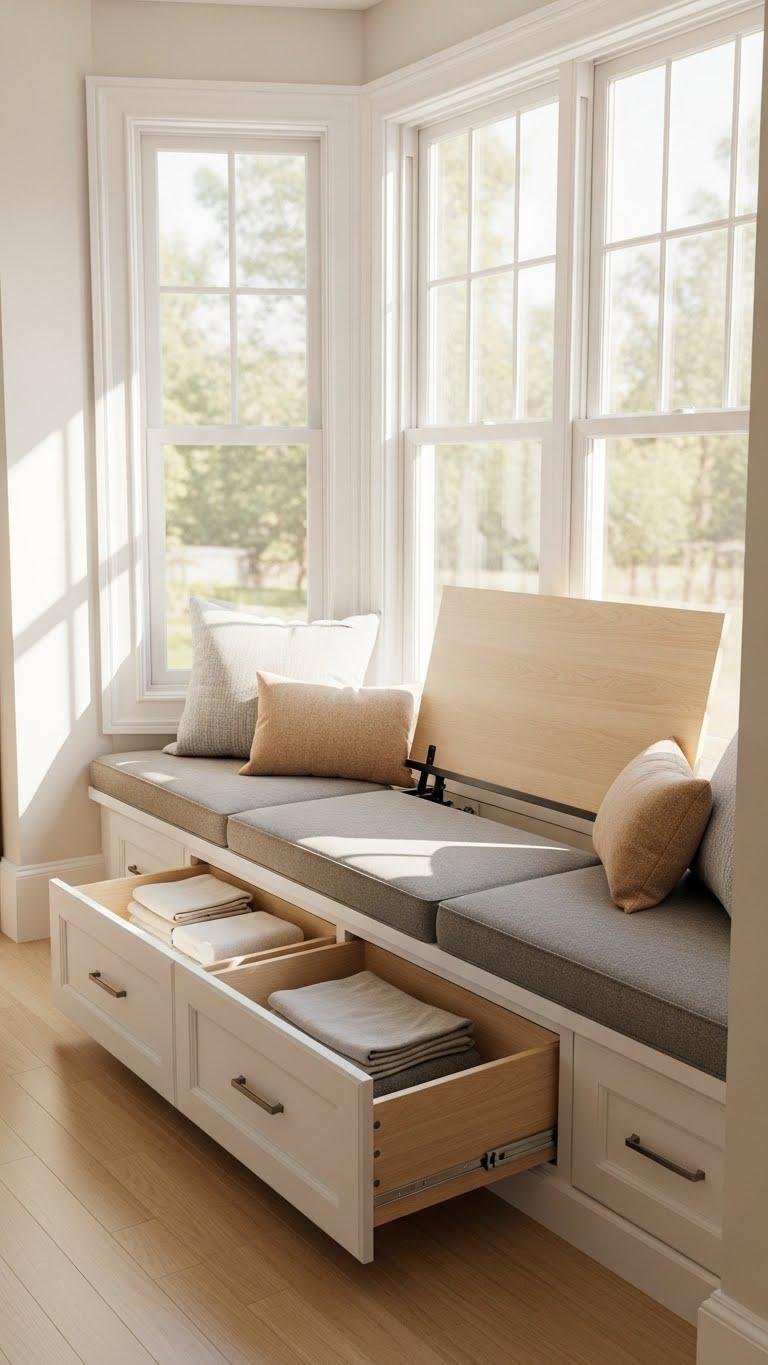
After you tuck away the tables, reclaim that sunny spot by building a window-seat with hidden storage beneath. You’ll gain neat under seat drawers for linens and gear, and cushioned setbacks that let you lounge without bulk.
Keep proportions slim, use lift-top lids or seamless drawers, and choose durable fabrics. It’s a simple, freeing upgrade that maximizes light and order.
Paint Walls, Trim, and Ceiling the Same Color
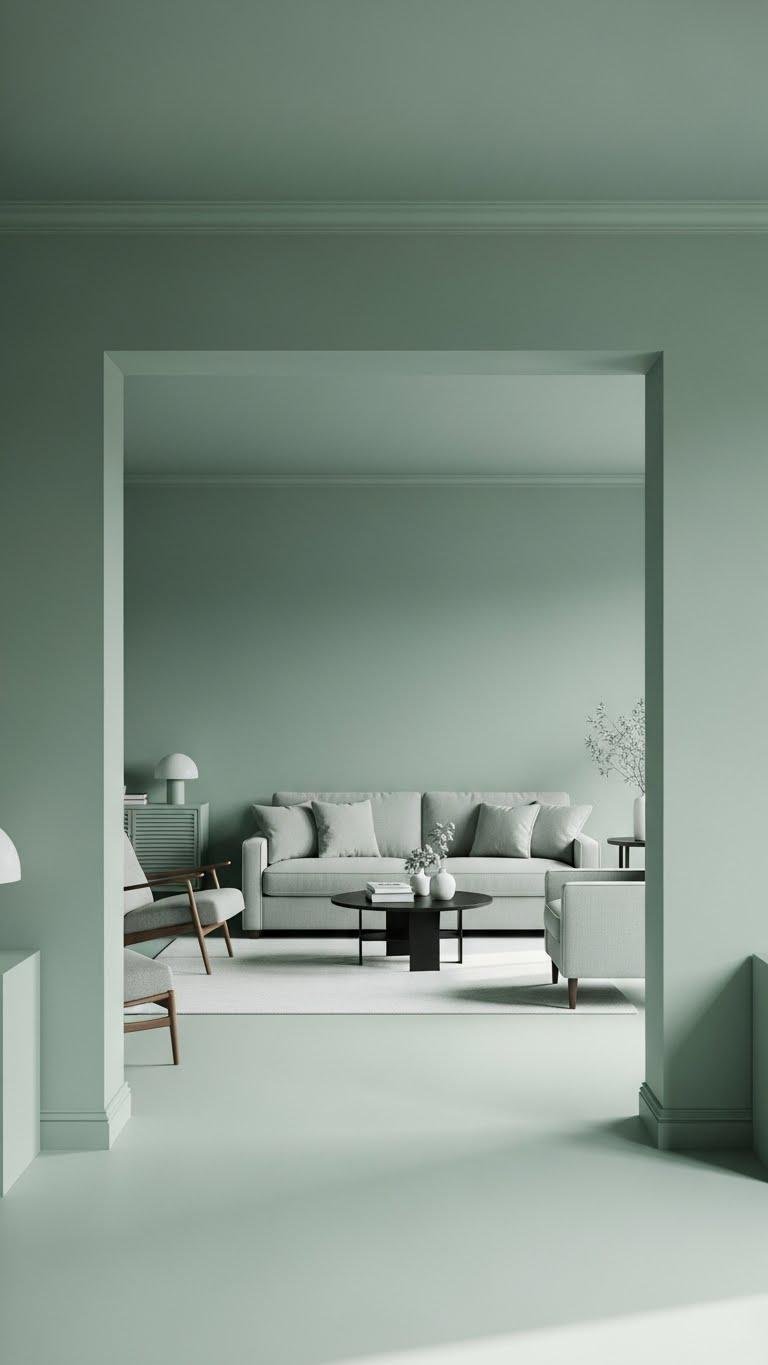
If you paint the walls, trim, and ceiling the same color, the room feels taller and more cohesive because sightlines won’t stop at contrasting edges.
Choose a bold or muted hue and carry it up to a monochrome ceiling with seamless trim for continuity. You’ll simplify the visual field, free movement, and create a calm, expansive backdrop that lets furniture and light breathe.
Mix Natural Materials and Textures for Warmth

Layer natural materials and varied textures to warm a small space without crowding it. Mix linen throws, sisal rugs, and woven baskets for tactile layers that still breathe. Add wood furniture with simple lines and a few stone accents—coasters or a small planter—to anchor the room. You’ll create a calm, free-feeling interior that’s cozy without feeling congested.
Install Over-Door and Slim Modular Storage Systems

Make the most of overlooked vertical real estate by installing over-door racks and slim modular units that fit into narrow gaps; they give you instant, organized storage without eating floor space.
You’ll love over door shelves for shoes, toiletries, or plants, and slim cubbies for books and baskets. Choose lightweight, movable pieces so you can rearrange storage as your life changes.
Choose Modular Seating That Reconfigures Easily

After freeing up floor space with over-door racks and slim units, think vertically and laterally about seating — pick modular pieces that reconfigure as your needs change.
You’ll want a modular ottoman you can move as a footrest, extra seat or table. Choose sofas with interchangeable armrests and removable backs so you can open, close or reshape the layout fast for living, working or entertaining.
Use Storage Ottomans and Benches as Dual-Purpose Pieces

Storage-ottomans and benches give you seating and hidden storage in one sleek package, so you can clear clutter without sacrificing style.
Pick pieces with clean lines and durable fabric that double as portable seating for guests or quick lounging. Use neutral tones or bold accents to anchor the room, tuck away blankets, toys, or gear, and keep your space open and free.
Define Sightlines by Floating Furniture Strategically

Those storage pieces clear visual clutter so your eye can move — now use floating furniture to control where it goes. Float a sofa or console off walls to craft sightline symmetry, guiding views between windows, doors, and focal points.
You’ll create breathing space and intentional floating focalpoints that make movement effortless, keep traffic flowing, and let the room feel open and free.
Create Vertical Art Galleries to Draw the Eye Upward
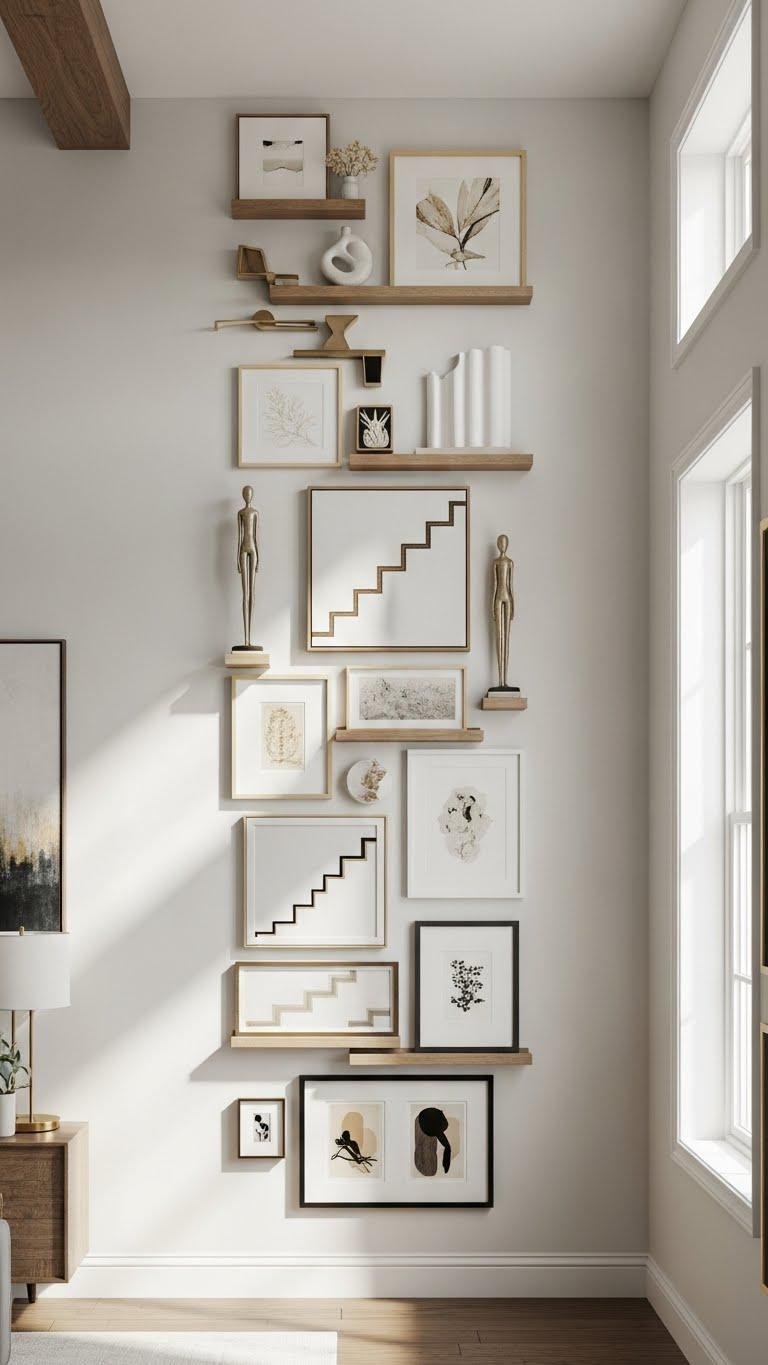
When you lift art vertically, you make the room feel taller and direct the eye upward — so stack a mix of frames, sculptures, and narrow shelves to create a deliberate column that connects floor to ceiling.
You’ll arrange vertical silhouettes and stairway canvases to guide movement, keep spacing consistent, and mix textures.
That column becomes a freeing focal spine, adding height without crowding.
Incorporate Recessed Shelving and Built-In Niches
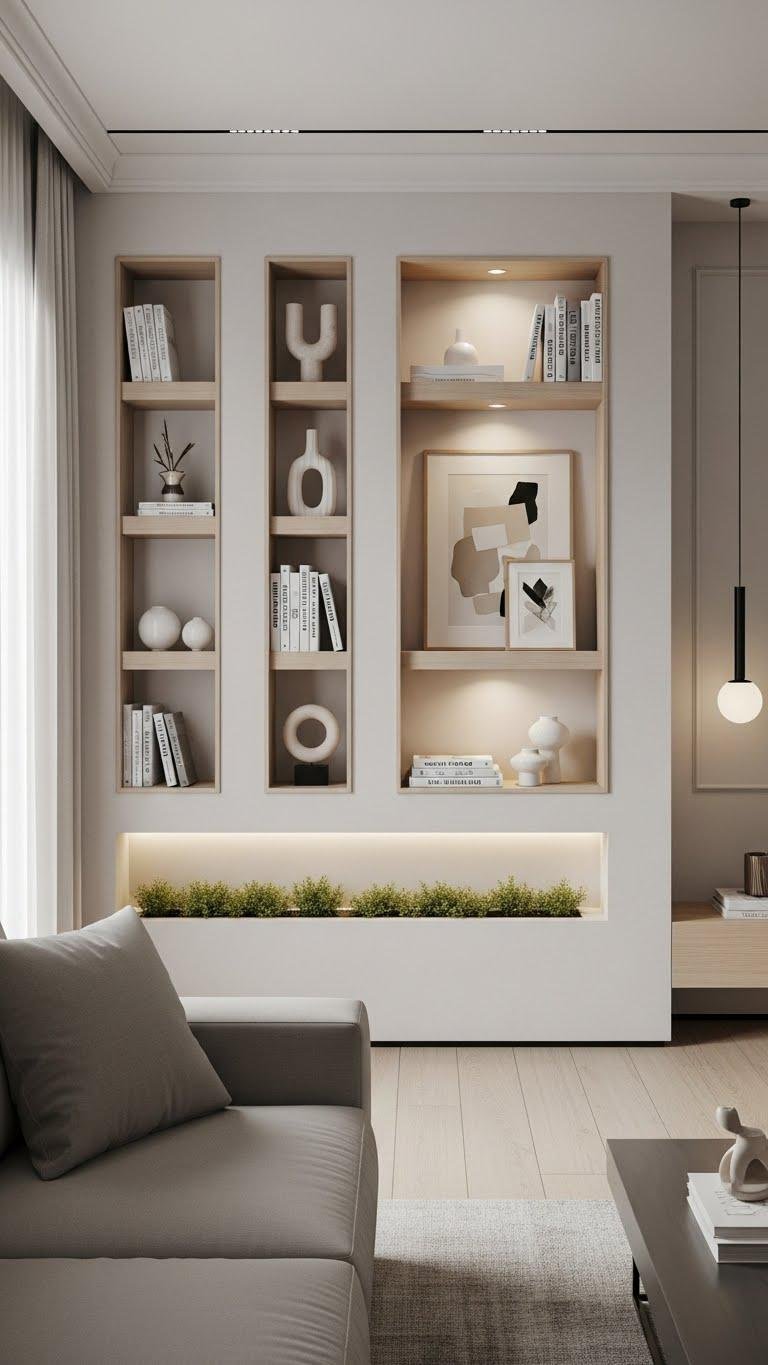
If you want to add depth without stealing floor space, carve out recessed shelving or built-in niches to hold books, art, and accent lighting. You’ll create clean storage and display zones that free cluttered surfaces.
Add niche lighting to spotlight treasures and recessed planters for low-profile greenery. Keep lines simple, finishes minimal, and arrangements flexible so your space feels open and intentional.
Use Pocket or Sliding Panels to Open Up Plans
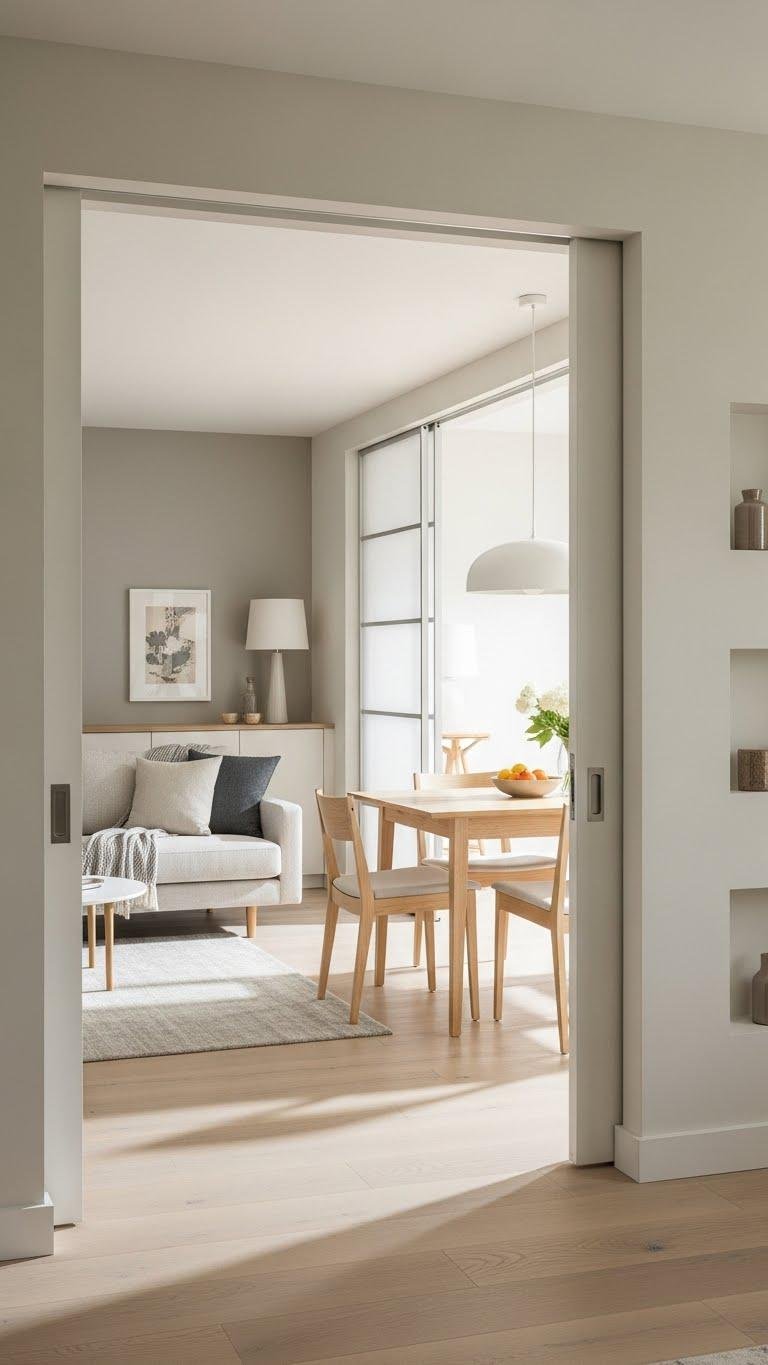
Built-in niches let you keep surfaces calm; pocket and sliding panels go further by reshaping how rooms connect. You can free floor space with hidden sliders that disappear into walls, letting you switch between open plan and private zones. Use translucent partitions to diffuse light while keeping sightlines, and choose simple finishes so movement feels effortless and the layout adapts to how you live.
Add Statement Lighting That Doubles as Art
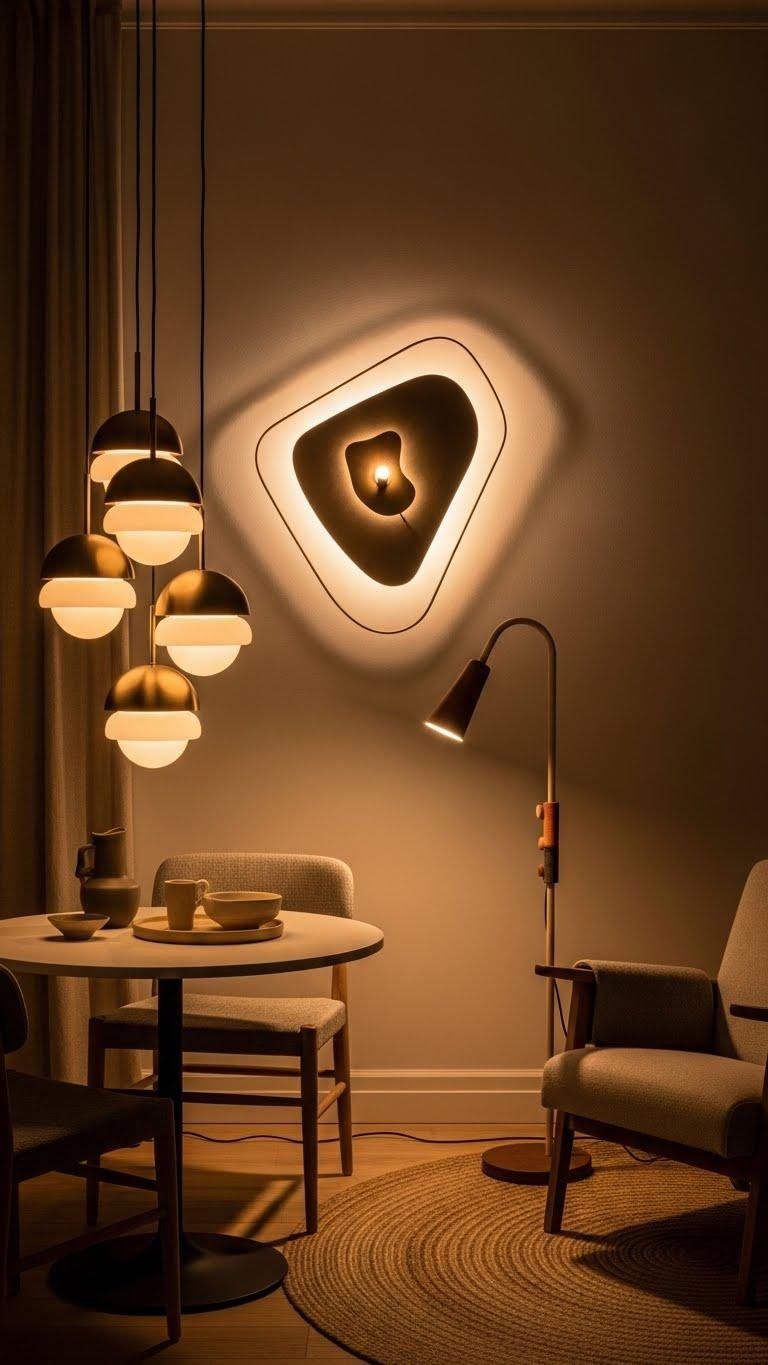
Choose a sculptural light fixture that commands attention and also solves a practical need—pendants that drop over a tiny dining table, a wall sconce that doubles as artwork, or a floor lamp that defines a reading nook. You’ll use sculptural pendants and artful sconces to create focal points, free up floor space, and set mood with layered light. Opt for clean shapes and tactile materials.
Keep a Cohesive Neutral Palette With Strategic Color Pops

While a neutral base keeps a small space feeling calm and open, thoughtful color pops give it personality without cluttering the eye.
You’ll start with a muted foundation — linens, walls, rugs — then choose one or two vivid hues.
Be deliberate with accent placement: a cushion, lamp, or art piece.
This keeps the room airy, intentional, and easy to change.
Use Curved Furniture to Improve Flow in Tight Corners

Often a gentle curve makes all the difference in a cramped corner: swapping a boxy armchair for a rounded sofa or an arched console lets you move through the room without snagging on sharp angles.
Choose rounded ottomans for flexible seating and flow, add curved shelving to soften vertical edges, and angle pieces so circulation feels effortless — minimalist choices that free your movement and sightlines.
Integrate Furniture With Built-In Charging and Lighting
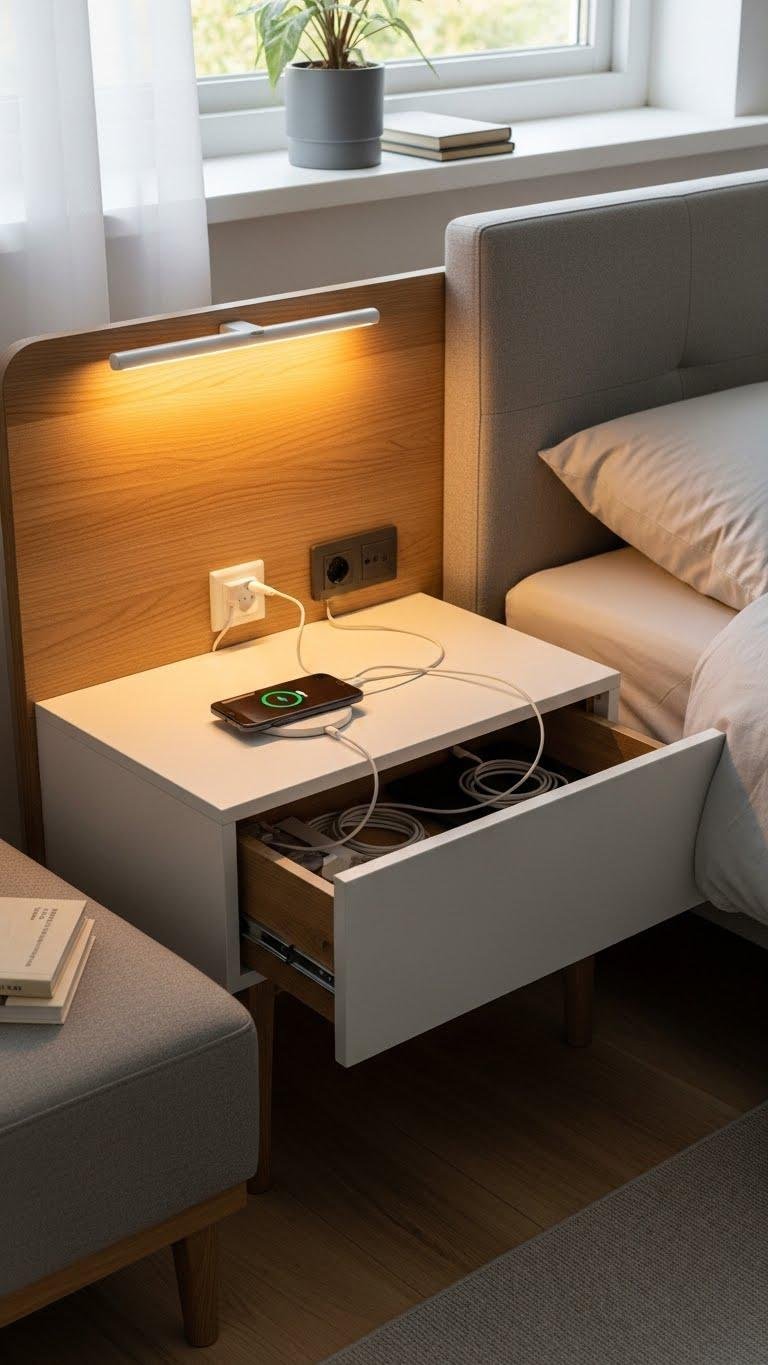
Make your furniture work smarter by choosing pieces with built‑in charging and integrated lighting so you can eliminate clutter and keep essentials within reach.
Pick a side table or headboard with wireless charging pads and drawers sized for cords. Integrate adjustable ambient illumination for reading and mood.
You’ll free floor space, simplify routines, and keep tech invisible yet ready, preserving a calm, mobile life.
Employ Slim Wardrobe Nooks Instead of Bulky Closets

A slim wardrobe nook lets you reclaim floor space without sacrificing storage: fit a recessed rail, a narrow armoire, or a wall-mounted system into a hallway alcove or beside a bed so clothes hang neatly and stay visible.
Choose a vertical wardrobe in a fitted alcove to keep lines clean, use open shelving for quick access, and add hooks for bags to maximize freedom.
Keep Decor Minimal With Multipurpose Decorative Storage
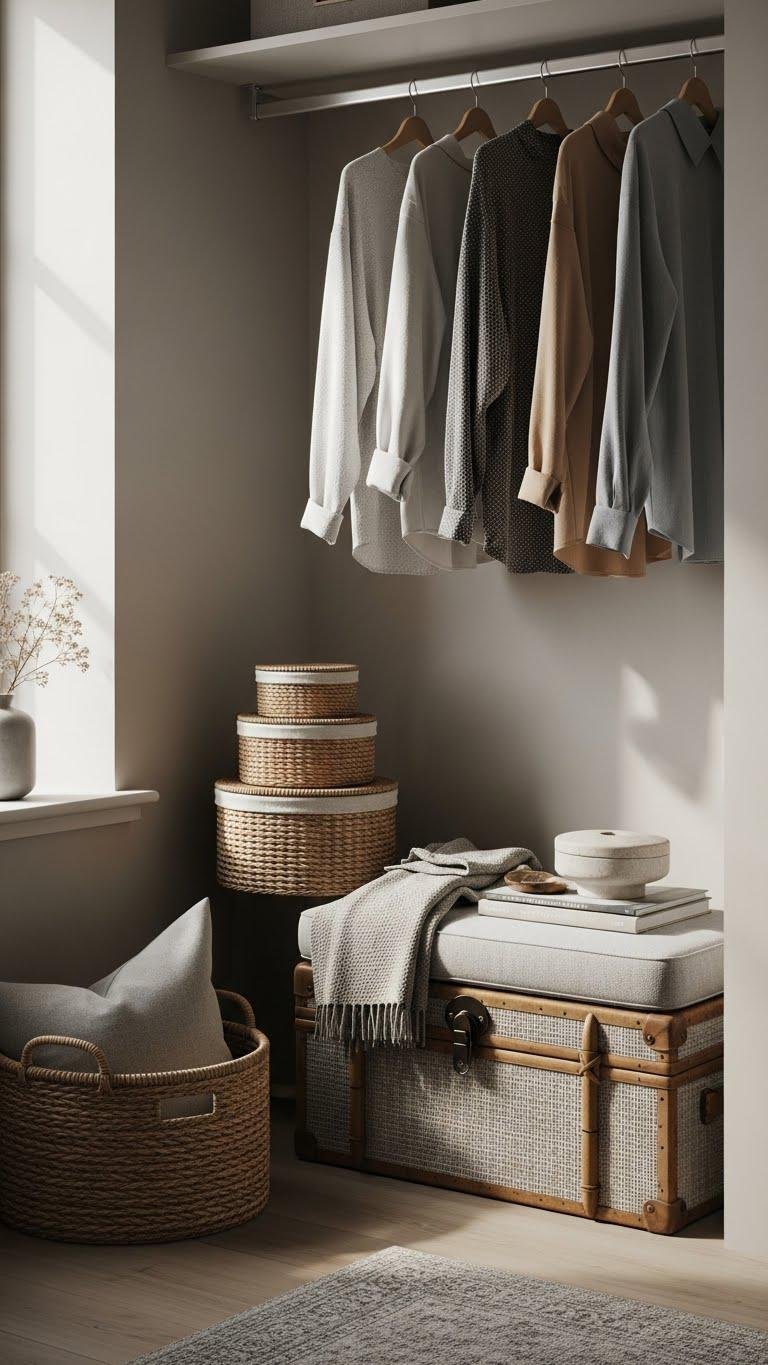
Besides freeing floor area, slim wardrobe nooks teach a simple lesson: storage can be seen as decor.
You’ll keep surfaces calm by choosing stackable baskets and decorative trunks that double as seating or side tables. Pick neutral tones, simple shapes, and tactile materials so each piece anchors the room while hiding clutter. That lets you move freely and enjoy a minimalist, functional space.