
You can make a small living room feel much larger with a few intentional choices. Lean into light, layered neutrals, slim-profile furniture, and smart vertical storage to keep sightlines open. Use mirrors, a slightly lighter ceiling, and continuous flooring to amplify depth, then add texture and layered lighting for warmth. These simple shifts change how the space feels — and there are 26 practical ideas that will get you there.
Use Light, Neutral Wall Colors to Open the Room

Think of pale paint as your room’s secret ingredient: soft whites, warm beiges, and muted greiges reflect light, blur edges, and make compact spaces feel airy and seamless.
You’ll choose a soft white or warm beige to create a calm backdrop, pair with slim-profile furniture, and let textures—linen, woven rugs, matte ceramics—add warmth without clutter, keeping the space open and free.
Paint the Ceiling a Lighter Shade or Use a Gloss Finish
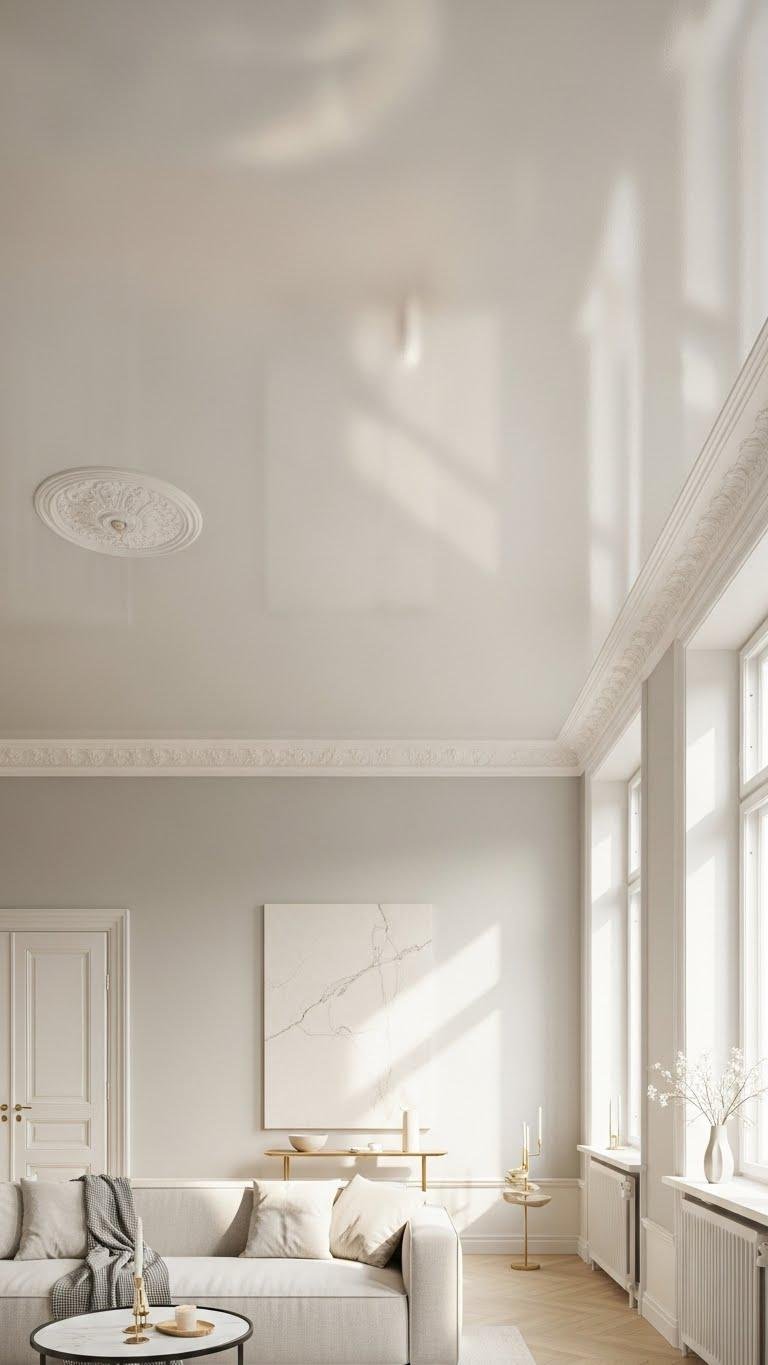
After using pale walls to open the room, lift the feeling of height by painting the ceiling a lighter tone or choosing a subtle gloss—this tricks the eye into more vertical space and bounces light around the room.
You’ll want a lighter sheen to reflect daylight, visually expanding airiness. Consider minimal ceiling art or faint molding to add character without closing the space.
Create a Monochromatic, Color-Drenched Palette

Want a bold, cohesive look that makes a small room feel intentionally styled rather than cluttered? Embrace a color-drenched scheme: pick one hue and use monochrome layering across walls, textiles, and upholstery. Vary saturation and texture to create depth without visual noise.
Add tonal accessories—lamps, cushions, art—so each piece whispers the same story, letting the space breathe and feel liberating.
Install Large-Format or Continuous Flooring
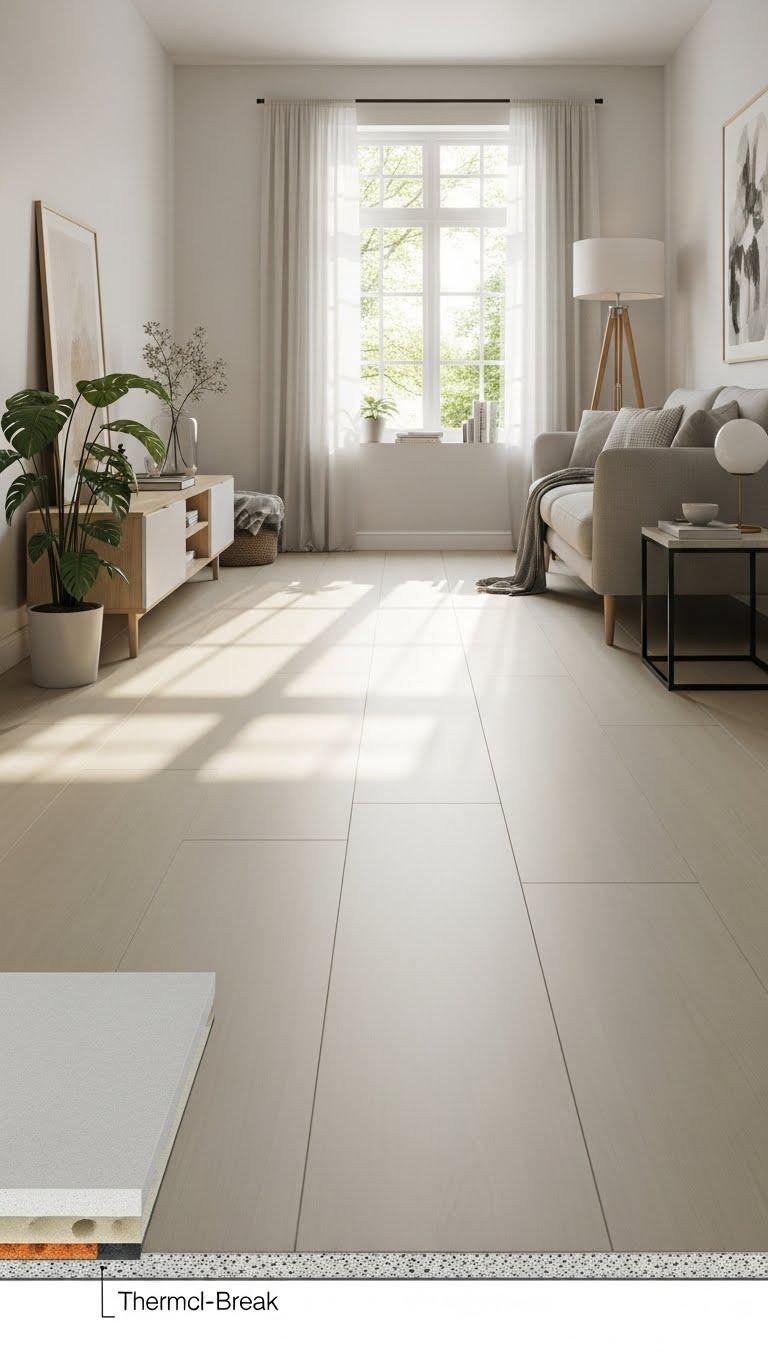
Large-format planks or a continuous poured surface can instantly widen a small living room by reducing visible seams and sightline interruptions, so choose a scale and direction that extend the eye toward focal points like windows or a sofa.
Go for minimal joints with seamless grout, pair with thermal break underlayment for comfort, and keep finishes light and matte to maximize flow and freedom.
Add Mirrors to Multiply Light and Depth

When you place mirrors strategically, they double light and deepen sightlines, making a compact living room feel airy and expansive. Use angled mirrors to bounce daylight into corners, visually stretching walls.
Lean layered mirrors against a wall for artful depth without drilling. Choose slim frames and varied sizes to keep the look modern and freeing, amplifying openness without clutter or heavy visual weight.
Choose Low-Profile Sofas With Exposed Legs
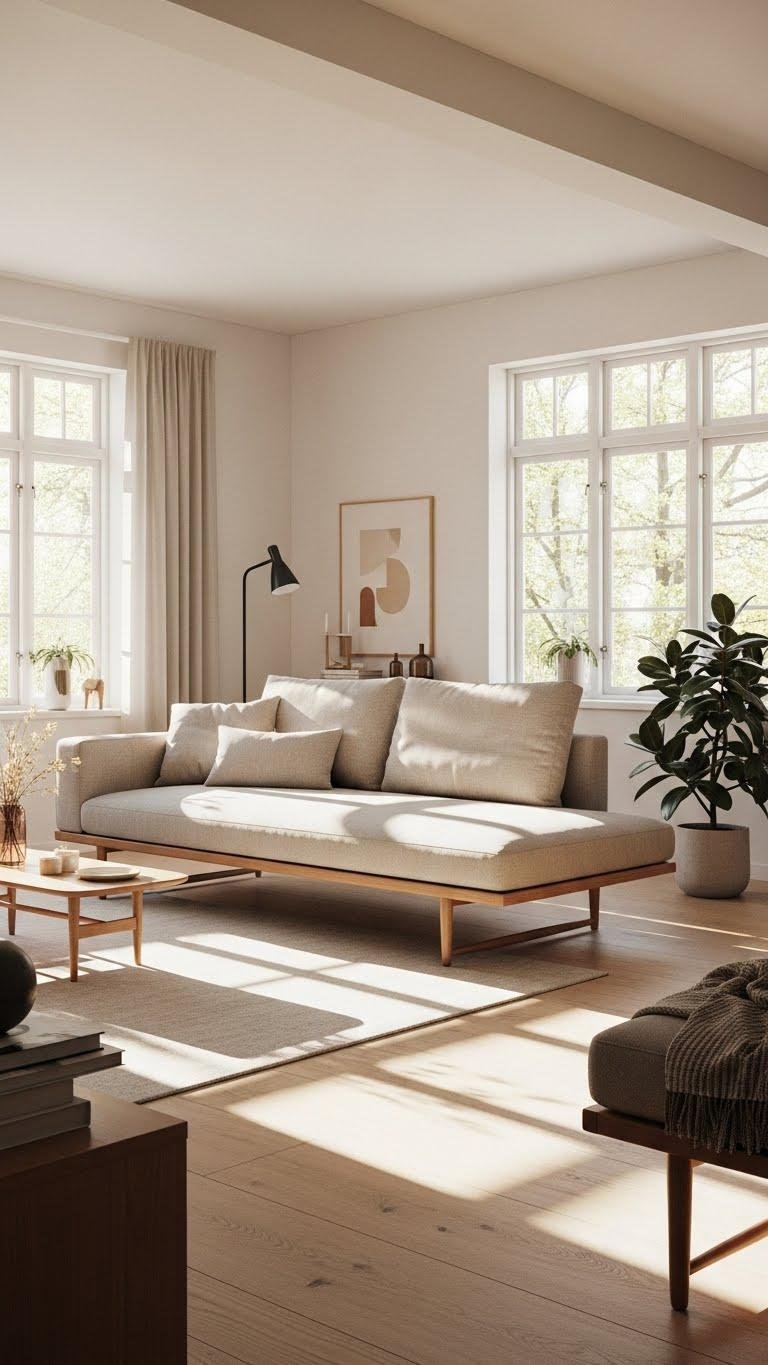
Pick a low-profile sofa with exposed legs to instantly open sightlines and keep your small living room feeling airy. Choose a low profile chaise or a streamlined mid century silhouette in neutral fabric to extend visual space. Raised legs let light pass beneath, creating freedom and flow. Pair with minimal cushions and clean lines so the room reads spacious and purposeful.
Select Leggy, Slim-Profile Chairs and Tables

After you’ve opened sightlines with a low-profile sofa, keep that airy feeling by choosing leggy, slim-profile chairs and tables that echo the same visual lightness.
You’ll favor slim legged armchairs and delicate side tables with metal or tapered wood legs; they lift the room, create flow, and let light pass. Pick muted upholstery and slim silhouettes to maintain openness and freedom.
Use Sectional or Bench Seating to Streamline Seating
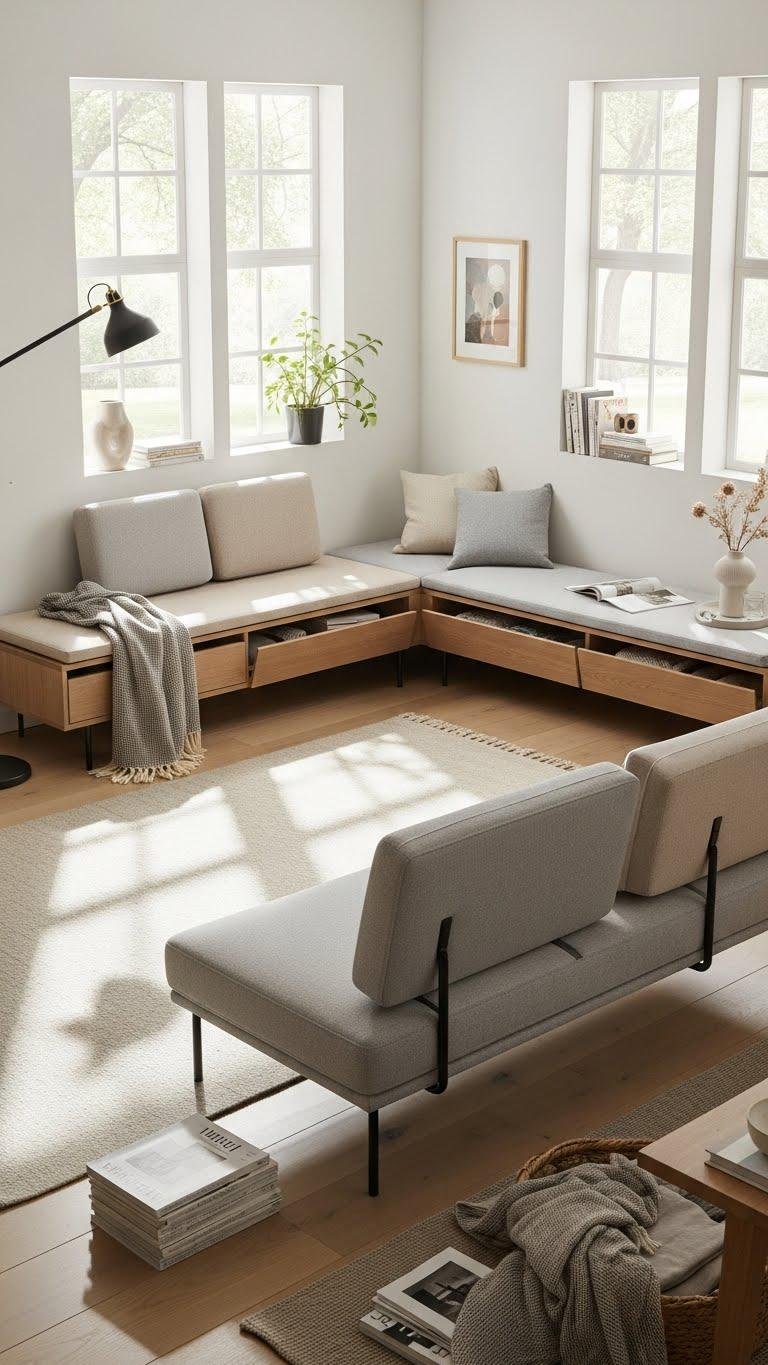
Streamline seating with a compact sectional or a long bench to maximize capacity without breaking sightlines — sectionals hug corners and define zones, while benches slide under windows or tables and tuck away when you need open floor. Choose slim-profile compact sectionals in neutral tones, add low backs to keep sightlines, and pick benches with bench storage to stash throws, shoes, or magazines for a liberated, airy feel.
Pick Floating and Wall-Mounted Furniture Pieces

Several pieces of floating or wall-mounted furniture can instantly free floor space and sharpen a room’s lines — think slim consoles, floating shelves, and wall-mounted media units that keep clutter off the floor and preserve sightlines.
Choose floating desks for a breezy workstation, wall mounted consoles for streamlined storage, and slender shelving to display essentials. You’ll feel liberated and visually lighter.
Maintain Clear Pathways and Unobstructed Traffic Flow
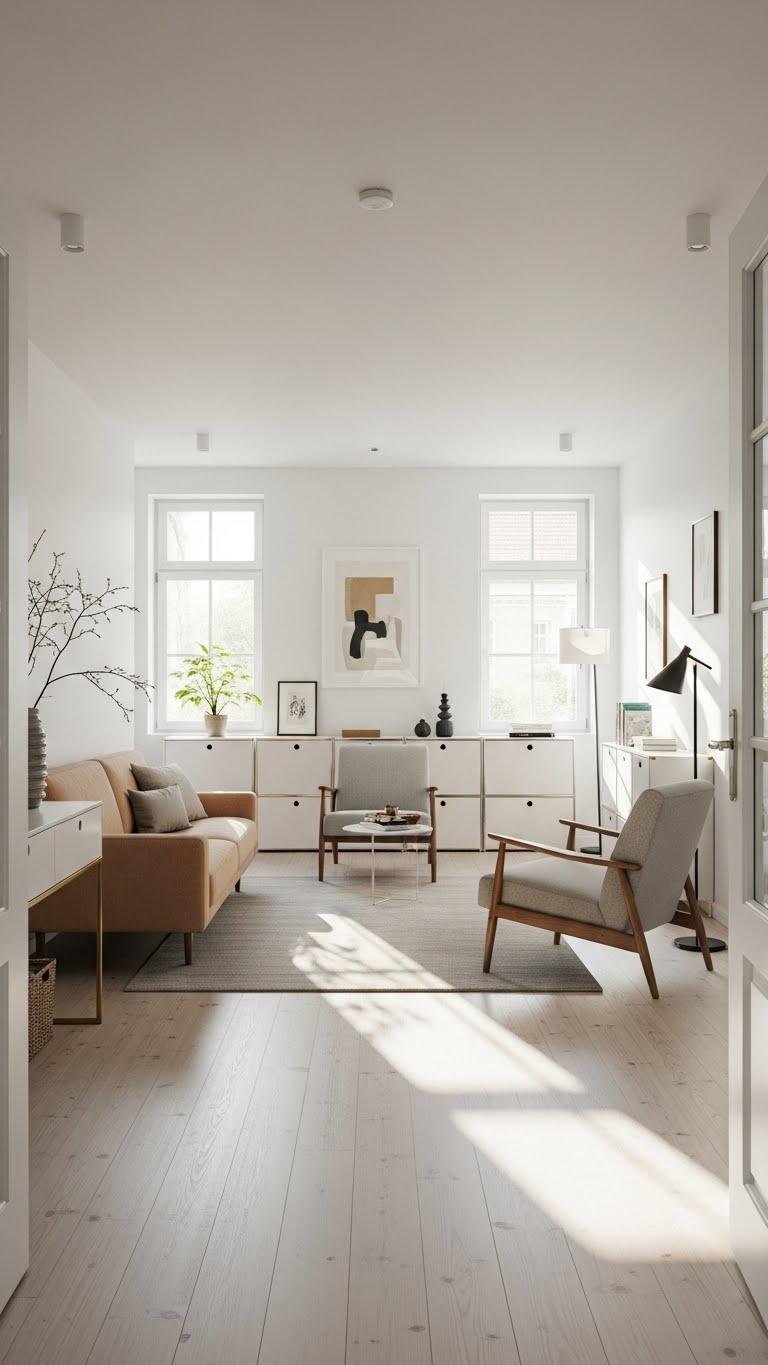
When you design a small living room, keep pathways clear so movement feels effortless and the space reads larger; arrange seating and storage to create unobstructed sightlines from entry points and between key zones.
Prioritize clear sightlines and unobstructed thresholds by trimming visual clutter, choosing low-profile pieces, and aligning rugs and lighting to guide flow so you move freely and spaces feel open.
Float Furniture Away From Walls to Create Depth

Though it might feel counterintuitive, pulling furniture a few inches off the walls instantly adds depth and makes your small living room feel layered rather than boxed in.
Float a loveseat or console to create sightlines, pair with floating curtains to lift the ceiling, and hang illusion artwork to expand visual space. You’ll craft an airy, rebellious layout that feels open and free.
Anchor Zones With Appropriately Scaled Rugs

If you want your small living room to feel intentional, anchor each seating zone with a rug that’s scaled to the furniture—either large enough for all front legs to sit on or just big enough for the front legs of key pieces—so the space reads as cohesive rather than chopped up. Mix layered rugs for texture, lean into rounded rugs to soften corners, and keep palettes light for airy movement.
Limit Focal Points and Simplify Visual Interest

You’ve anchored zones with rugs so the room reads cohesive; now pare down what competes for attention. Choose a single focal piece—art, light, or sofa—and let surrounding elements practice visual restraint.
Limit patterns, colors, and decorative objects so sightlines breathe. You’ll create a calmer, bolder small living room that feels spacious and free, where each item earns presence without clutter.
Install Tall Shelving and Vertical Bookcases
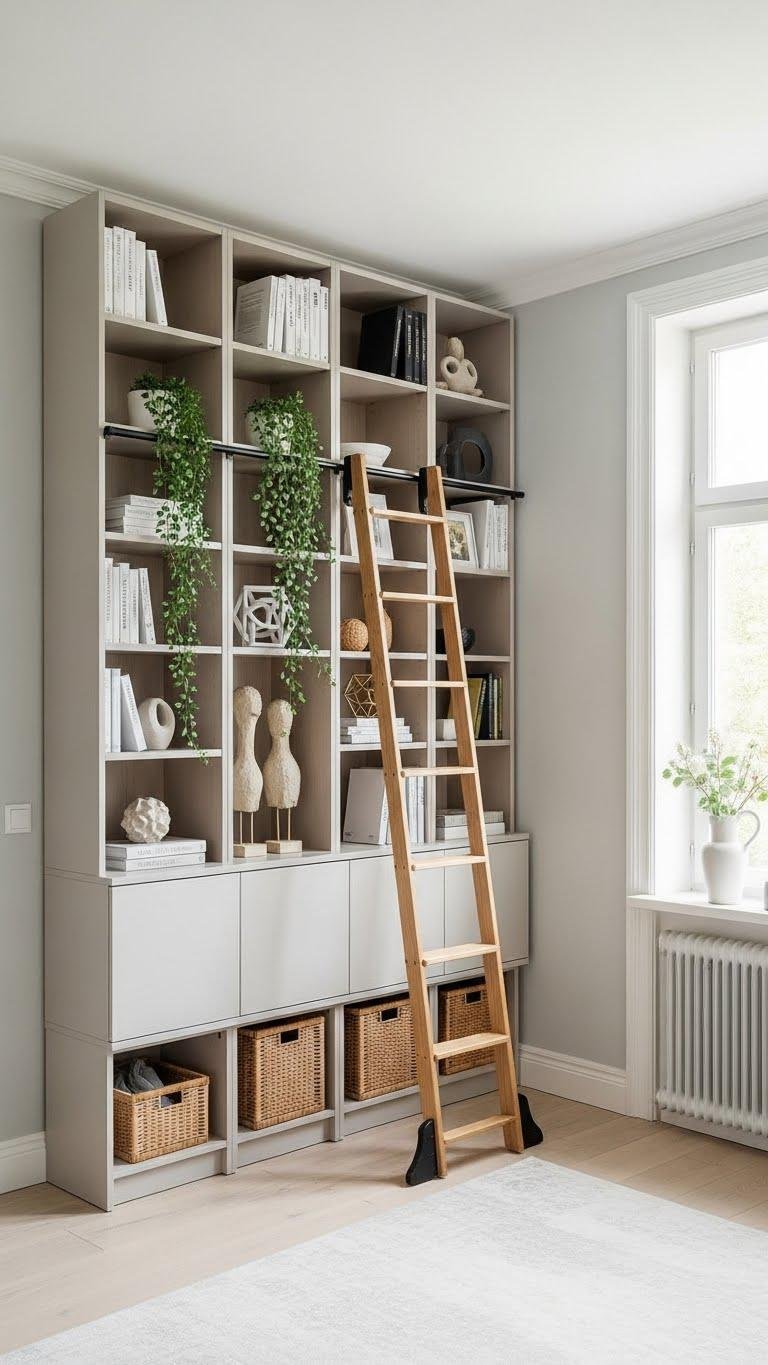
When you stack storage vertically, you reclaim floor space and draw the eye upward—making a small living room feel taller and more intentional.
Choose tall shelving or slender bookcases, mix open and closed storage, and add a vertical garden for life without clutter. Use narrow ladders as display rails or access tools, keeping lines clean, airy, and effortlessly free.
Hang Curtains Close to the Ceiling to Lengthen Windows

Tall shelving pulls the eye up; so do curtains hung close to the ceiling—raising the rod visually lengthens windows and makes the whole room feel brighter and more spacious. You’ll choose drapery hardware and precise rod placement to maximize height. Opt for airy patterned panels or solid tones, add thermal lining for comfort, and let curtains create an open, liberated atmosphere without clutter.
Use Floor-To-Ceiling Narrow Storage Solutions
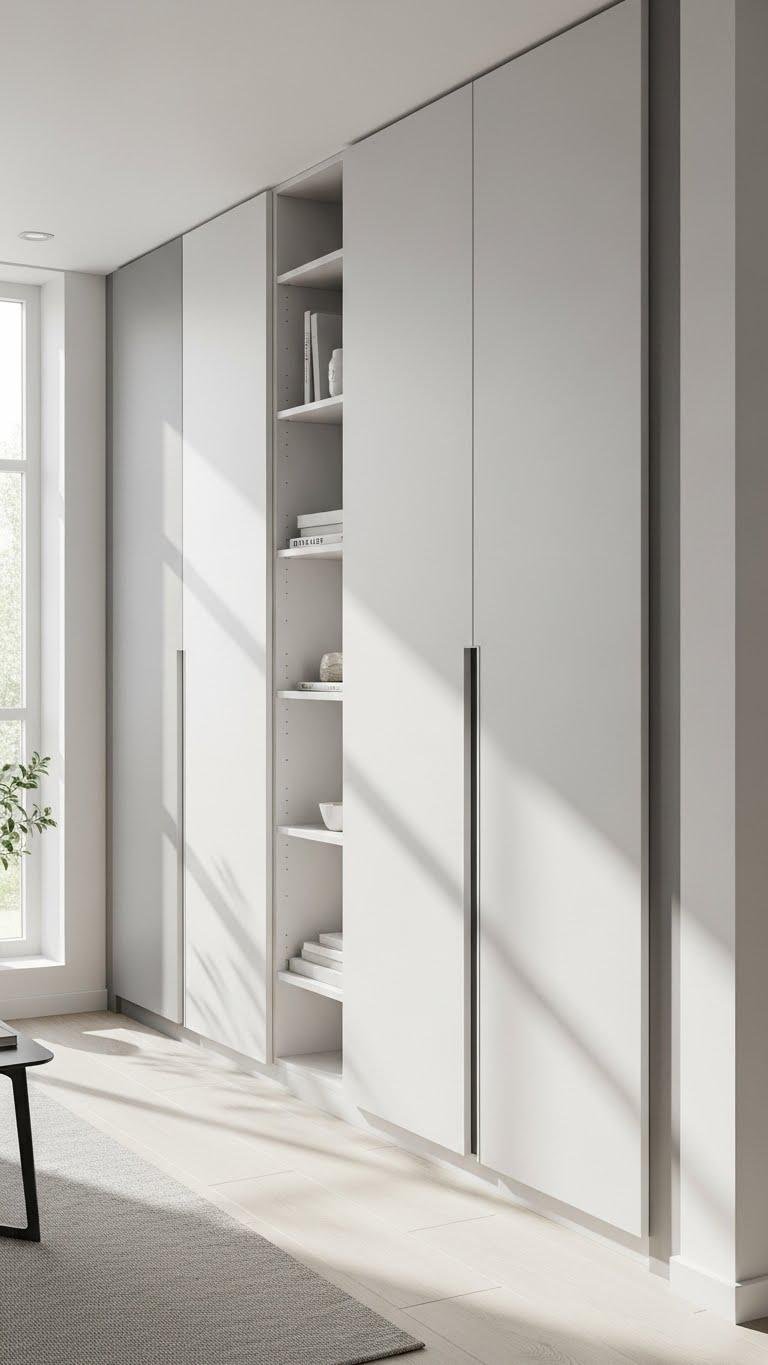
If you want to maximize vertical space in a small living room, install narrow floor-to-ceiling storage that hugs the wall and keeps sightlines open. Choose sleek vertical cabinetry and slim shelving to store gear without bulk. You’ll gain freedom to move, edit decor, and keep surfaces clear. Think narrow closets with shallow doors, matte finishes, and hidden pulls for a modern, airy look.
Place Tall Plants and Floor Lamps in Corners

Because corners naturally fall into shadow, you can anchor a small living room by placing a tall plant or a slim floor lamp there to add height and light without crowding the center.
Embrace vertical plantings for sculptural greenery and choose slim-profile lamps with corner uplighting to open sightlines, keep floors clear, and give the space an airy, liberated feel.
Layer Ambient, Task, and Accent Lighting
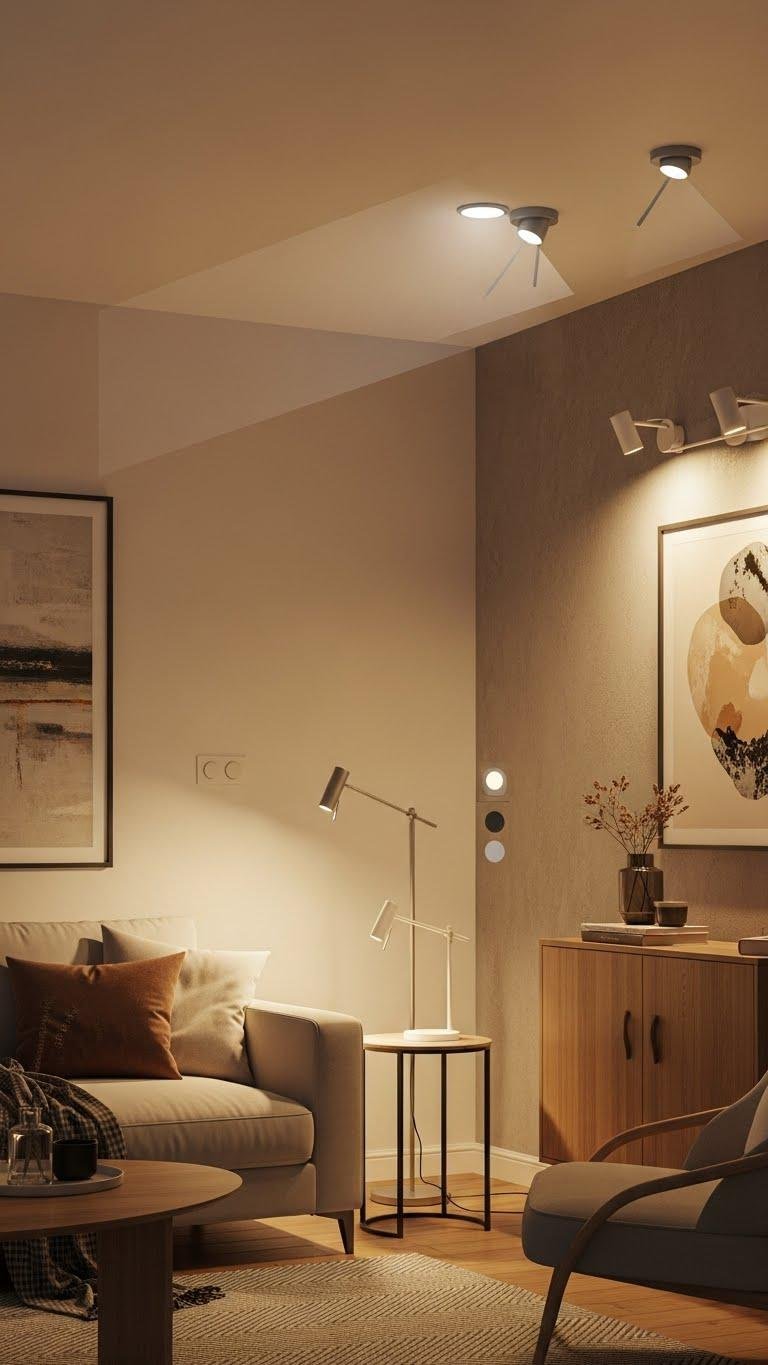
You’ve already used vertical elements and corner lighting to open the room; now think about lighting in layers so every activity and mood gets its own glow.
Combine ambient, task, and accent sources with fixture layering and layered dimmers to control brightness and vibe.
Choose slim-profile fixtures, adjustable reading lamps, and focused accent spots to keep sightlines clean and freedom to rearrange.
Use Recessed or Track Lighting to Save Floor Space

Drawing the eye upward, recessed and track lighting free up floors and keep sightlines clean while giving you precise control over illumination. You’ll love how linear tracks and directional fixtures sculpt space, highlight art or seating, and create zones without bulky lamps.
Choose adjustable beamwidth options and dim to warm drivers so lighting feels liberating, cozy, and perfectly tuned to your mood.
Incorporate Reflective Finishes and Glass Surfaces

When you add mirrors, glass-topped tables, and glossy surfaces, they bounce light and visually double depth so a small living room feels airier and more open. Pick a statement mirror, scatter mirrored trays for styling, and introduce metallic accents like slim lamp bases or picture frames. You’ll create a minimalist, liberated vibe that expands sightlines without clutter or heaviness.
Choose Translucent or Glass-Topped Tables
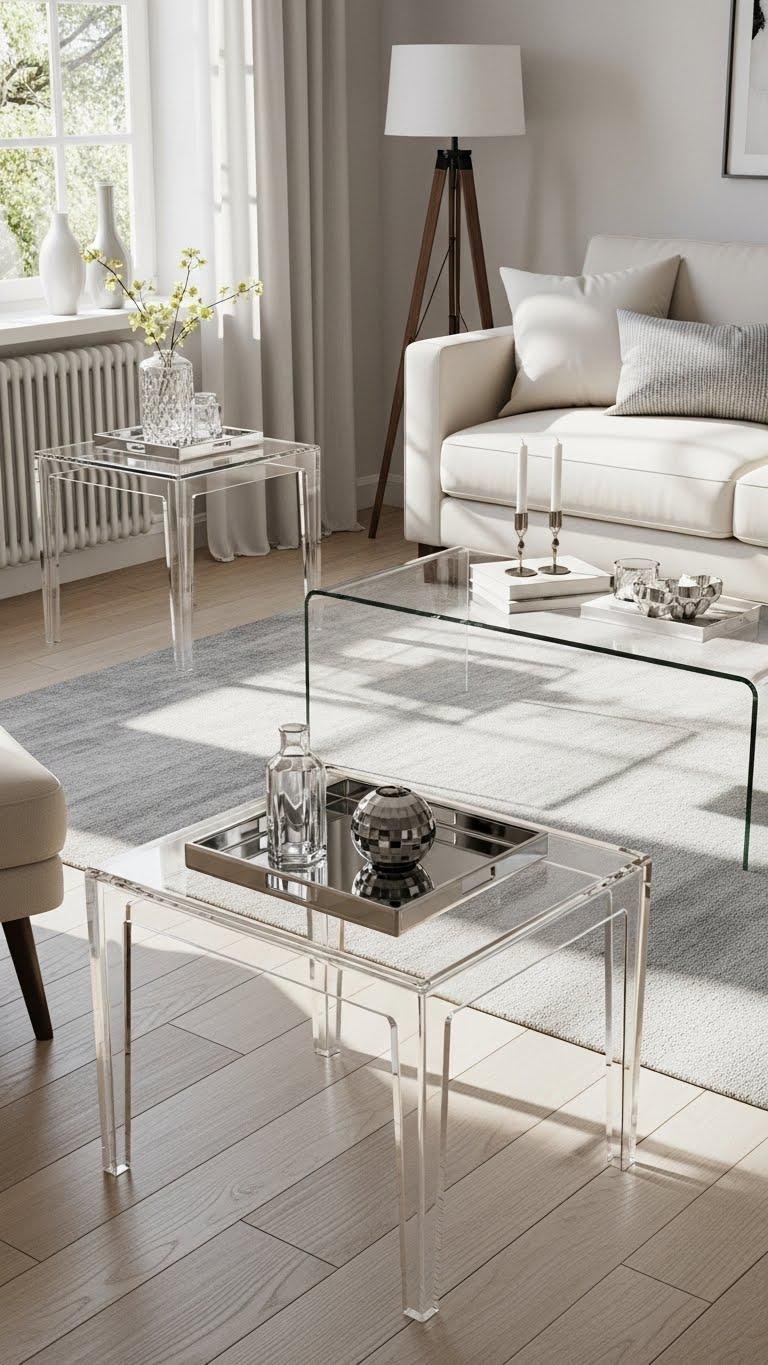
A few well-chosen translucent or glass-topped tables can instantly lighten a small living room by letting sightlines pass through and keeping the floorplan visually open.
Choose clear acrylic side tables or a slim glass coffee table to preserve movement and air. Top them with mirrored trays for sparkle and organization.
You’ll enjoy a free, airy vibe without clutter or visual weight.
Keep a Restrained Palette and Consistent Finishes

Because your eyes land on color first, keep the palette pared back and the finishes matched so the room reads larger and calmer; stick to three main hues (one neutral, one soft accent, one deeper tone) and repeat them across upholstery, rugs, and artwork.
Choose muted metal accents and unified hardware to streamline sightlines. That restraint makes the space feel airy, intentional, and effortlessly free.
Curate Minimal Decorative Objects and Hidden Storage

When you edit what stays, the room instantly feels calmer—keep only a few sculptural pieces that double as moments of texture or color, and hide the rest.
You’ll create curated vignettes that read like art, not clutter.
Choose multipurpose accents and concealed ottomans for storage, then let negative space and balanced scale give you breath and freedom in a small living room.
Integrate Built-In Seating and Under-Furniture Storage
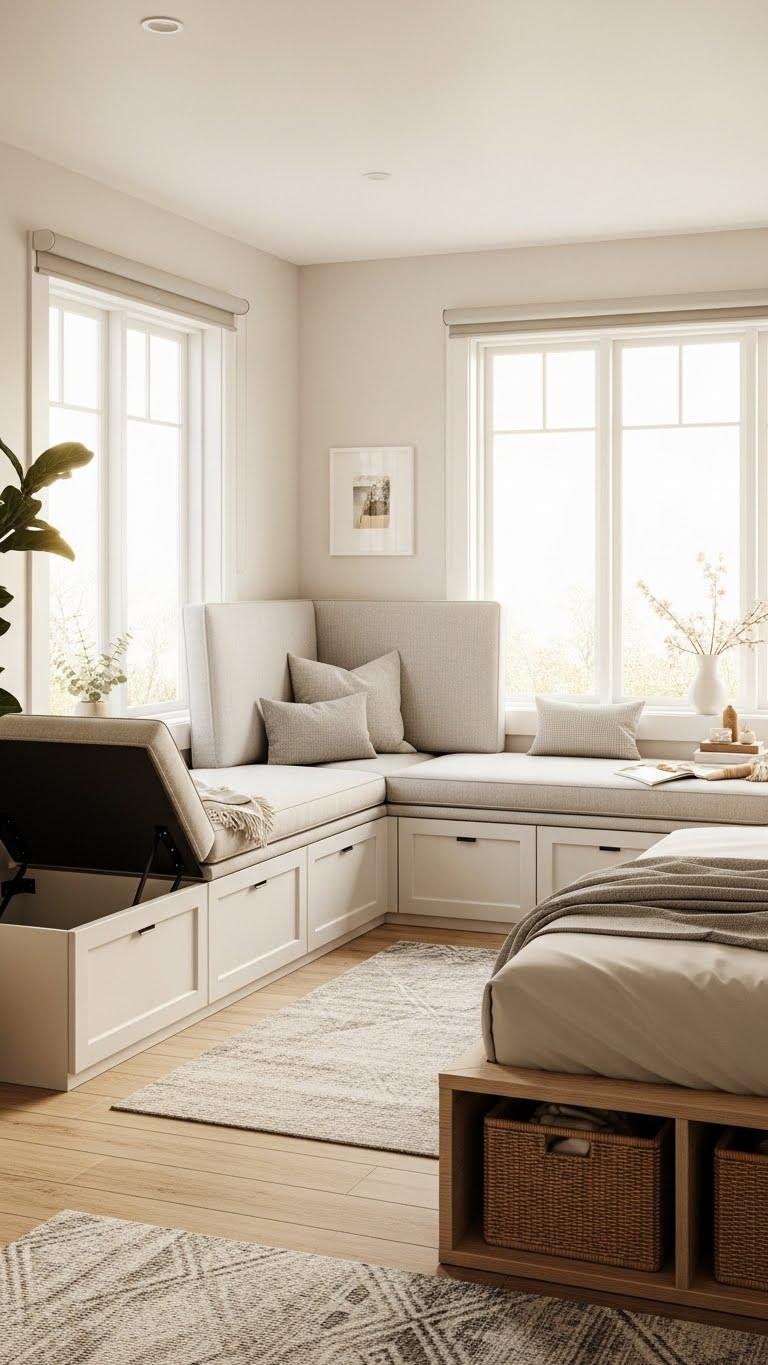
Bring seating and storage together by building them into the room’s bones—bench seating with lift-up lids, window nooks with drawers beneath, or low platforms that tuck baskets underneath.
You’ll choose a built in banquette to anchor the space, add underbed drawers for seasonal linens, and keep lines clean. This feels modern, spacious, and liberating while hiding clutter without sacrificing style.