
You’ll learn simple ways to make shelves feel curated, not cluttered—layer heights, use deliberate gaps, and group objects in threes for quiet rhythm. Think mixed textures (matte ceramics, warm wood, brushed metal), low-contrast color palettes, and a few well-placed plants for life. I’ll show how to anchor clusters with book stacks, use trays for small items, and hint at symmetry so each shelf reads edited and calm—and there’s one trick that transforms everything.
Layered Heights for Instant Depth

Start by arranging objects at varying heights to give your shelves immediate depth and visual rhythm. You’ll mix a varying riser with staggered pedestals, balancing books, ceramics, and sculptures. Keep negative space intentional, let textures breathe, and rotate pieces seasonally. You’ll create a curated, effortless look that feels liberated, modern, and thoughtfully restrained — every shelf a small, expressive landscape.
Asymmetrical Balance With Groupings

After you’ve played with layered heights, move toward asymmetrical balance to make groupings feel deliberate rather than matchy.
Let asymmetrical groupings breathe: pair a tall sculptural object with clustered small pieces, alternating textures and negative space. You’ll create visual rhythm that reads relaxed, not fussy.
Trust instincts, mix vintage and modern, and let imperfect symmetry feel intentional and freeing.
Three-Object Vignettes

When you pare a shelf down to three objects, each piece earns room to breathe and a stronger role in the story you’re telling.
You choose a sculptural vase, a small artisanal bowl, and a framed print, balancing color contrast and texture pairing.
Let negative space amplify intent, mix matte with gloss, and favor bold simplicity so your shelf feels effortless, liberated, and unmistakably curated.
Books Stacked With Object Toppers
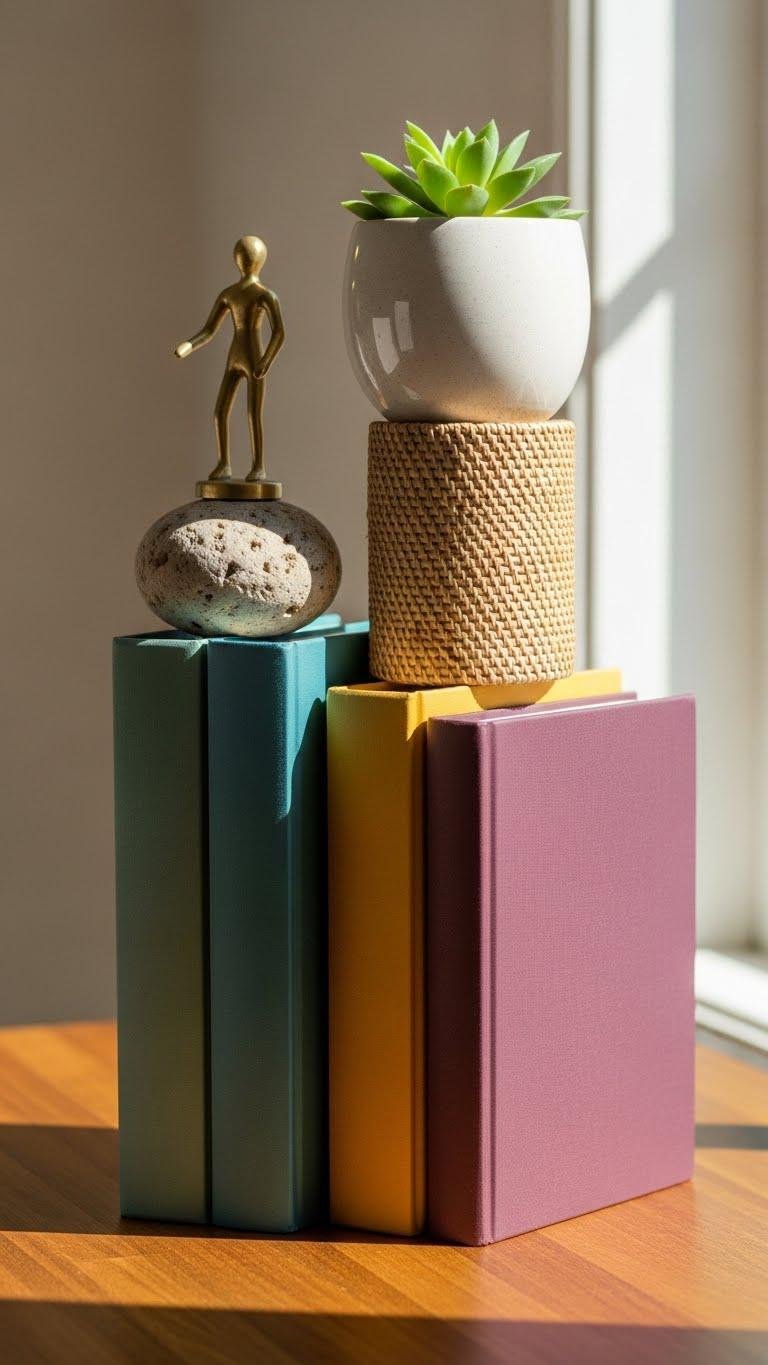
A stack of books becomes a deliberate pedestal when you top it with a single object—think a brass figurine, a small potted succulent, or a textured stone—so the pile reads as both collection and display.
You’ll mix color coordination and tactile contrast, pairing matte covers with glossy ceramic or woven fiber.
Let each topper declare mood; keep lines clean, choices personal, and styling liberated.
Negative Space Shelving

While you might be tempted to fill every shelf, negative space shelving shows the power of restraint: leaving deliberate gaps turns objects into focal points and lets materials, light, and shadow breathe.
You’ll craft breathable displays that feel intentional, using scale and texture to cue shelf breathing. Embrace airy arrangements, edit ruthlessly, and let emptiness grant you freedom and refined visual calm.
Grounding With Baskets and Boxes

Texture and structure anchor your shelves—use woven baskets and matte boxes to give airy arrangements weight and purpose.
You’ll balance open displays with woven bins for corralled clutter and neutral boxes for hidden essentials, keeping lines calm and intentional. Pick natural fibers, soft tones, and varied heights so each piece breathes. You’ll create a liberated, curated look that still feels orderly and lived-in.
Mix of Vertical and Horizontal Books

Layer books vertically and horizontally to build rhythm and visual interest across your shelves. You’ll mix stacked spines with neat vertical alternation, creating pockets of calm and movement. Place a horizontal pile as a pedestal for art or a plant, then balance with upright volumes. This approach feels modern and free, letting you edit quickly while keeping every shelf intentional and airy.
Pyramid Arrangements for Focus

When you arrange objects in a pyramid on a shelf, you create a clear focal point that guides the eye and anchors the composition. You’ll place taller pieces at the back, smaller in front, crafting a triangular silhouette that feels intentional.
Use a bold object as the center focalpoint, balance texture and negative space, and let the arrangement breathe for a liberated, curated look.
Repeating Shapes Across Shelves
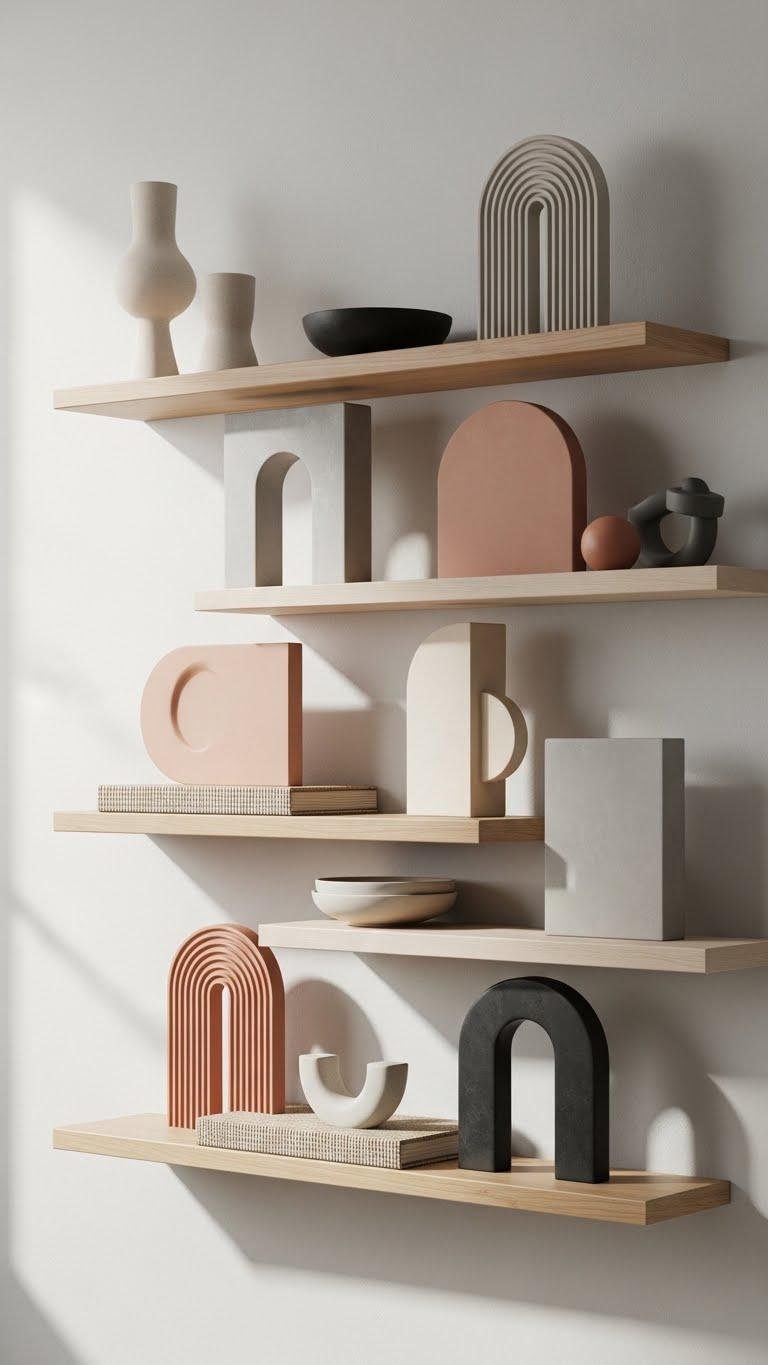
Often, you’ll repeat a simple shape—like a circle, rectangle, or arch—across multiple shelves to create a quiet rhythm that ties disparate objects together.
You’ll lean into matching silhouettes and repeated motifs, mixing textures and scale so each shelf breathes.
The effect feels curated, modern, and liberating—allowing you to play with negative space while keeping the composition harmonious and purposeful.
Single Statement Piece Per Shelf

Let a single, carefully chosen object claim each shelf and everything else will fall into place: you’ll give the eye a deliberate focal point, a sculptural pause that defines the rhythm of the wall.
Choose oversized artwork or a minimalist sculpture to anchor the space; let negative space breathe, let textures whisper, and let your shelves feel curated, free, and confidently edited.
Plants for Texture and Life

Because greenery brings both texture and life to a shelf, choose plants that read like living decor—think trailing pothos for soft movement, sculptural snake plants for vertical rhythm, and feathery asparagus fern for delicate contrast.
Let air purifying varieties sit where light favors them; use trailing vines to soften edges, layer pots with raw ceramics, and arrange freely so each plant breathes without clutter.
Evenly Distributed Visual Weight

When you arrange items on a shelf, think of visual weight like a scale and aim to balance it across the composition so your eye moves easily from one point to the next.
You’ll distribute visual mass by varying object size, texture, and negative space, keeping color balance across groupings.
Trust your instincts, edit boldly, and let curated asymmetry feel freeing yet composed.
Minimalist Monochrome Styling
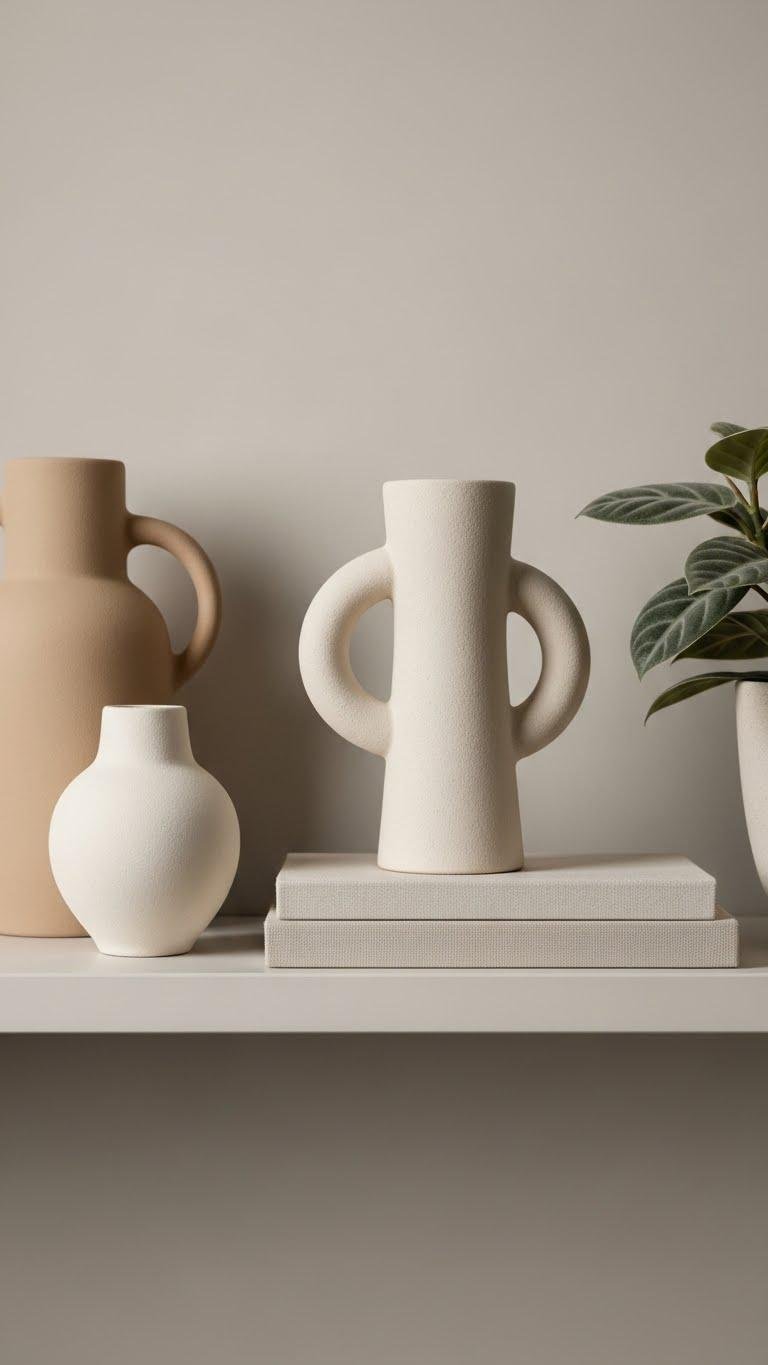
After balancing visual weight across objects, pare everything back to a single hue and watch how form, texture, and negative space start to sing.
You’ll choose a neutral palette, letting sculptural ceramics, books, and plants read as one cohesive statement.
Emphasize tonal textures—matte, linen, soft grain—to create calm contrast.
This minimalist monochrome styling frees the shelf to breathe and feel deliberate.
Color-Blocked Book Sections

Think of your books as pigments on a shelf and arrange them by color to create instant, graphic impact. You’ll group volumes into color-blocked sections, honoring ombre spines and subtle tonal gradients for a curated flow. Mix heights and textures within each block, leave breathing room between clusters, and let bold hues read like artworks—organized, liberated, and effortlessly modern.
Sculptures Framed by Books
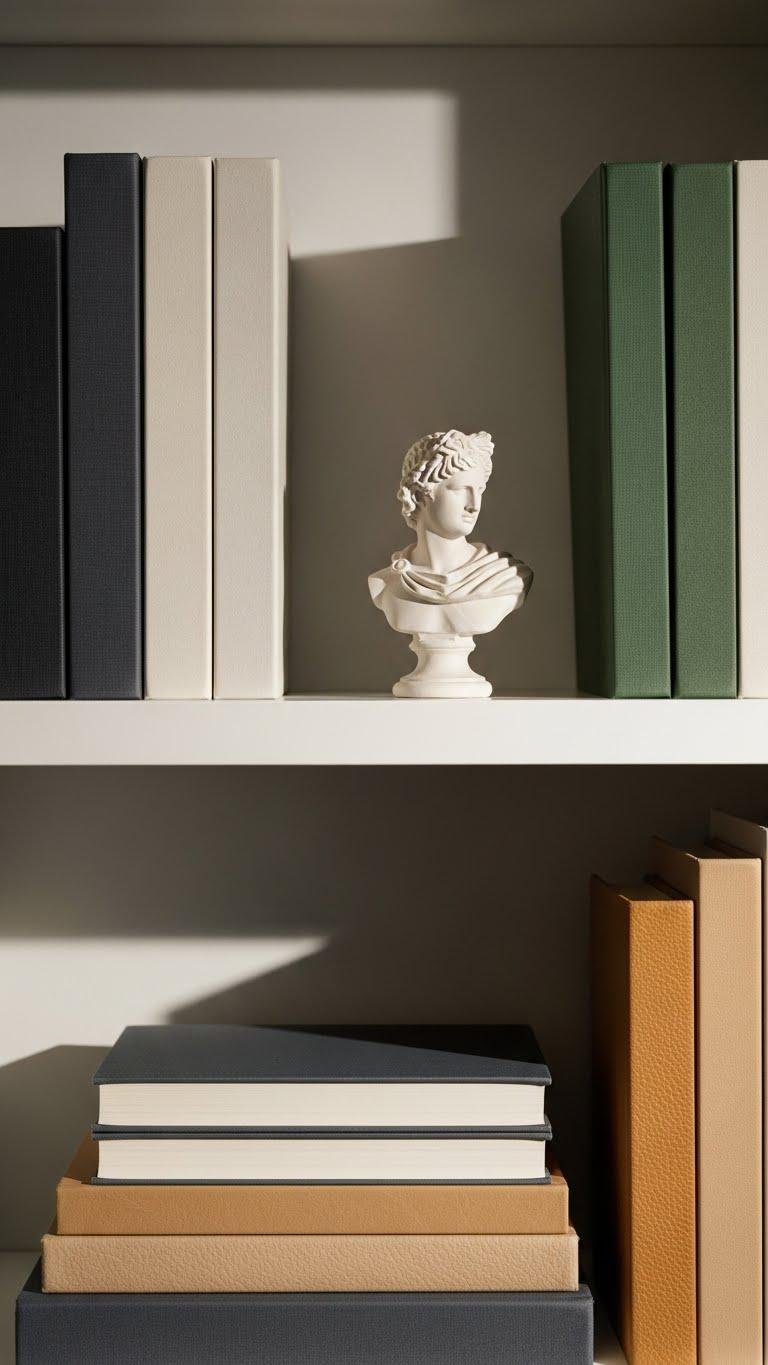
Balance elevates a shelf from storage to gallery: flank a small sculpture with vertical stacks or low horizontal piles of books to create a deliberate frame that guides the eye.
You’ll place miniature busts center stage, using hardcover framing for contrast and rhythm. Keep negative space, vary heights, and choose tactile covers so the composition feels curated, modern, and effortlessly free.
Layered Art Leaning Behind Objects

Lean a mix of framed prints and unframed canvases behind objects to create depth and a lived-in gallery feel that’s quietly intentional. You’ll use leaning layers to form subtle movement, positioning taller pieces slightly off-center and smaller works overlapping.
Let art anchors — a bold frame or sculptural bookend — stabilize the vignette, so your shelf reads curated, airy, and free rather than staged.
Odd-Numbered Cluster Strategy
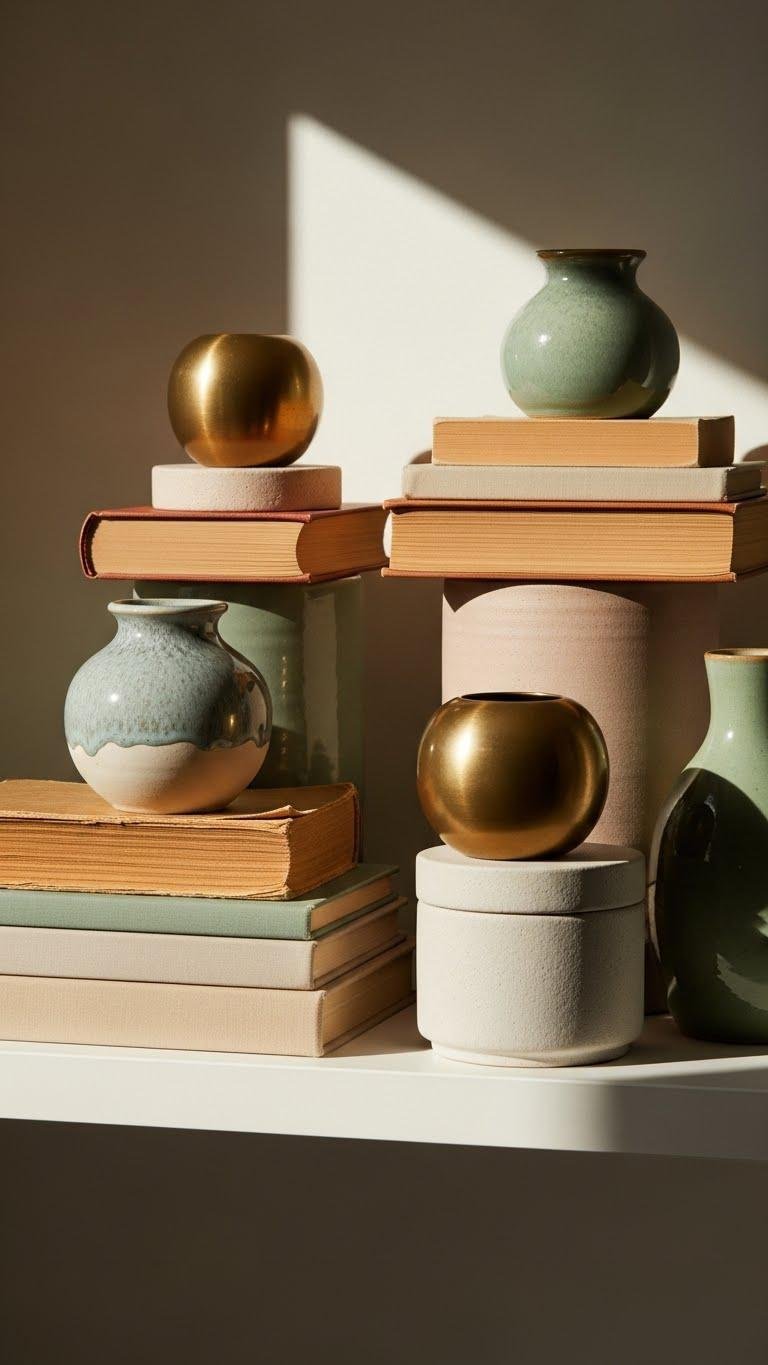
Three is a magic number on a shelf: group objects in odd-numbered clusters to create visual rhythm that feels natural, not forced. You’ll arrange odd clusters with intent—vary heights, textures, and color chords so each trio sings. Embrace layered oddities: stack a small book, a brass object, and a ceramic for effortless, breezy composition that reads curated, liberated, and modern.
Alternating Full and Grouped Shelves

Shake up your shelving rhythm by alternating fully dressed shelves with more relaxed, grouped ones—this contrast gives the eye a place to rest and a place to linger. You’ll create an alternating rhythm that feels intentional, airy, and modern. Balance scale, texture, and negative space to establish a confident visual cadence; curate pieces that reflect your freedom and invite lingering without clutter.
Low-Lying Objects on Top of Book Stacks
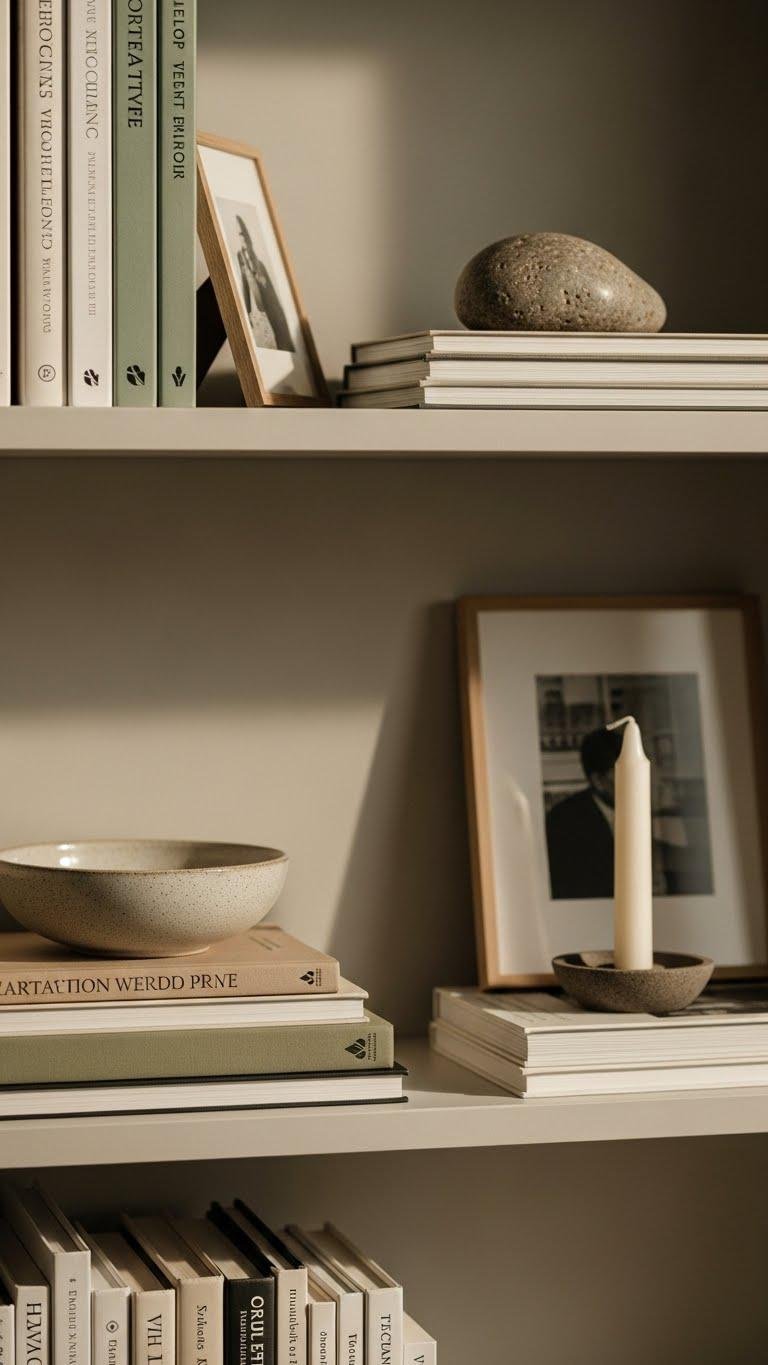
After alternating full and airy shelves, bring your attention down to small vignettes: low-lying objects perched on stacked books instantly anchor a shelf while keeping the overall look light. You’ll layer low profile ceramics, a sculptural paperweight, or a single candle on slim stacks, then tuck flat photo frames sideways for intimacy. Keep scales modest, textures varied, and placement effortless.
Open Space Around Focal Items
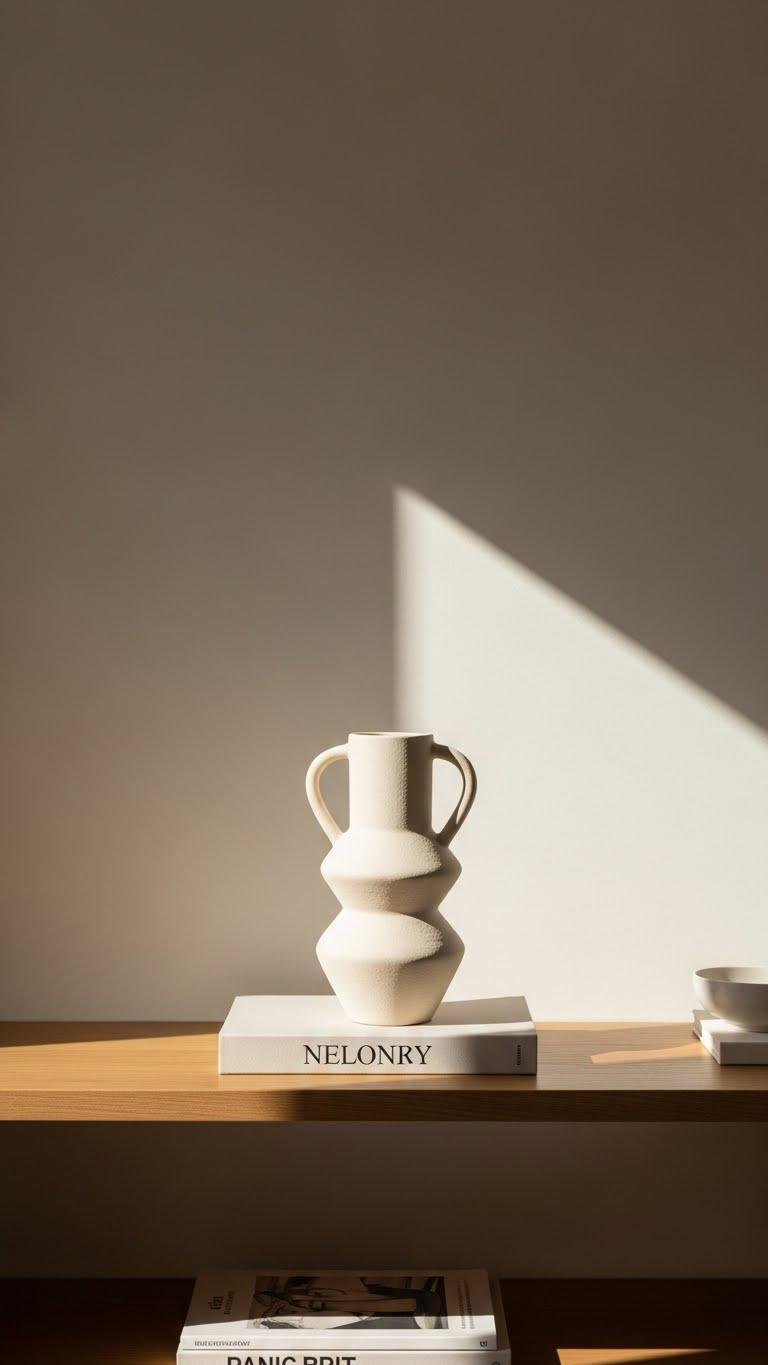
When you give a focal object breathing room, it reads as intentional rather than cluttered—let a sculptural vase, framed print, or tactile ceramic sit with clear space on all sides so light and shadow can shape it.
You’ll favor breathing space and deliberate focal clearance, choosing one standout piece per shelf, editing surrounding items so the arrangement feels airy, confident, and effortlessly free.
Tall Items Flanked by Short Accents
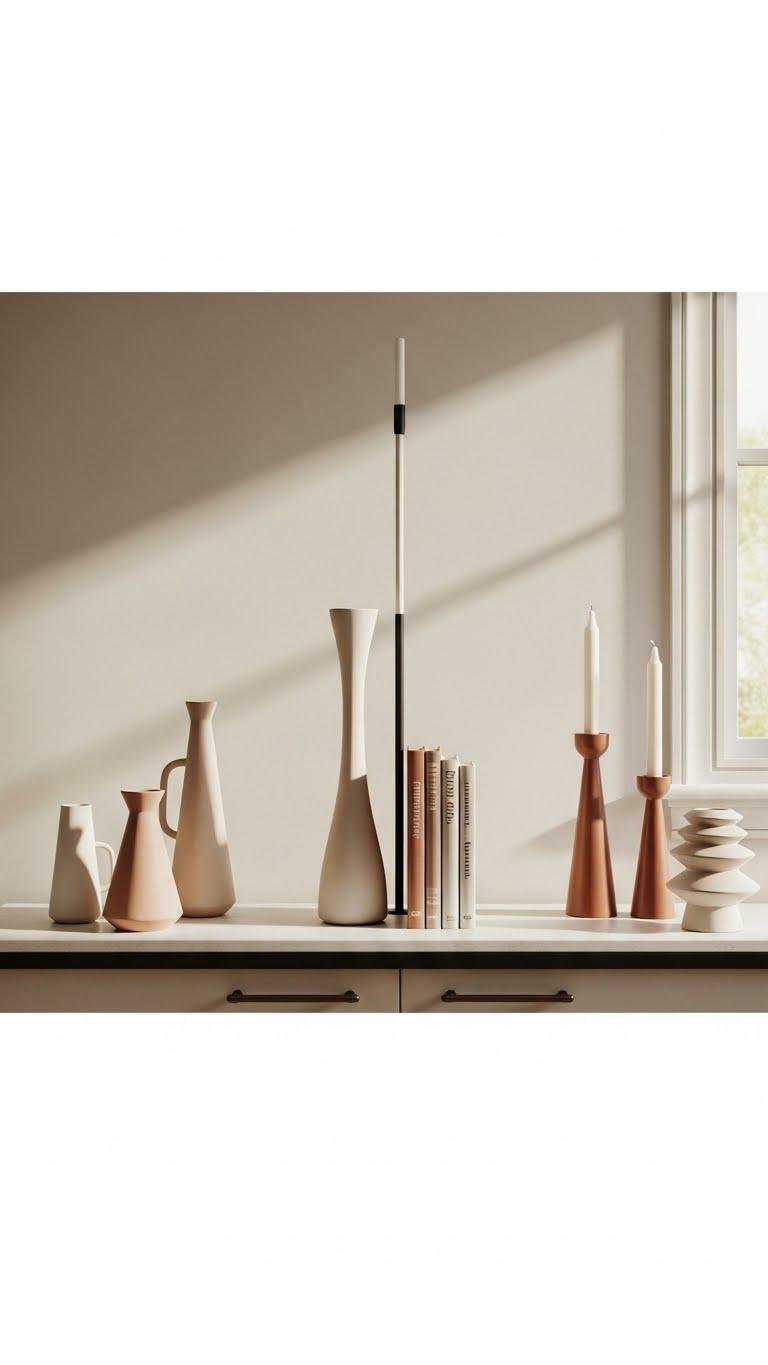
If you’ve given a single object room to breathe, keep that calm by balancing height with smaller companions: place a tall lamp, sculptural vase, or stacked book column in the center or slightly off-center, then anchor it with low-profile accents on either side. You’ll pair tapered vases or tiered candlesticks as counterpoints, mixing rhythm and negative space so each piece feels intentional and free.
Warm Metals and Natural Textures Mix

Layer warm metals like aged brass or brushed copper among raw materials—woven rattan, hand-thrown clay, and weathered wood—to give your shelves depth and a lived-in luxe feeling. You’ll balance warm brass accents with jute texture, letting patina meet soft fibers. Mix sculptural vessels and slim frames, keep negative space, and let each element breathe so your styling feels free, curated, and effortlessly modern.
Curated Collections in Trays

Corral small treasures in shallow trays to give each vignette a clear, deliberate home—think a matte ceramic tray holding a trio of carved wooden beads, a tiny brass spoon, and a coin-edge matchbox. You’ll pick a mini tray that anchors curated themes — botanical, travel, or found-object — arranging scale, texture, and negative space so each small collection reads as intentional, free, and artful.
Offset Mirror or Small Frame Styling

When you tuck a small mirror or an off-center frame into a shelf vignette, it instantly multiplies depth and personality—reflecting light, glimpses of other objects, or a sliver of wall color to create a dynamic pause among books and ceramics. You’ll use offset reflections and petite frames to punctuate rhythm, catch stray sunlight, and invite playful angles without feeling precious or constrained.
Layered Heights Within a Single Shelf

Although a single shelf may look simple, stacking objects at varied heights creates a miniature skyline that guides the eye and keeps the vignette lively. You’ll mix varying pedestals and staggered risers—books, sculptures, and plants—so each piece breathes. Choose contrasts in scale and texture, let negative space sing, and arrange freely; the result feels curated, airy, and confidently modern without looking cluttered.
Keep Heavy Pieces on Lower Shelves
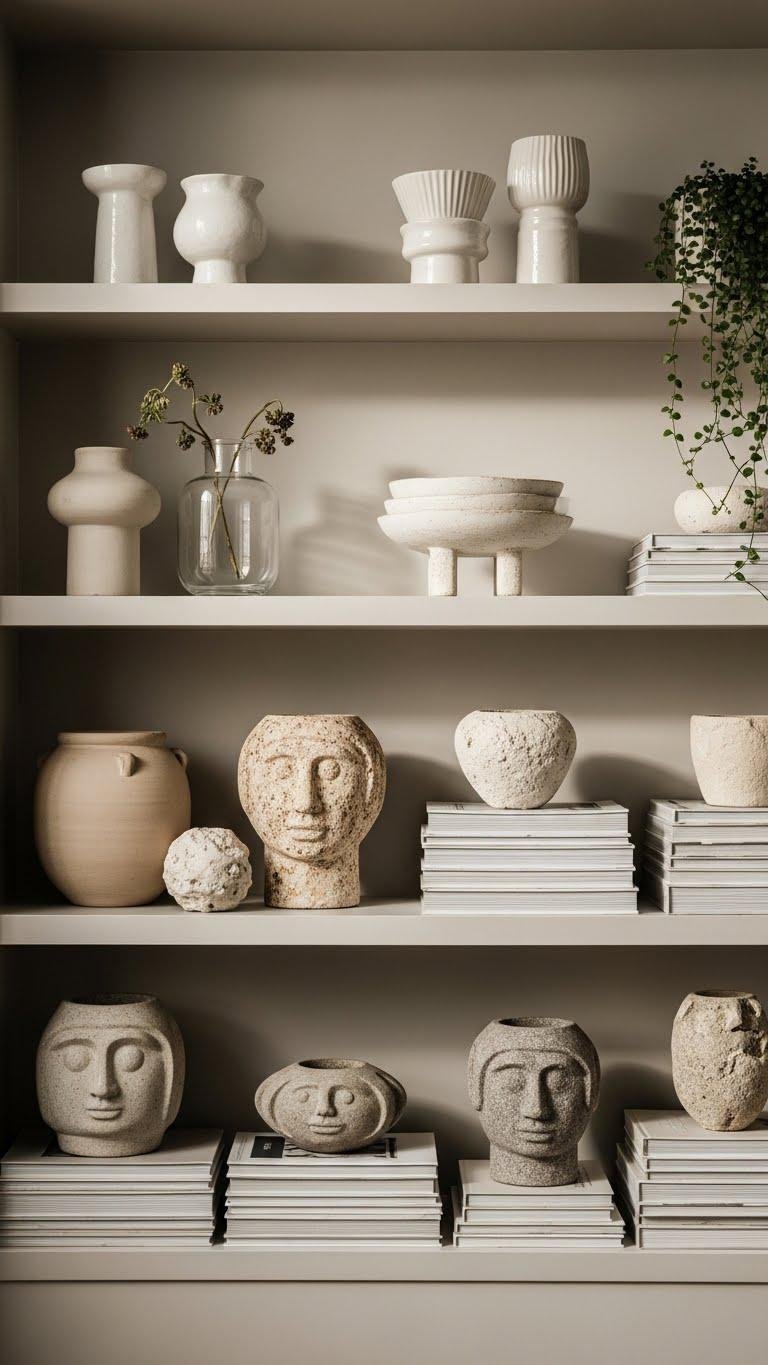
Because weight anchors a vignette as much as color or texture, place bulky ceramics, stone objects, and stacks of books on lower shelves so your display feels grounded and intentional. You’ll create a weighted lower plane that forms a stable foundation, letting lighter, playful pieces float above. This balance looks curated, modern, and liberating, so you can edit freely without chaos.
Symmetry Hinted, Not Enforced

If you lean into symmetry as a guiding line rather than a rule, your shelves will feel composed without looking staged.
You’ll nudge arrangements toward mirrored balance—pair similar heights, echo shapes—while letting one side deviate. Use subtle repetition of color or texture to tie pieces together, then leave breathing room. That hint of order keeps styling fresh and free, not rigid.
Edit Ruthlessly for Clean Lines
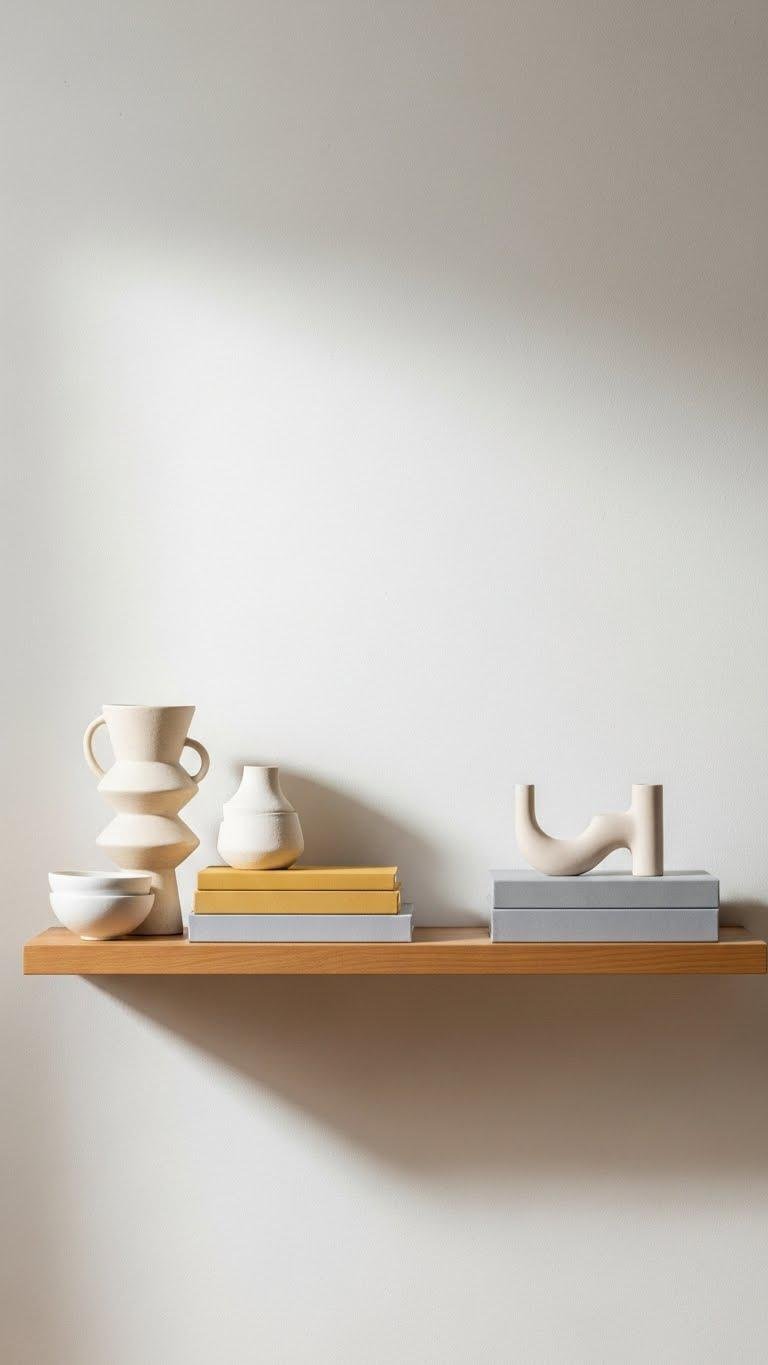
When you edit ruthlessly, you strip each shelf back to essentials so shapes and negative space sing. You choose pieces that breathe, practicing mindful editing to keep intention visible.
Remove excess to erase negative clutter and celebrate clean lines; let lone vases, stacked books, and sculptural objects offer calm. You’ll find freedom in restraint, a curated rhythm that feels effortless and current.