
Start with a warm beige on the walls and layer creams, taupes, and linen textures to build an inviting base. Add tactile contrast—velvet cushions, a rust or mustard sofa, terracotta bowls, and a live-edge coffee table—to create depth without clutter. Use layered lighting, muted-blue accents, and grouped ceramics to keep things calm and collected, then try a few simple swaps that will change the whole room.
Choose a Warm Beige Paint as Your Base
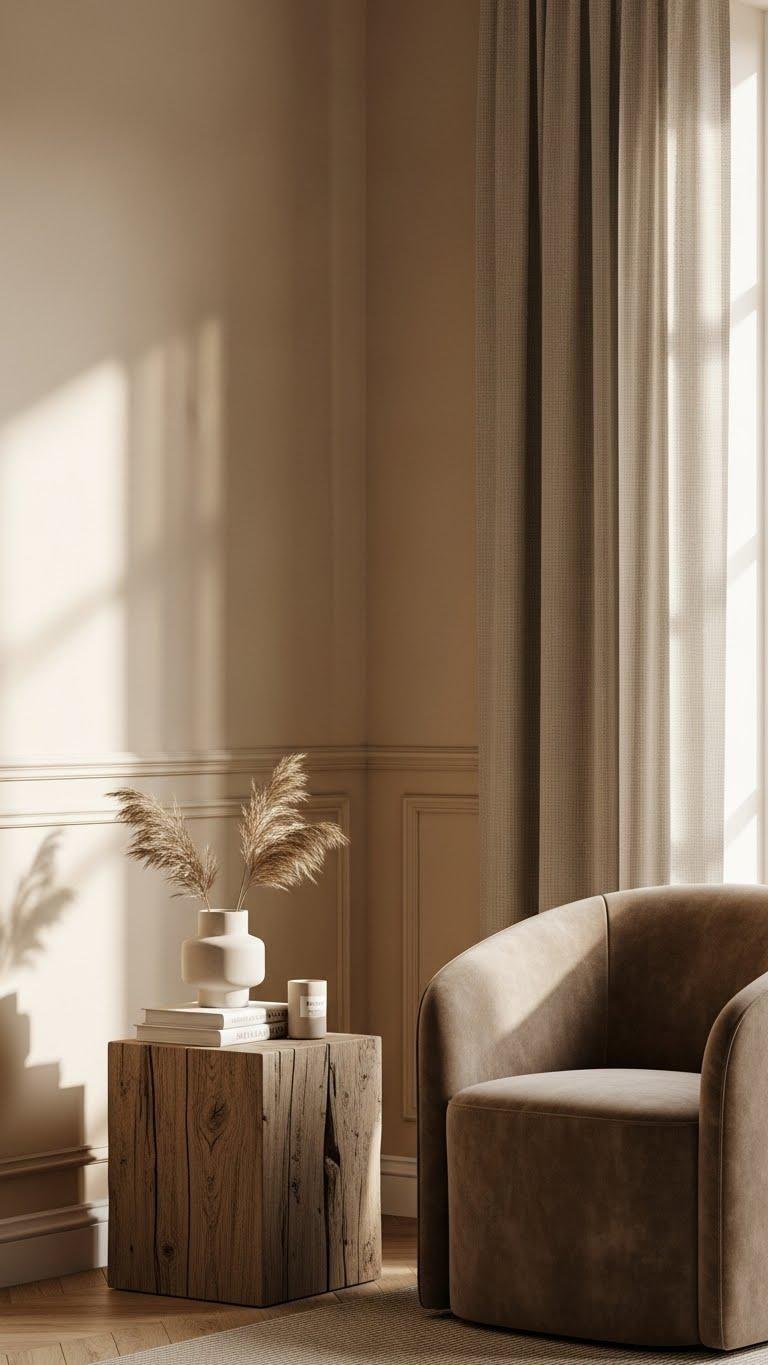
Start with a warm beige as your foundational wall color — it anchors the room without competing with textures or accents.
You’ll choose paint with sun kissed undertones to lift light and keep moods loose.
Pair it with linen, wood, and velvet swatches for tactile contrast.
Balance satin and matte sheens, let natural grain show, and keep trimming minimal so the space feels unchained.
Layer Creamy Whites Instead of Cool Whites

When you layer creamy whites instead of cool whites, the room gains warmth and depth without sacrificing brightness; soft ivories, warm ivies, and antique whites work together to create a subtle tonal map that flatters natural light. You’ll pick fabrics and finishes with creamy undertones—linen, matte plaster, wool—so soft whites read as intentional layers, inviting movement and effortless calm throughout the space.
Add a Rust Orange or Mustard Yellow Sofa
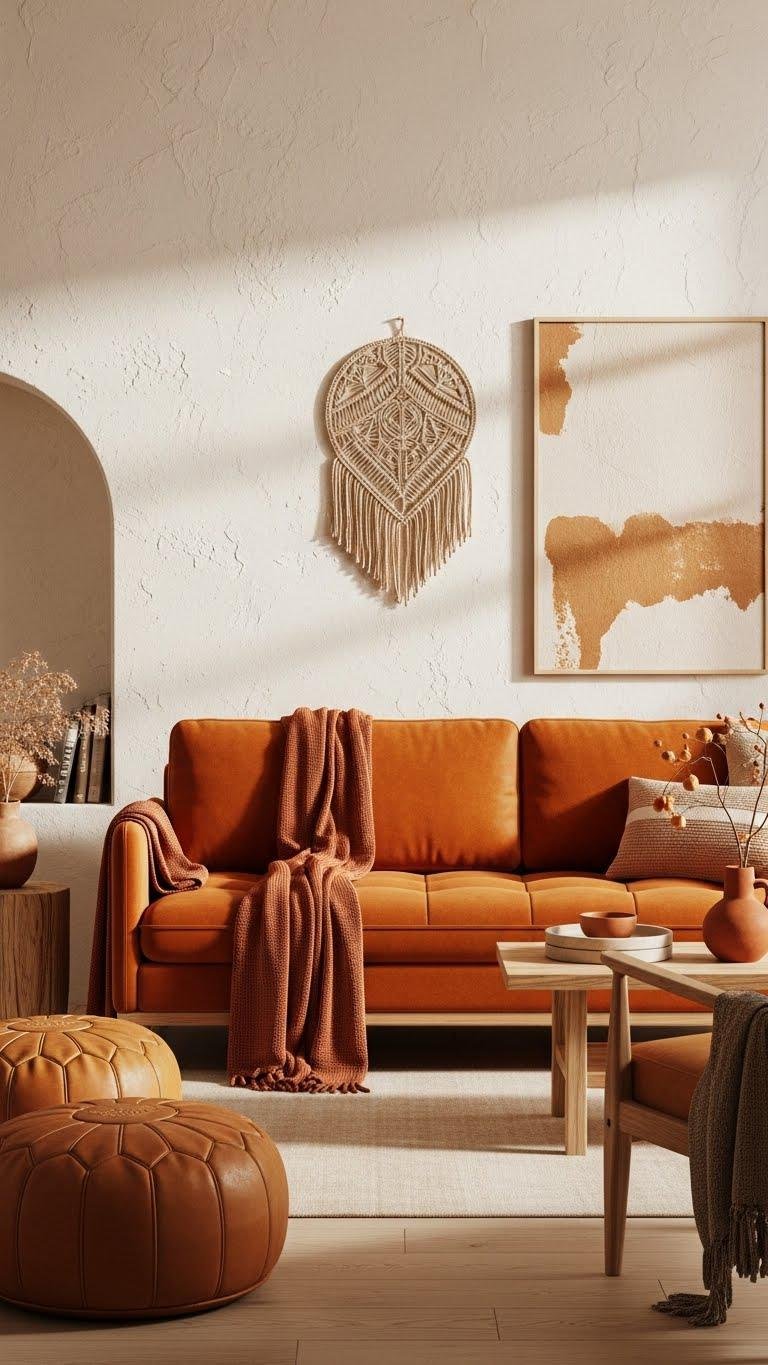
After you’ve layered creamy whites to build a warm, textured backdrop, introduce a rust orange or mustard yellow sofa to anchor the scheme and inject personality.
You’ll choose durable woven or leather upholstery that patinas with use, pair it with terracotta throws for depth and tactile contrast, and balance seating with ochre poufs to keep the room open, inviting, and effortlessly free.
Mix Warm Greige With Pops of Blue and Bronze

Lean into warm greige as a calming base, then lift the palette with carefully placed blue accents and burnished bronze details to create contrast and depth. You’ll layer weathered navy and denim accents—think throw pillows and a textured rug—against cobalt textiles for vibrant focal points. Anchor seating and storage with bronze hardware to add subtle sheen and tactile warmth without overpowering the neutral calm.
Incorporate Natural Wood Furniture Finishes

Bring natural wood finishes into the scheme to warm greige and blue accents with organic texture and grain. Choose pieces with satin finishes to reflect light softly while preserving tactile warmth. Let live edge tables anchor seating areas, pairing raw silhouettes with refined upholstery.
You’ll balance minimalism and freedom by mixing tones, spotlighting joinery, and keeping surfaces uncluttered for a calm, lived-in feel.
Use Buttery-Soft Caramel Leather Accents

Introduce buttery-soft caramel leather to add warmth and tactile contrast to a neutral palette; its honeyed tones sit beautifully between greige walls and soft blue accents, giving the room a lived-in richness without overpowering the calm. You’ll choose antique caramel seating or sleek caramel ottomans to anchor sightlines, invite touch, and age gracefully, letting freedom-driven choices feel intentional and timeless.
Introduce Jute and Rattan Pieces

When you layer jute rugs and rattan furniture into a neutral scheme, they immediately add organic texture and structural warmth without competing with your palette.
Choose a sculptural rattan chair, a woven pendant for soft overhead glow, and a textured pouf for casual seating. You’ll appreciate durable, breathable materials that age beautifully, loosening strict minimalism into relaxed, liberated comfort.
Place a Textured Wool or Linen Area Rug

Built on top of your layered natural pieces, a textured wool or linen area rug anchors the room while adding tactile depth and thermal comfort.
Choose hand knotted or Scandinavian kilim patterns in recycled wool for sustainable charm.
Opt for short pile to keep lines crisp and furniture stable.
Let neutral tones and subtle texture define cozy freedom without visual clutter.
Bring in Stone or Clay Tabletop Accessories
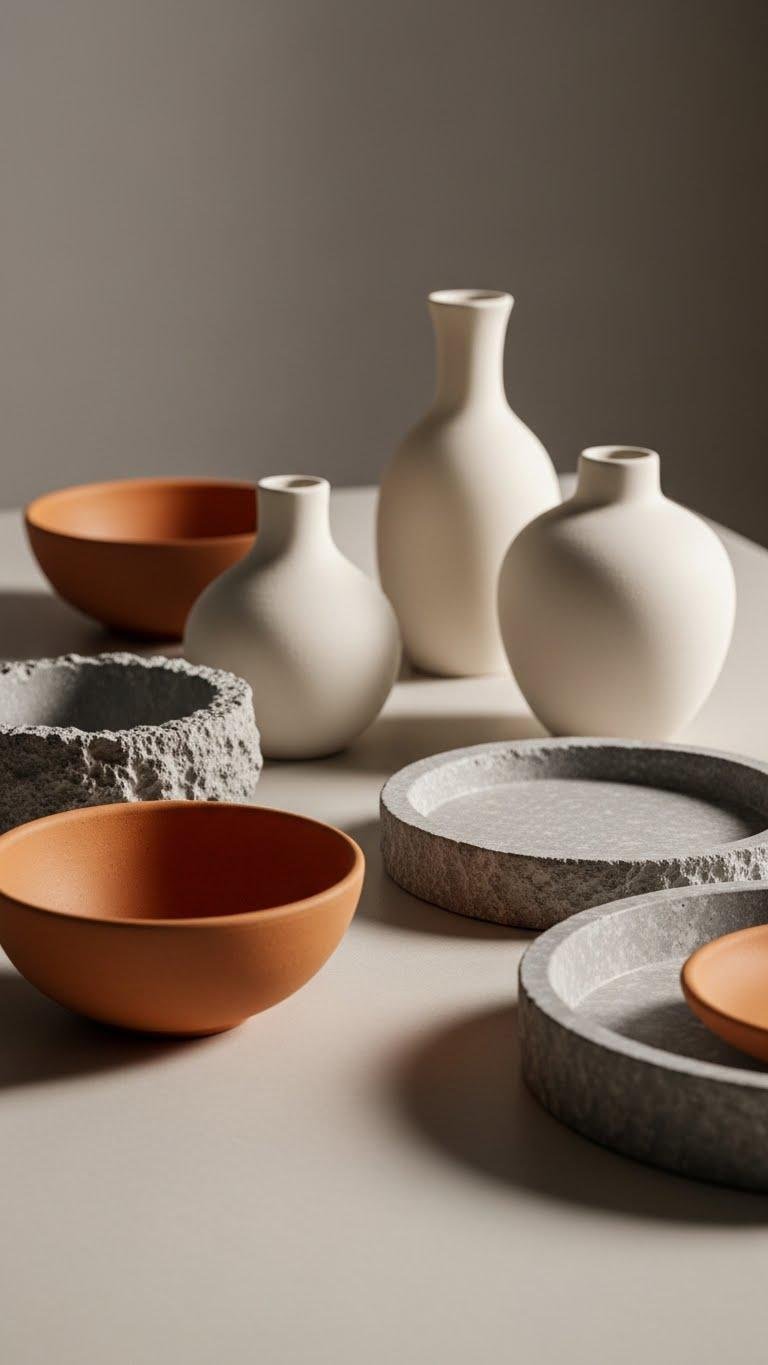
Layer in stone or clay tabletop pieces to ground surfaces with natural weight and muted warmth.
You’ll choose terra cotta bowls, matte porcelain vases, and carved stone trays that age gracefully. Place them sparingly to keep air and movement; mix heights and raw textures to catch light.
These tactile accents feel deliberate, unconfined, and quietly anchored without crowding the room.
Layer Throw Blankets in Warm Neutral Tones
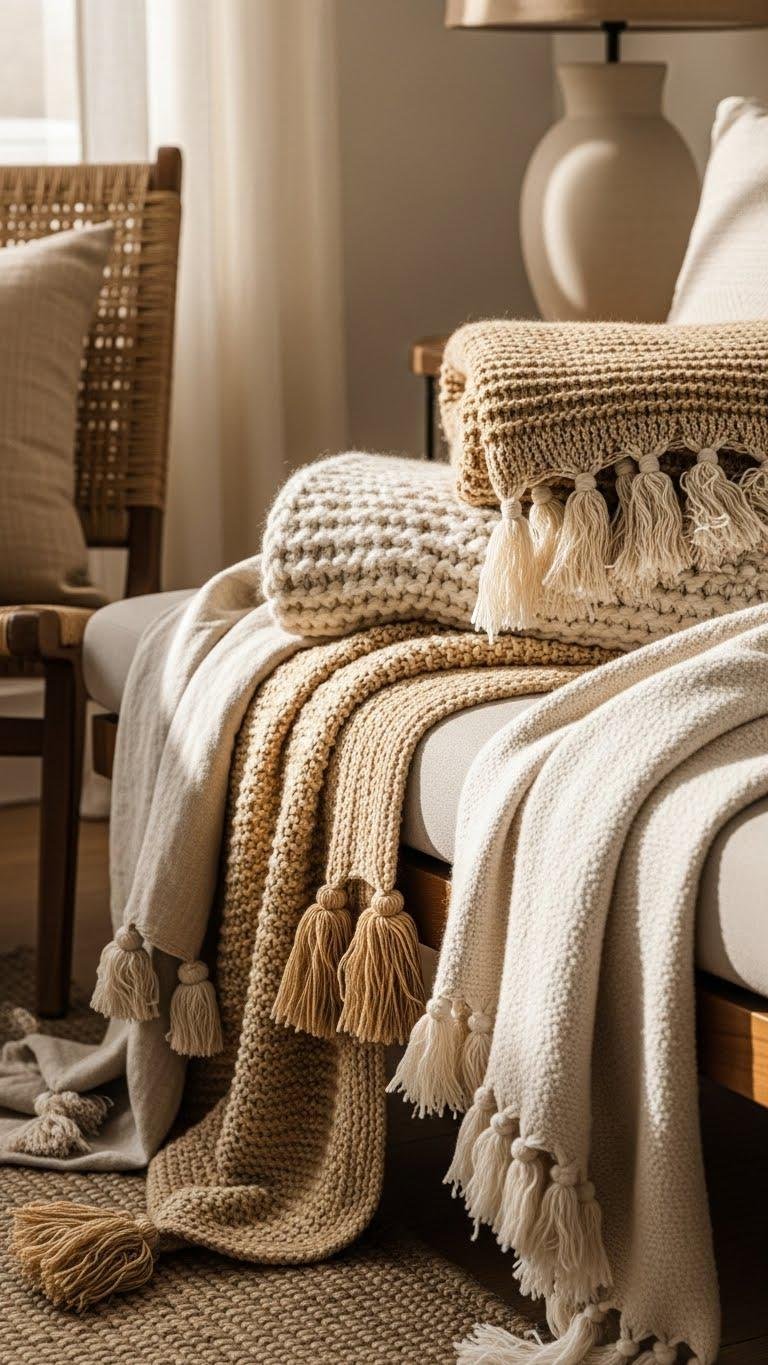
After anchoring surfaces with stone and clay, bring that grounded feel into seating with throw blankets in warm neutrals. Layer lightweight linen, chunky wool, and plush cotton for depth. Choose textured throws to add tactile contrast and subtle pattern; keep colors sandy, ochre, and cream. Finish casually with tassel trims or raw edges so your space stays relaxed, intentional, and free.
Swap Patterned Pillow Covers in Taupe and Beige
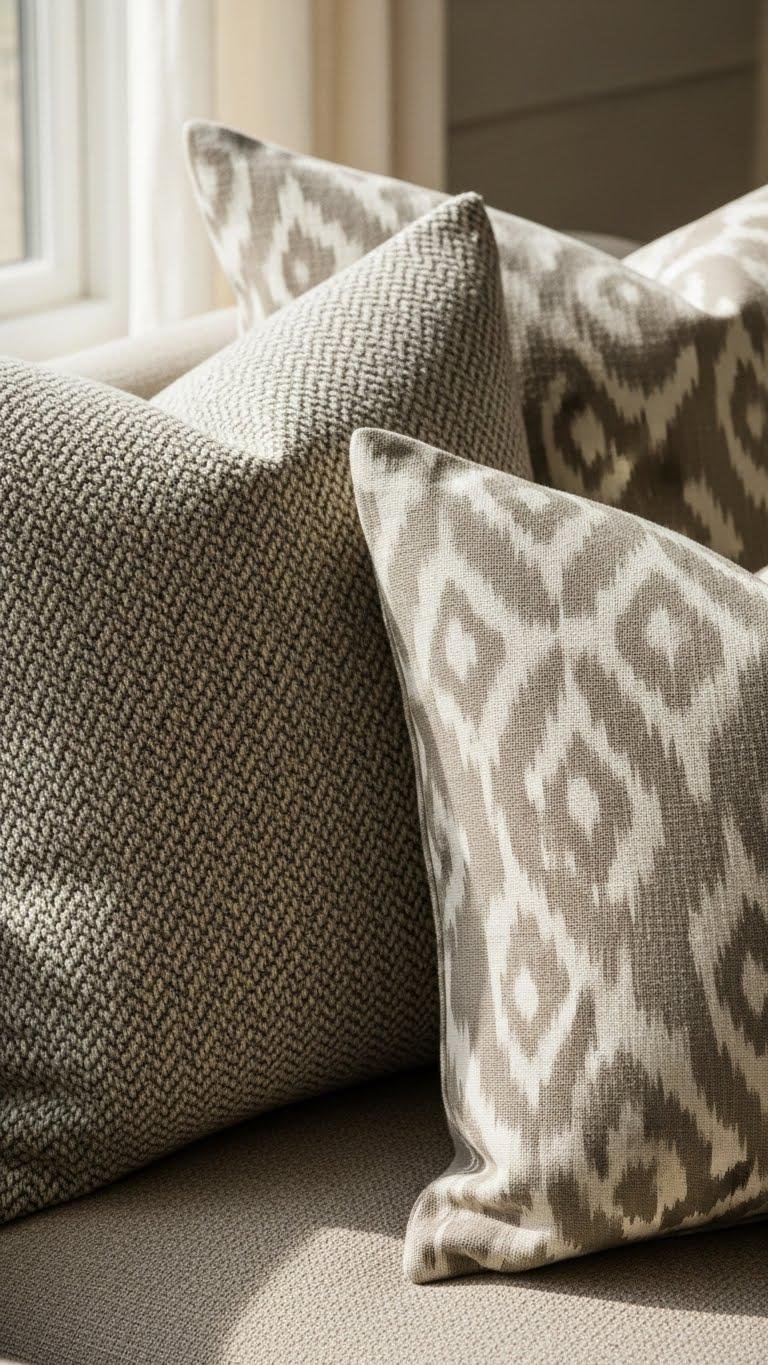
Pillows in taupe and beige instantly calm a room, so swap louder prints for patterned covers that read as texture rather than color.
Choose textured taupe weaves and linen beige slubs to create subtle motifs—herringbone, basketweave, or tonal ikat—mixing scales for depth. You’ll refresh seating without dominating the palette, letting materiality and tactility define relaxed, freeing neutral style.
Select Brass Pendant and Floor Lighting

Choose brass pendant and floor lighting that celebrate material and proportion: pick warm, lightly antiqued brass finishes paired with simple silhouettes so the metal reads as texture rather than ornament.
You’ll balance scale—cluster brass pendants over seating, position floor lamps to frame corners—letting metal tones anchor a neutral palette.
Opt for clean lines and tactile patina to keep the room airy and free.
Add Cotton Lamp Shades With Warm Bulbs

Pair those warm brass fixtures with simple cotton shades to soften metal’s sheen and shape the room’s glow. Choose soft linen-toned cotton for tactile restraint; you’ll temper glare and direct light. Fit warm bulbs that cast an amber glow, creating pockets of comfort without heaviness. You’ll control ambiance easily, layering task and accent lighting to keep the neutral palette freeing and intimate.
Choose Low-Slung Velvet Footstools for Depth

Anchor the seating area with a low-slung velvet footstool that adds visual weight without blocking sightlines. You’ll pick low profile ottomans in muted hues to ground the room, their plush pile inviting bare feet. A velvet pouf组合 offers sculptural softness and lounging versatility, balancing scale and texture while keeping the palette airy and free — tactile, purposeful, and quietly luxurious.
Use Two-Tone Rugs or Gently Patterned Runners
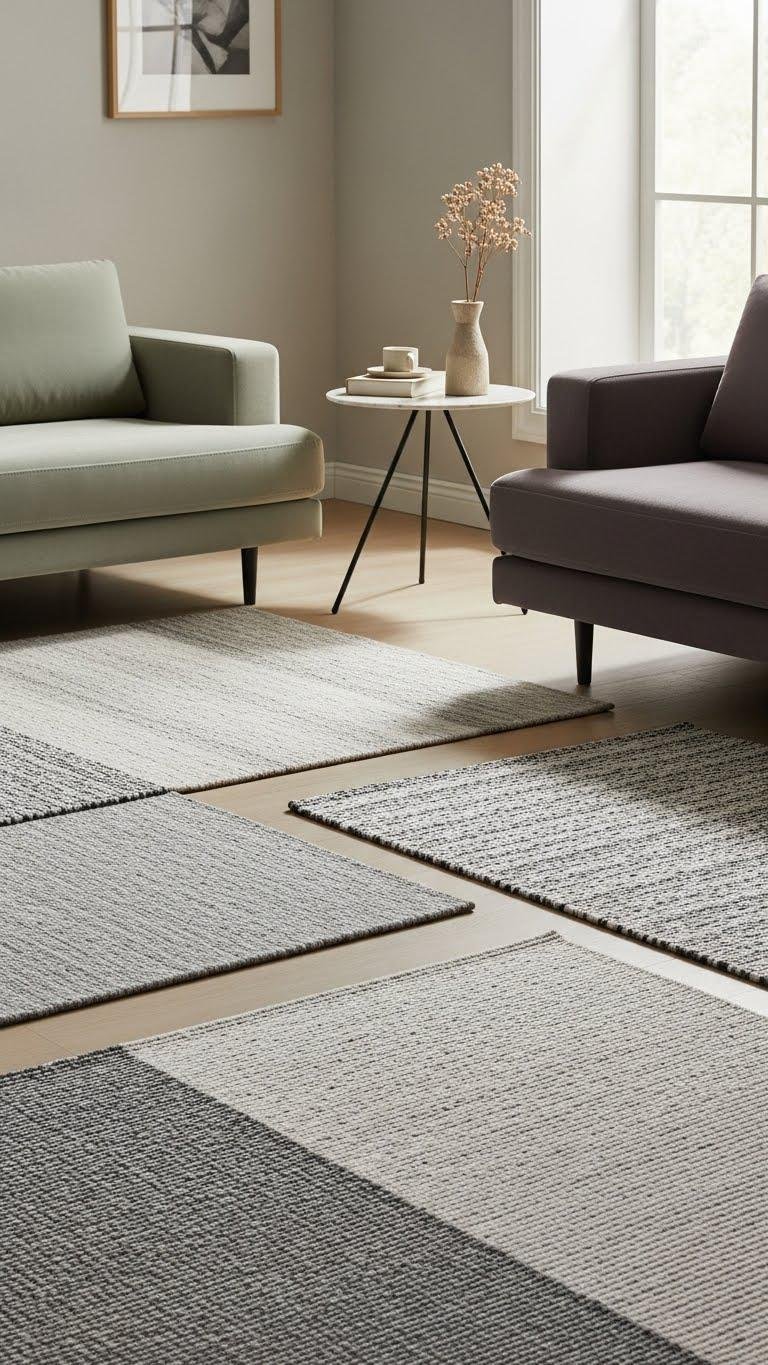
After grounding the seating with low-profile velvet pieces, soften the floorplane with two-tone rugs or gently patterned runners that echo the room’s muted palette.
You’ll pick monochrome runners to keep calm, then introduce layered textures—wool, flatweave, a subtle loop—to add warmth without clutter.
Place runners to guide movement and reveal material contrasts that feel effortless and free.
Anchor the Room With Ivory Accent Chairs

Tuck a pair of ivory accent chairs into the conversation area to instantly lift the palette and define seating without overwhelming the calm. You’ll create ivory contrast with textured linen or soft leather, balancing scale and sightlines. Intentional chair placement frames the focal point, preserves flow, and invites lounging. Choose durable fabrics and tapered legs for tactile warmth and effortless, liberated living.
Mix Charcoal and Taupe Abstract Art for Contrast
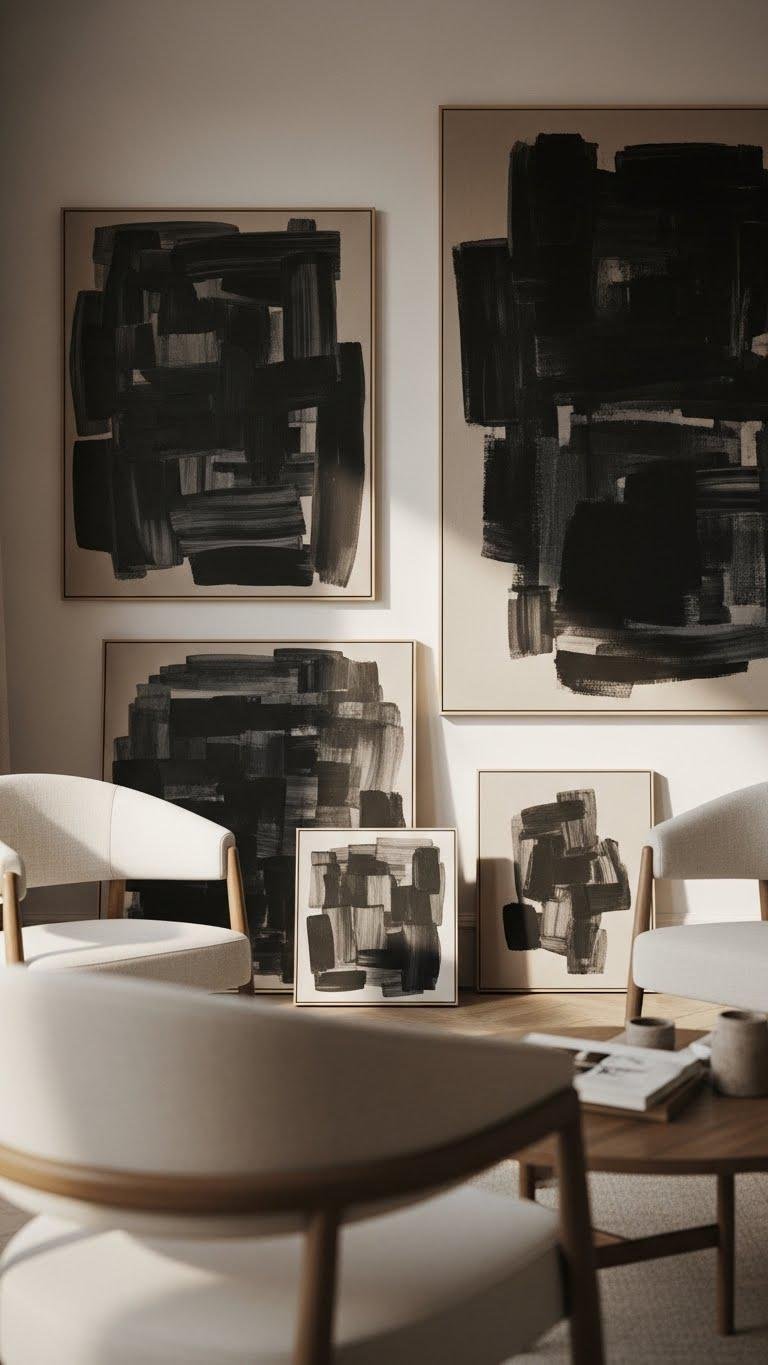
With the ivory chairs setting a soft, tactile stage, introduce charcoal and taupe abstract art to sharpen visual rhythm and ground the palette. You’ll balance charcoal taupe strokes with lighter washes, creating abstract contrast that reads modern yet warm. Choose canvases showing layered textures and intentional tonal interplay so your space feels liberated, material-rich, and quietly directional without overpowering the room.
Add Bronze or Champagne Gold Decorative Accents

Introduce bronze or champagne gold accents to lift the neutral scheme and add a subtle layer of warmth and polish. You’ll choose pieces in antique bronze for depth—lamp bases, tray edges, sculptural objects—and champagne gold for softer highlights on frames or vessel rims. Mix matte and polished finishes, favoring weighty metals and tactile patinas so your space feels lived-in, liberated, and quietly refined.
Use Muted Stripes or Checks for Upholstery

Pulling in muted stripes or soft checks gives upholstery a quiet graphic that grounds a neutral room without shouting. You’ll choose durable linens or wool blends in muted windowpanes or subtle houndstooth to add texture and rhythm. Keep scale small to mid for sofas and larger for accent chairs, letting pattern read calm rather than busy while preserving airy, liberated living.
Include Woven Baskets and Natural Storage

After you’ve settled on muted stripes or soft checks for upholstery, woven baskets and natural storage bring that tactile rhythm to the rest of the room.
You’ll choose woven storage in varied scales — open seagrass bins for throws, tight-knit rattan boxes for remotes — to keep surfaces calm.
Natural baskets introduce warm texture, conceal clutter, and invite an easy, unfussy living rhythm.
Incorporate Clay and Brown-Beige Ceramics

Layered lighting sets the mood; clay and brown-beige ceramics anchor it with tactile warmth and natural color that feels intentional rather than decorative. You’ll select matte terracotta bowls, speckled stoneware vases and shallow dishes to punctuate shelves and tables. Place pieces where light catches textures, group odd numbers for rhythm, and let earthy surfaces invite touch while keeping the palette calm and open.
Balance Modern Minimal Furniture With Organic Pieces
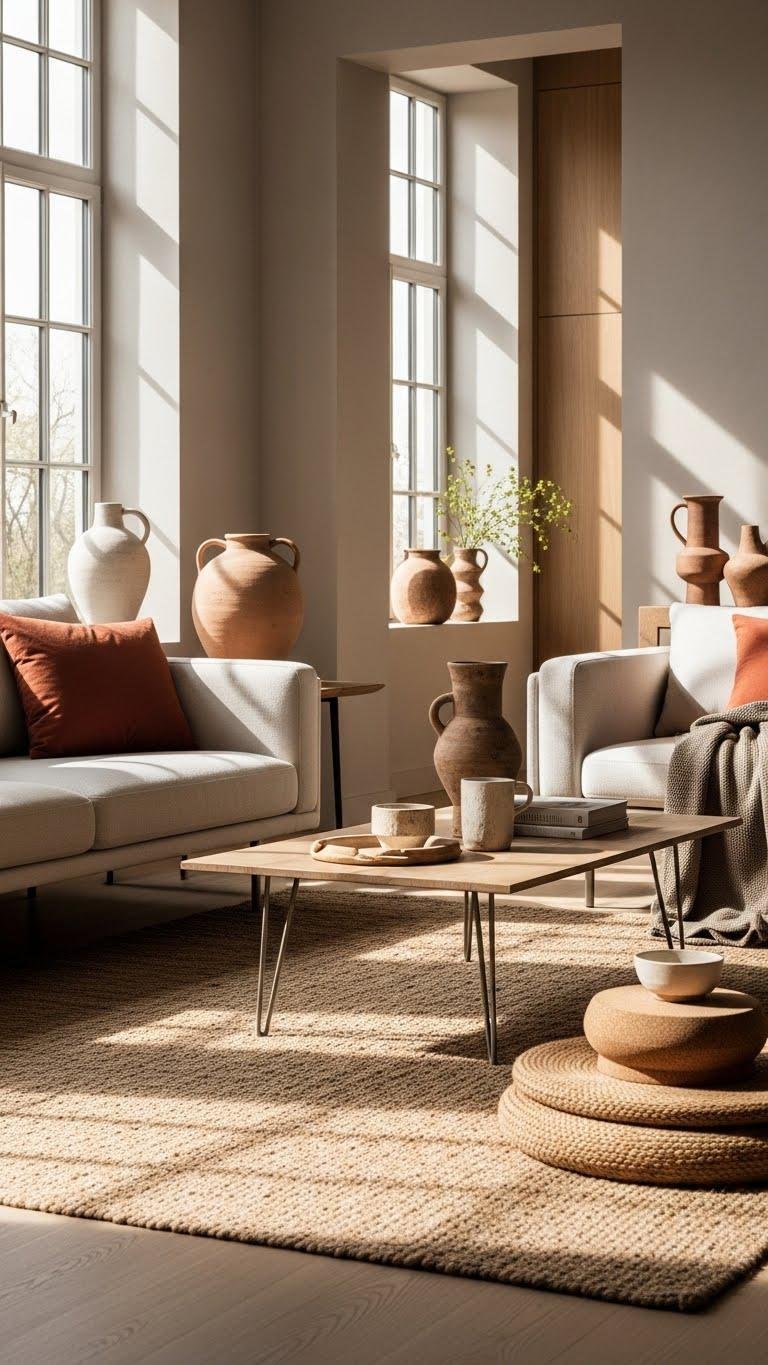
When you pair streamlined, modern furniture with organic pieces, aim for conversations between forms—sharp edges meet rounded silhouettes, cool metals soften against warm wood and clay—so each item highlights the other’s materiality. You’ll ground minimal sofas with textured ceramics, layered jute, and cork accents. Let restrained lines breathe; introduce tactile, imperfect objects so the room feels liberated, lived-in, and intentionally calm.
Introduce Green Plants in Warm-Toned Planters
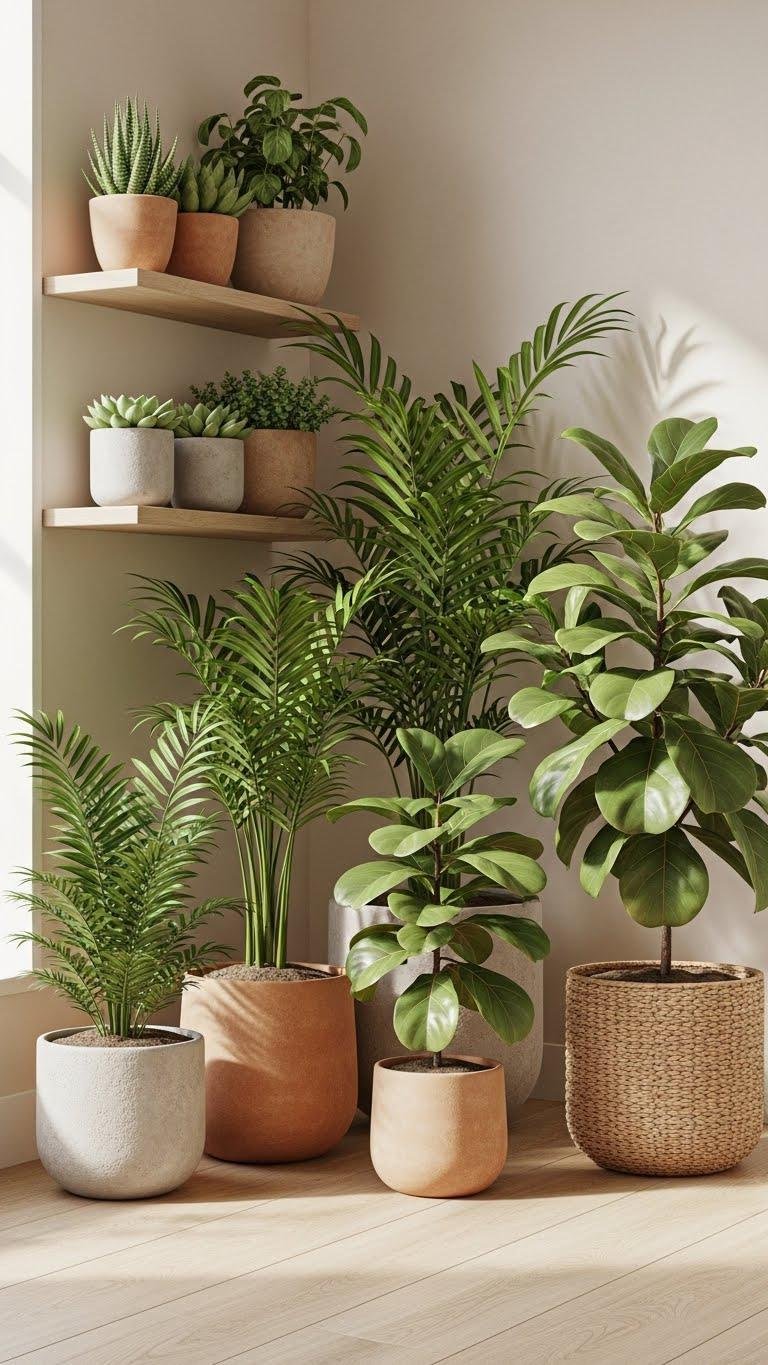
Bring in living greenery set in warm-toned planters to soften the room’s edges and tie the neutral palette together. You’ll choose textures—terracotta, matte stone, woven fiber—for planter warmth while mixing heights and leaf shapes.
Use succulent pairings on shelves, larger palms or fiddle-leaf figs on floors. Plants add tactile contrast, regulate light, and give you a casual, unconfined sense of home.