
You want your home to feel intentionally finished, not just lived in, so start by thinking about scale, texture, and function together. Pick a sofa that fits the room, layer rugs and lighting, mix open and closed storage, and add tactile textiles and plants at varied heights. Do a quick sweep for clutter and choose a restrained palette with one bold accent — and then keep going to see how small edits make a big difference.
Choose a Sofa That Fits the Room Scale

When picking a sofa, let the room’s scale dictate your choice — not the latest trend or a photo you love. You’ll favor low profile pieces in tight rooms, or sectional options when you need lounge flexibility.
Choose deep seat cushions for relaxed evenings, but balance scale with compact sofas where flow matters. Trust proportion over impulse for lasting freedom and comfort.
Layer Area Rugs to Anchor Zones

Although a single rug can define a space, layering lets you anchor zones with texture, color, and scale so each area reads clearly, especially in open-plan rooms.
Embrace material contrast—jute under a plush wool, or sisal beneath a vintage kilim—for tactile depth.
Use subtle pattern mixing, keep scale varied, and let rugs guide movement so each zone feels free, intentional, and lived-in.
Add Multiple Table Surfaces at Varying Heights

If you want a room that feels layered and effortless, add tables at different heights so each surface serves a purpose and draws the eye. Mix low coffee tables, side tables and staggered pedestals to create rhythm; use stacked trays for corralled styling, books or plants. You’ll gain function, visual freedom and easy sculptural moments without clutter.
Hang Window Treatments Above the Frame
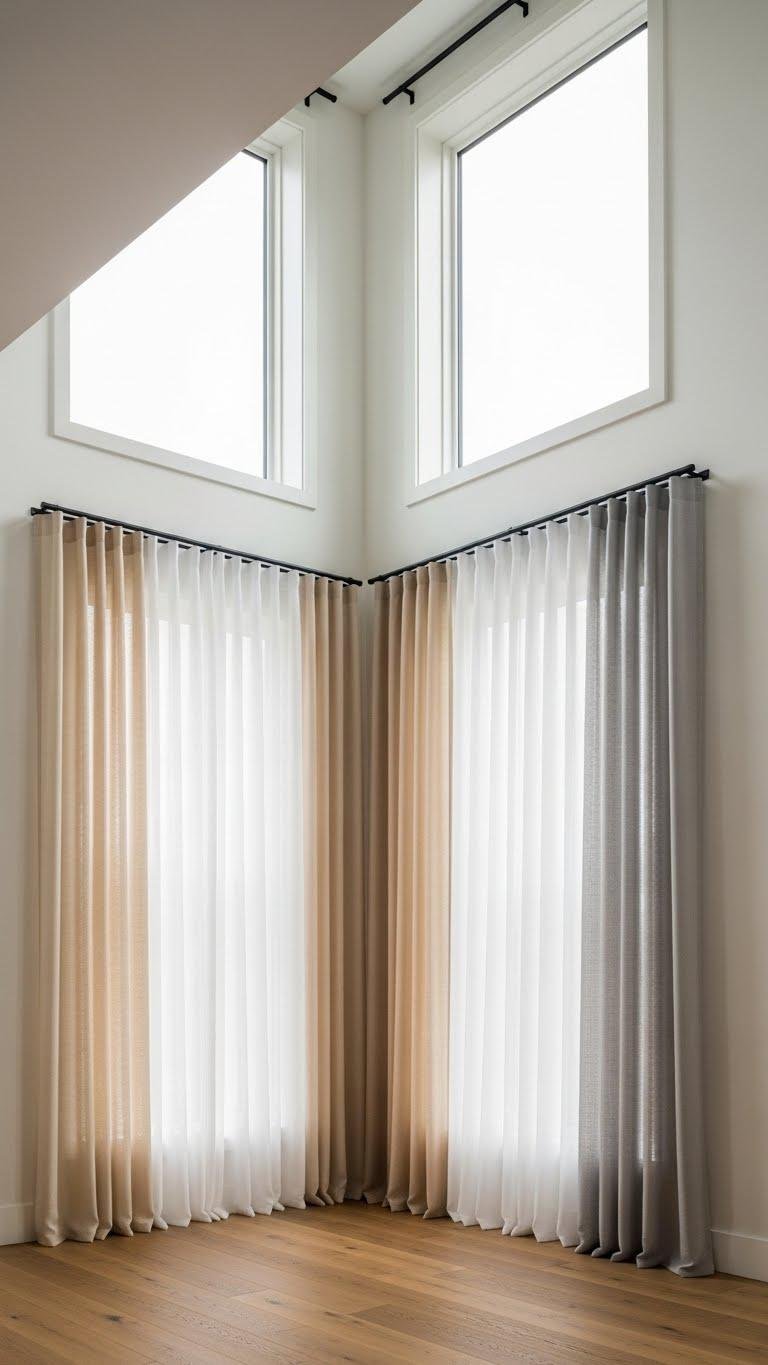
Layered surfaces naturally draw the eye upward, so extend that height play by hanging window treatments above the frame. You’ll create lofted proportions with high rod placement, making rooms feel freer and taller. Measure for proper fabric stack measurements so curtains puddle or clear the sill as you prefer. Keep lines clean, hardware minimal, and let light shape the space effortlessly.
Include Closed and Open Storage for Clutter Control

When you balance open shelving with concealed cabinets, you get both display space and a place to hide everyday messes.
You’ll mix open shelving for artful curation and quick access with hidden cabinetry to stow clutter and maintain calm. Choose streamlined profiles, consistent materials, and flexible compartments so your rooms feel liberated, organized, and effortlessly complete.
Install Three Layers of Lighting
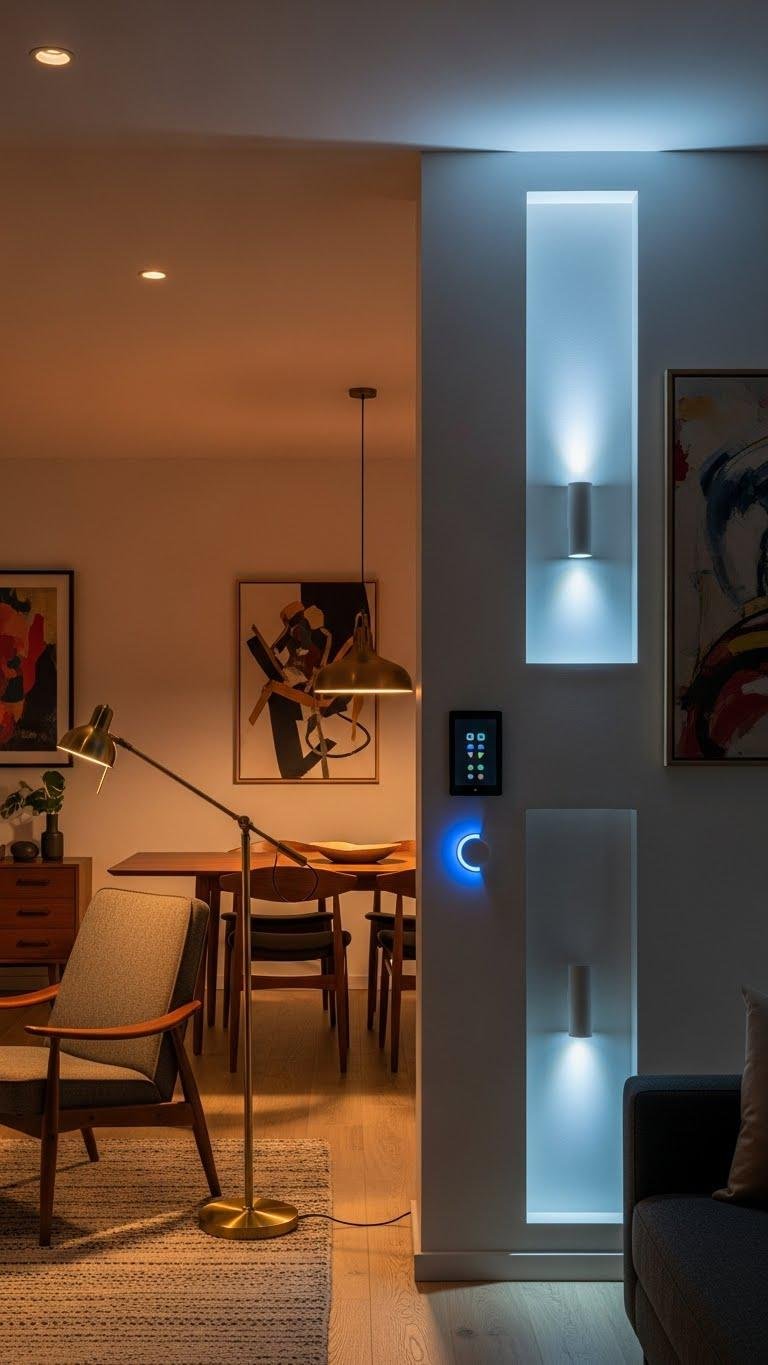
Because light shapes mood and function, you should plan three layers—ambient, task, and accent—to make every room feel intentional and adaptable. Mix overhead warmth with focused task fixtures and sculptural accent lights. Choose adjustable color temperature for freedom to shift atmosphere, and use integrated smart controls so scenes follow your rhythm. This layered approach gives control, clarity, and effortless style.
Place Task Lighting Where Activities Happen
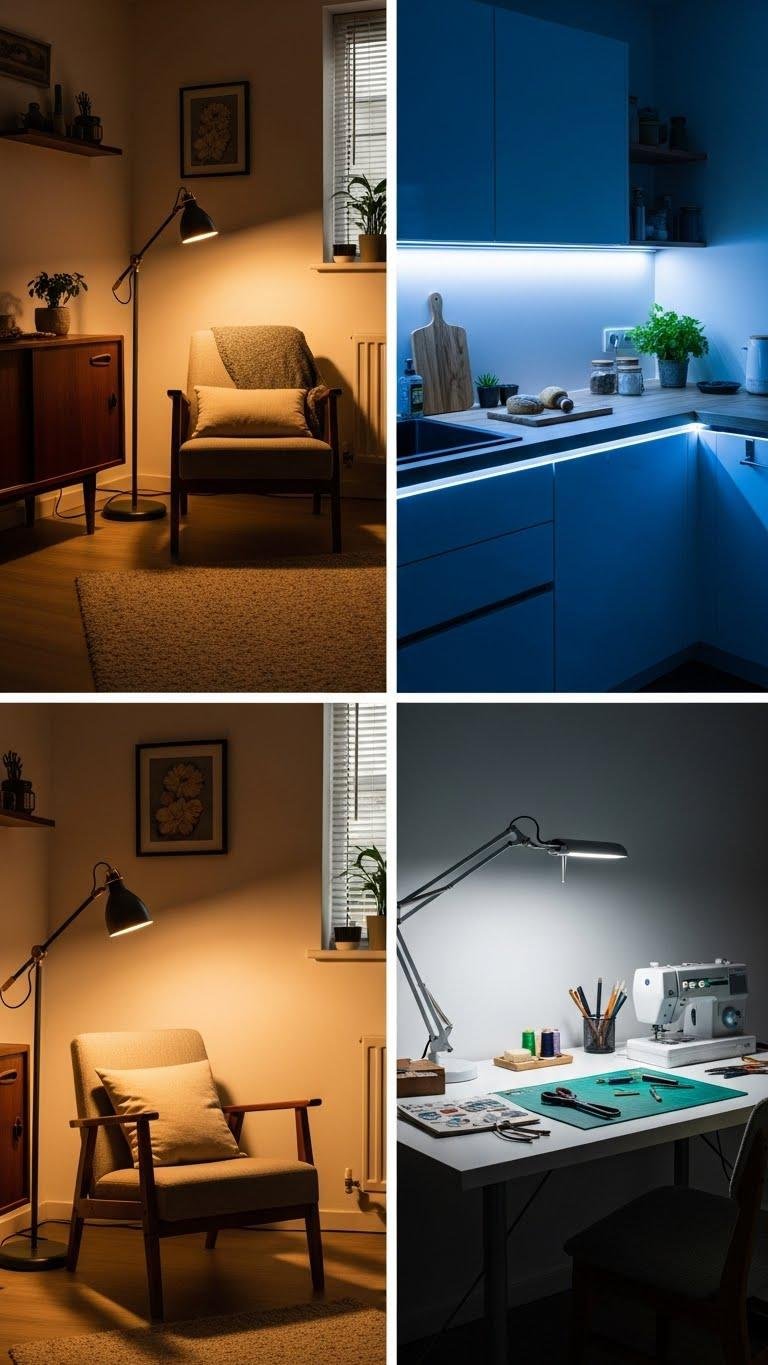
If you want crisp, comfortable work zones, put task lighting exactly where activities happen—over the reading chair, above the kitchen prep area, and beside the hobby table. You’ll choose under cabinet lighting for counters, direct LED fixtures for sewing or crafting, and task specific sconces to focus beams without glare. Place switches within reach so you control light and freedom every moment.
Add Accent Lighting to Highlight Features
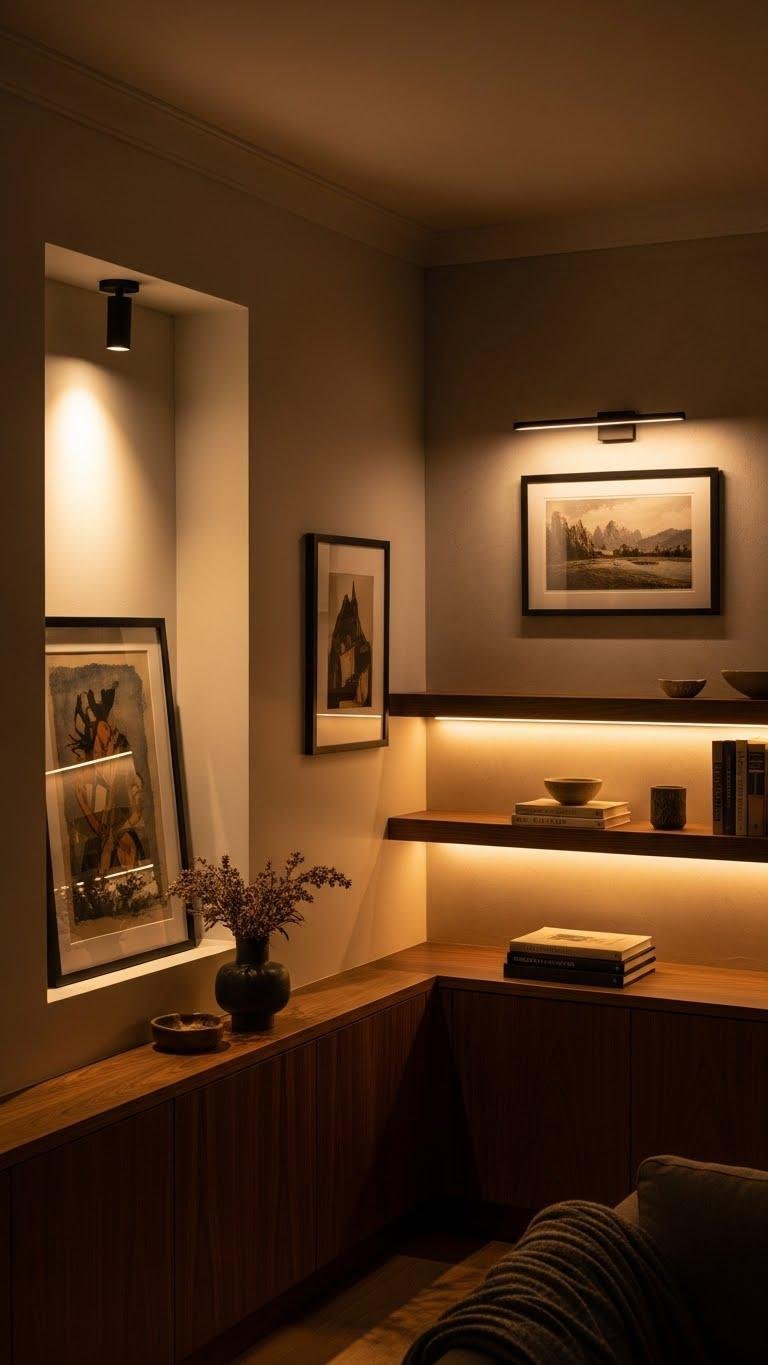
Often, a well-placed accent light makes a room feel curated rather than accidental — use spotlights, picture lights, or LED strips to draw the eye to artwork, architectural details, or a textured wall.
You’ll layer accent shelflighting and architectural uplighting to define focal points, create depth, and control mood. Aim for dimmers, warm tones, and precise placement so spaces feel intentional and liberating.
Create One Statement Wall With Art or Mirror
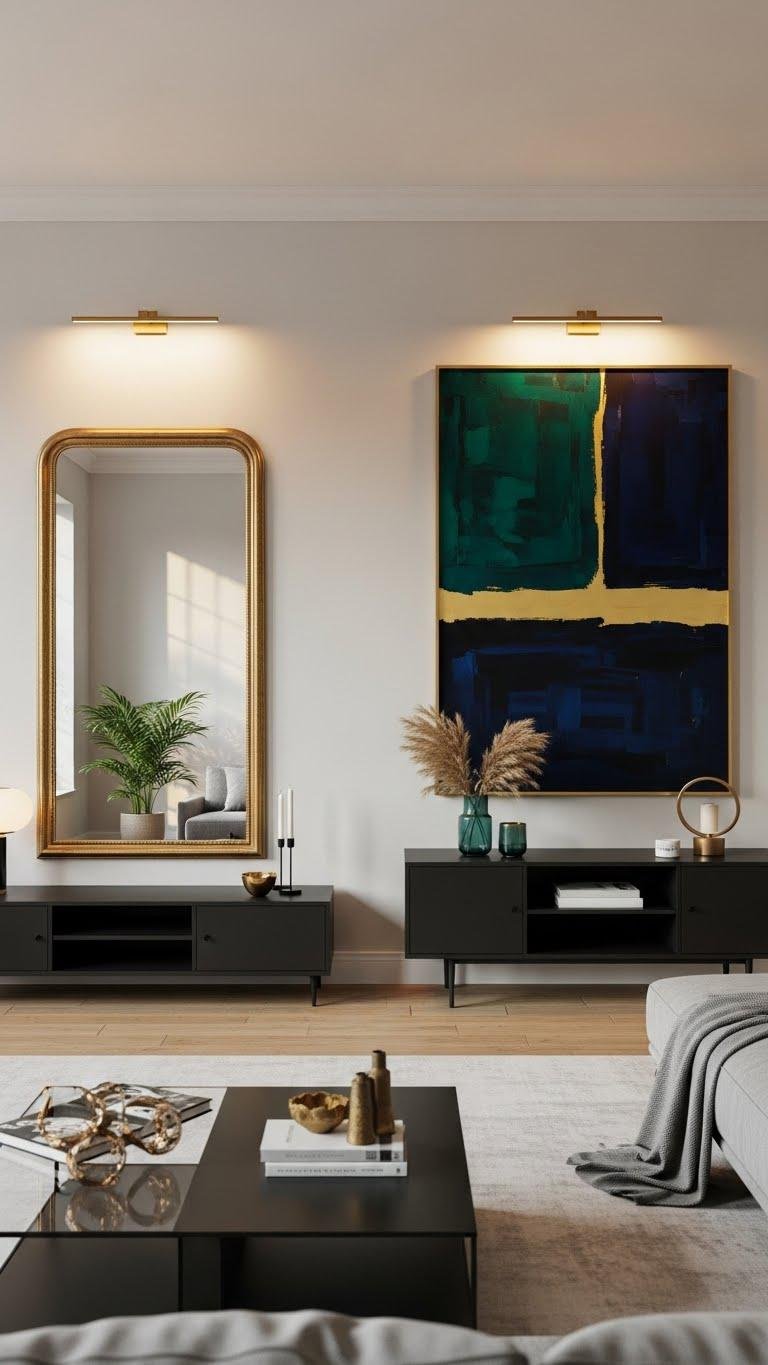
When you want a room to read as intentional, make one wall your focal anchor with a single large-scale artwork or an oversized mirror; it instantly organizes the space, reflects light, and sets the mood.
Choose boldly: a dramatic oversized mirror to expand light, or a curated gallery grouping for personality. You’ll create freedom to edit the rest, keeping decor confident and uncluttered.
Limit Your Paint Palette to Two or Three Coordinated Colors
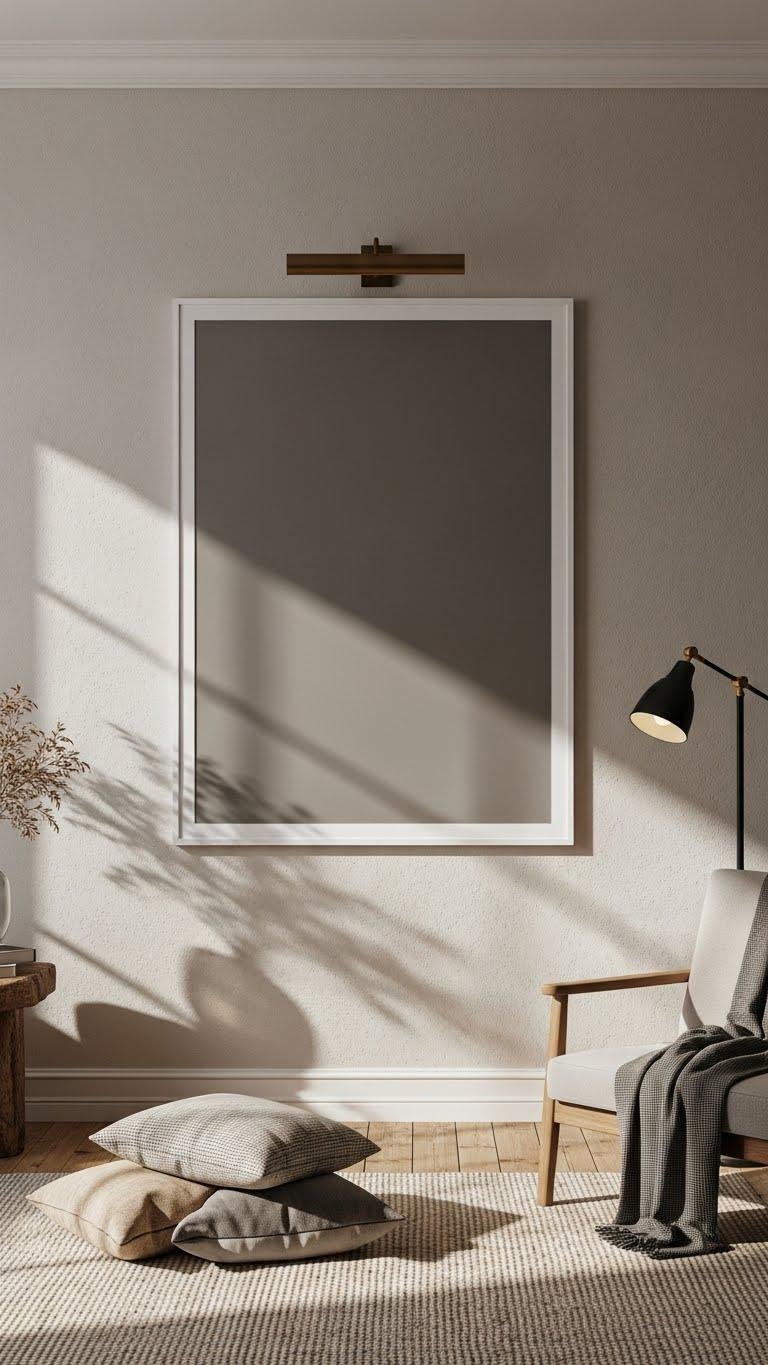
After you’ve let a single artwork or oversized mirror anchor the room, keep the rest of the space calm by limiting your paint palette to two or three coordinated colors.
You’ll embrace limited hues that simplify choices and free your style.
Pick base, accent, and trim tones, then introduce coordinated accents in textiles or hardware so the room feels purposeful, relaxed, and effortlessly yours.
Use Mirrors to Reflect Light and Expand Sightlines
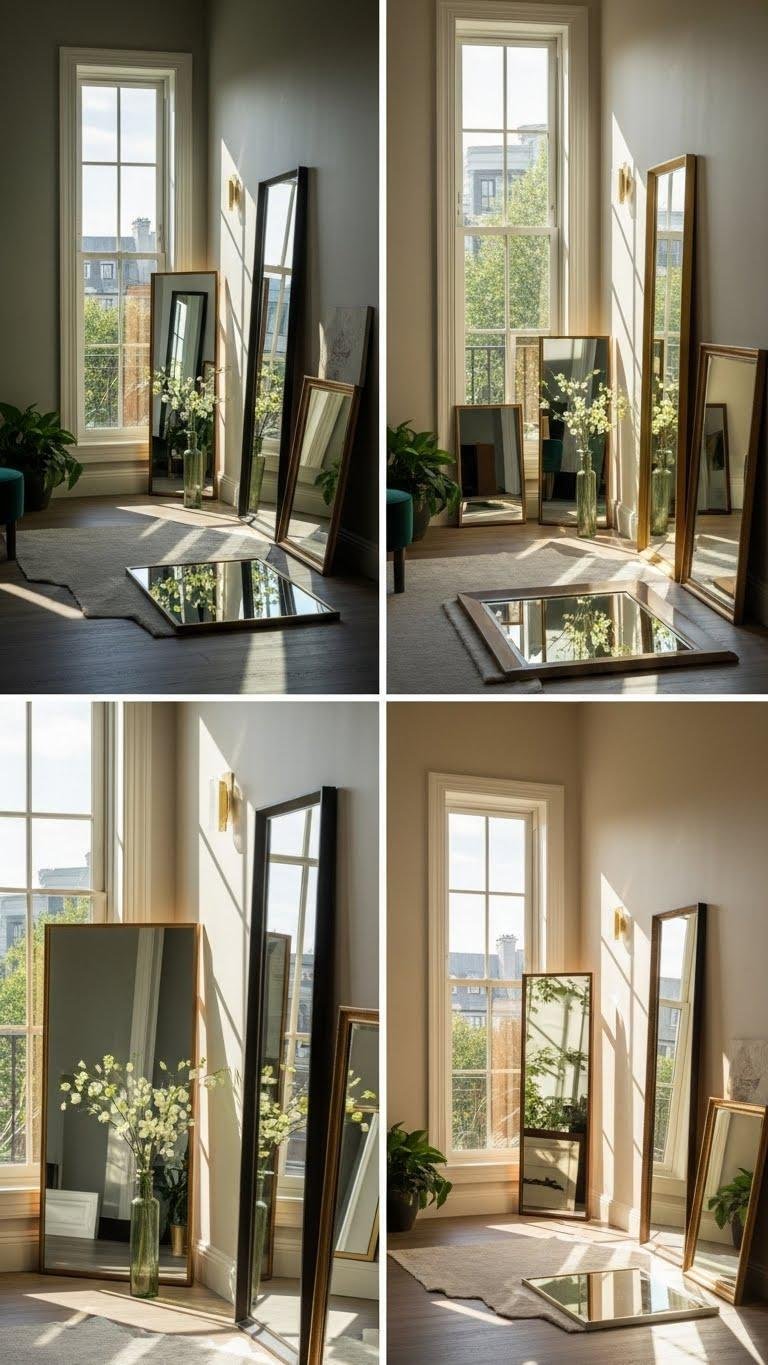
Because mirrors catch and multiply light, place them opposite windows or narrow sightlines to brighten rooms and make spaces feel larger; you’ll also use them to extend views, reflect attractive details, and create intentional depth without sacrificing décor.
Choose anti glare placement, mix framed and beveled mirrors, and combine layered reflective surfaces for subtle drama.
You’ll control mood, expand sightlines, and keep freedom in design.
Arrange Shelving for Layered Displays
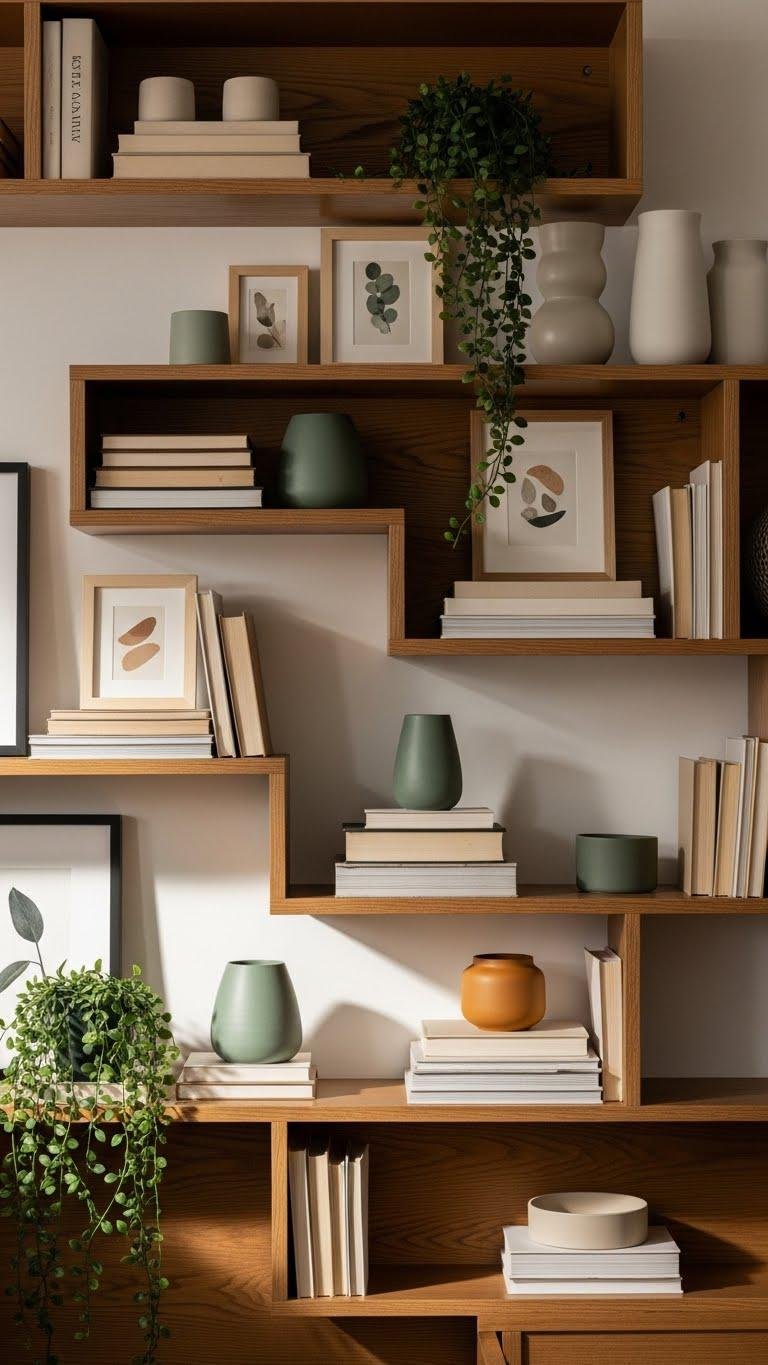
Layer shelving with intention to turn storage into a curated backdrop: mix heights, depths, and textures so your eye moves across layers instead of fixating on one plane.
You’ll combine books, art, ceramics and greenery to create contrasting textures and visual depth. Favor asymmetrical balance—group items in odd numbers, stagger planes, leave breathing room—so each shelf feels intentional and free, not crowded.
Include Throw Pillows and Blankets for Tactile Layers
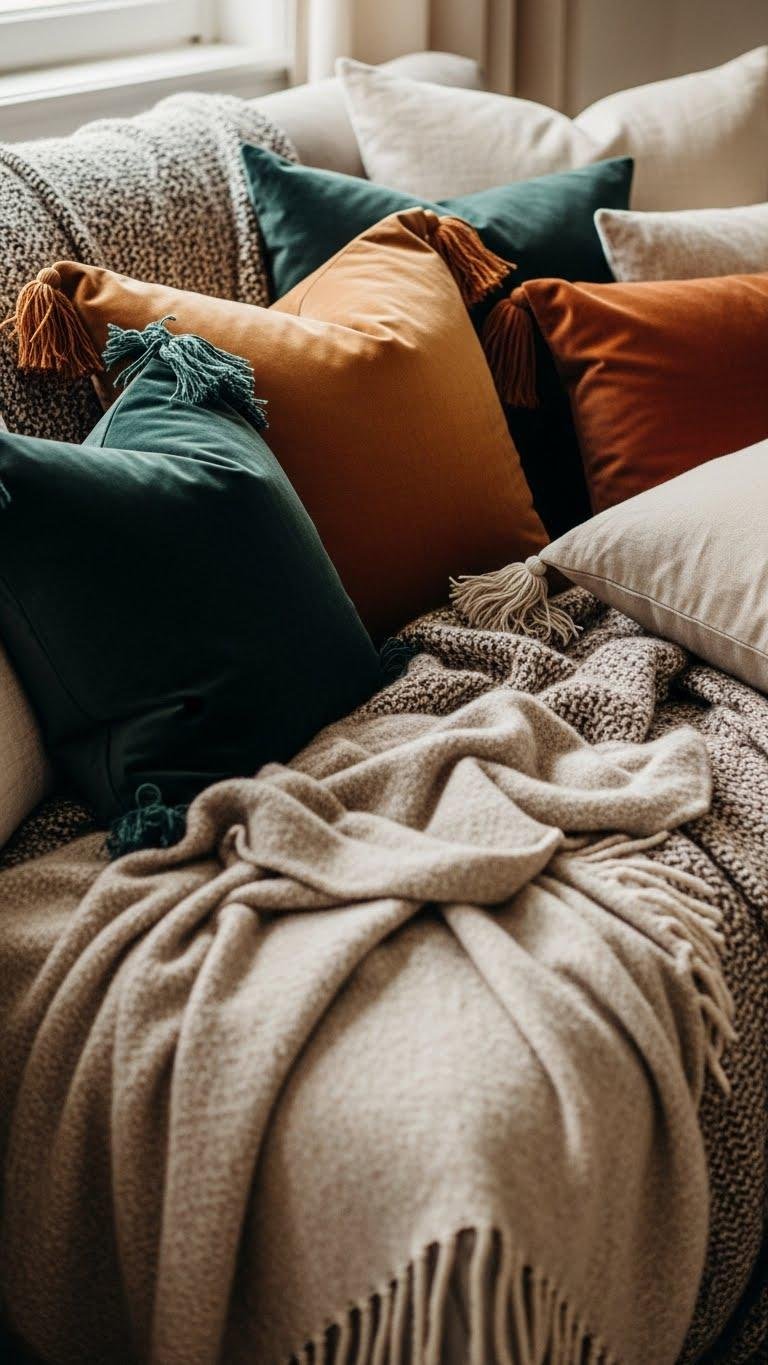
Textile layering brings instant warmth and personality to a sofa or bed, so choose pillows and throws that vary in scale, fabric, and color to create a tactile, lived-in look.
You’ll mix velvet textures with linen and knit, scattering cushions for easy comfort. Add Fringe accents for movement and a relaxed edge, then drape blankets for quick coziness you can rearrange freely.
Layer Bedding for a Finished Bedroom Look
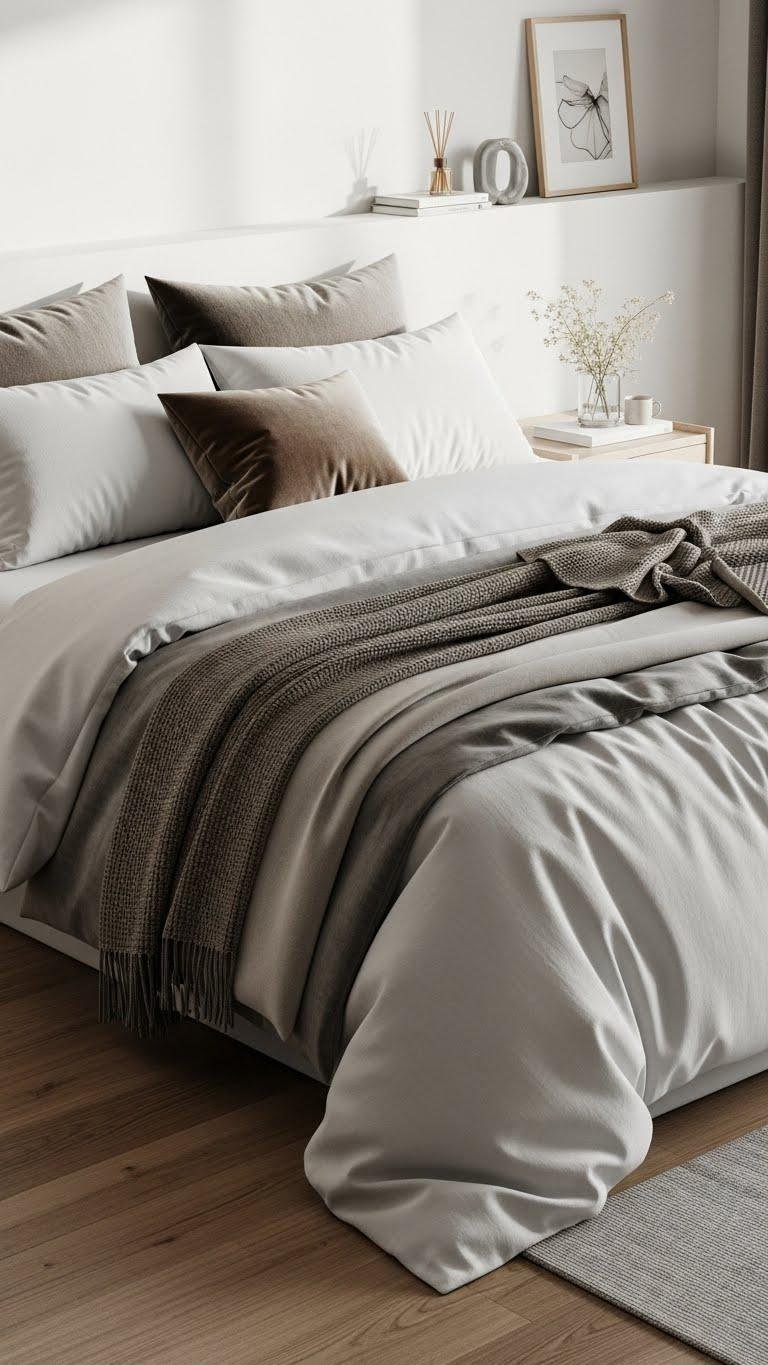
After you’ve mastered pillows and throws, give the whole room a polished, hotel-like feel by building your bed in purposeful stages. You’ll start with crisp sheets, add a light coverlet, then swap in seasonal layers for comfort and mood.
Mix fabric textures—linen, velvet, knit—to create depth without clutter. Tuck, fold, and leave space to breathe; the result feels effortless and free.
Choose Rug Material and Pile for Room Use

Pick a rug that matches how you live in the room: durable, low-pile synthetics like wool blends or polypropylene work best under heavy foot traffic and in kids’ rooms, while plush, high-pile wool or viscose adds warmth and luxury in low-traffic bedrooms or seating areas. Choose synthetic options for easy care or allergy friendly fibers to keep spaces breathable, resilient, and effortlessly stylish.
Combine Pattern, Neutral, and Accent in Textiles
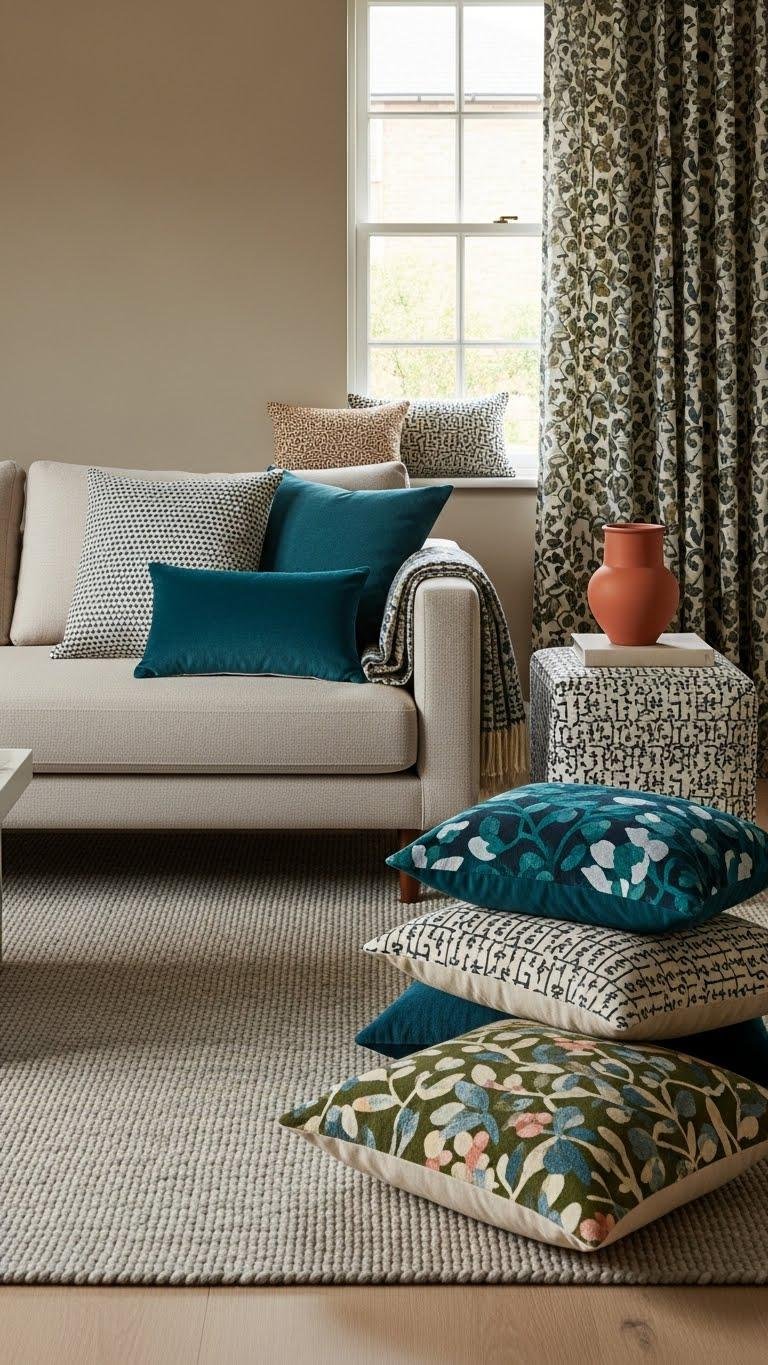
Once you’ve matched pile and fiber to how the room will be used, think about how textiles work together to make the space feel intentional: pair a neutral base (rug, sofa, large curtains) with patterned pieces for rhythm and a single accent color to punctuate the scheme.
You’ll embrace mixing textures and patterned neutrals, balancing scale and repeat so the room reads calm, confident, and free.
Style Vignettes With Odd-Number Groupings
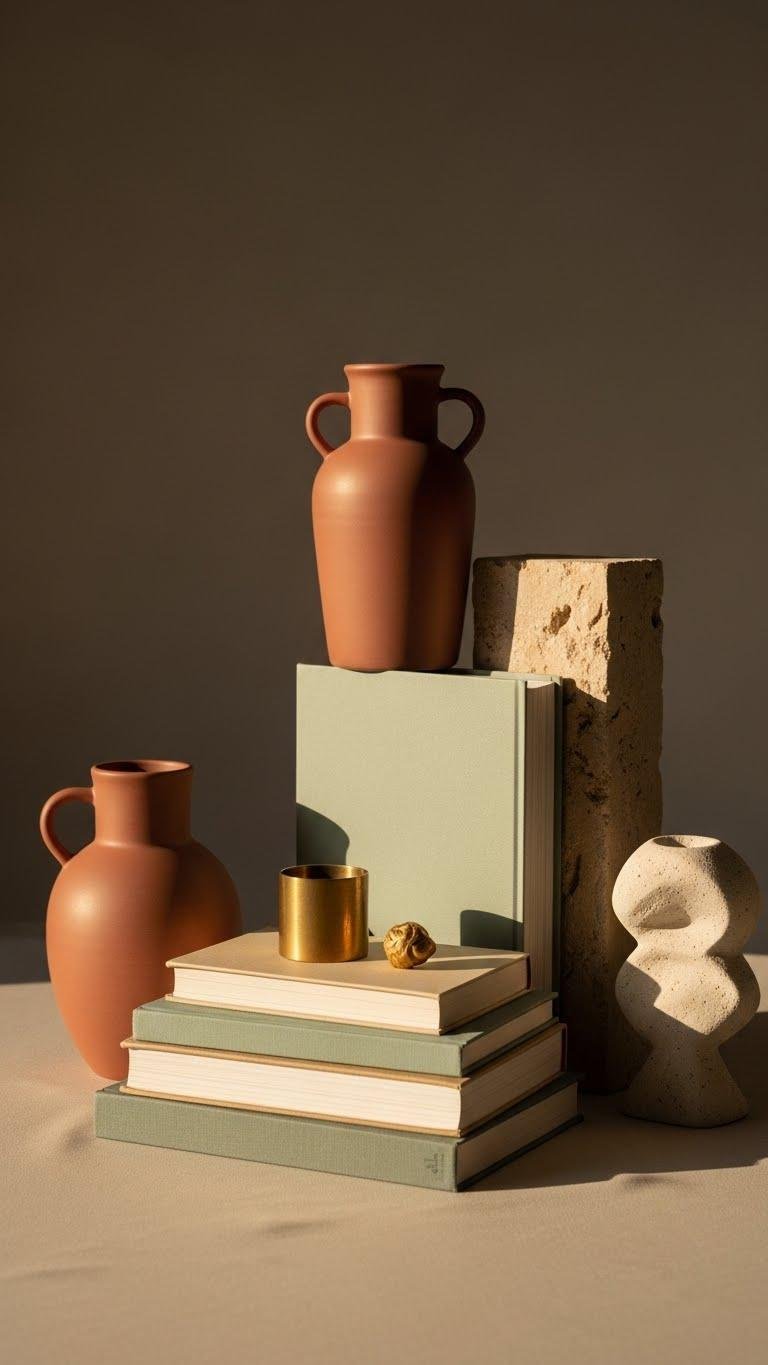
Group objects in odd-numbered sets to make vignettes feel intentional and easy on the eye; three or five pieces create a natural rhythm that reads as curated, not cluttered.
You’ll craft asymmetrical balance by varying heights, textures, and a restrained color trio. Arrange confidently, leave breathing room, and let each piece assert itself—freedom to edit keeps the scene lively and unmistakably yours.
Corral Small Items With Trays and Baskets
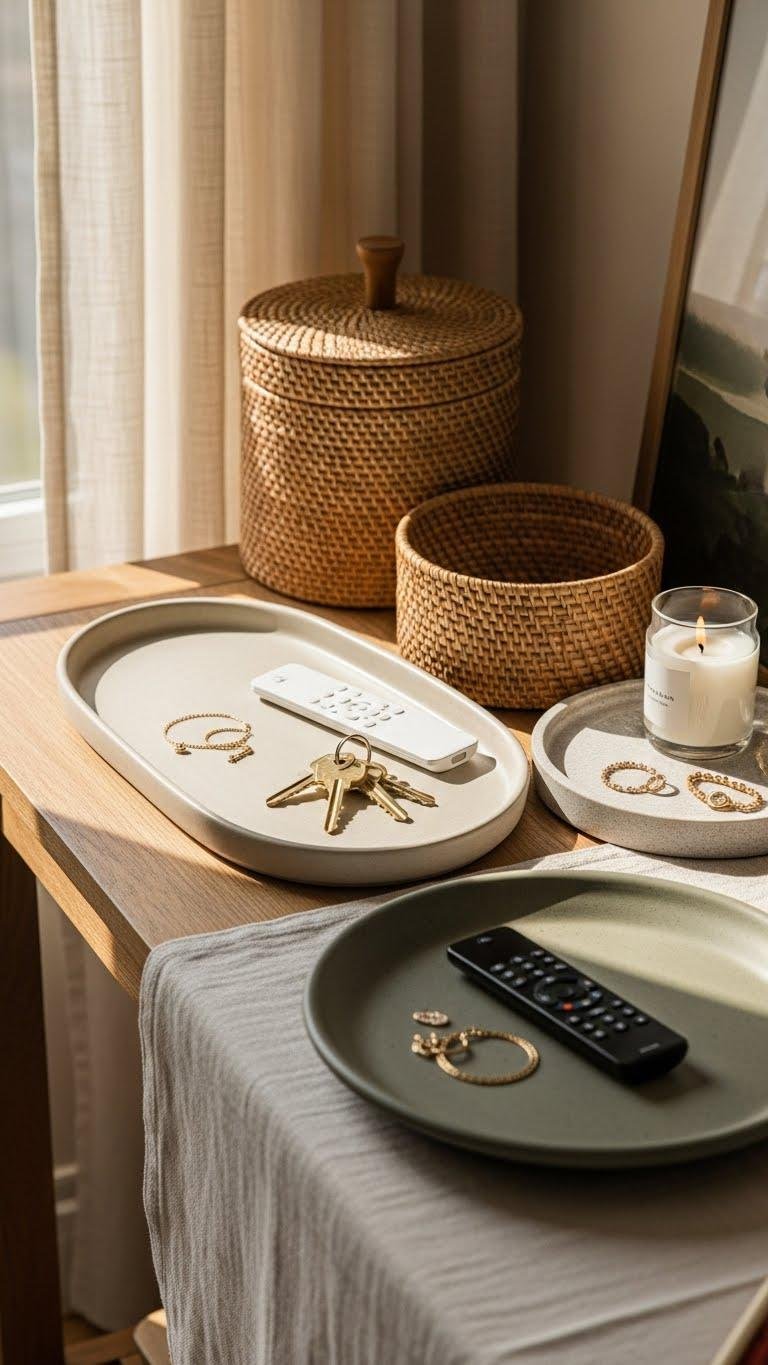
Tidy things up by corralling small items into trays and baskets—it’s the easiest way to make a surface look intentional without fuss.
You’ll create calm and control by grouping keys, remotes, candles, and jewelry in decorative trays and woven baskets.
Mix textures and sizes, keep edges neat, and rotate contents seasonally.
The result feels effortless, freed from clutter yet fully styled.
Introduce Plants at Multiple Heights
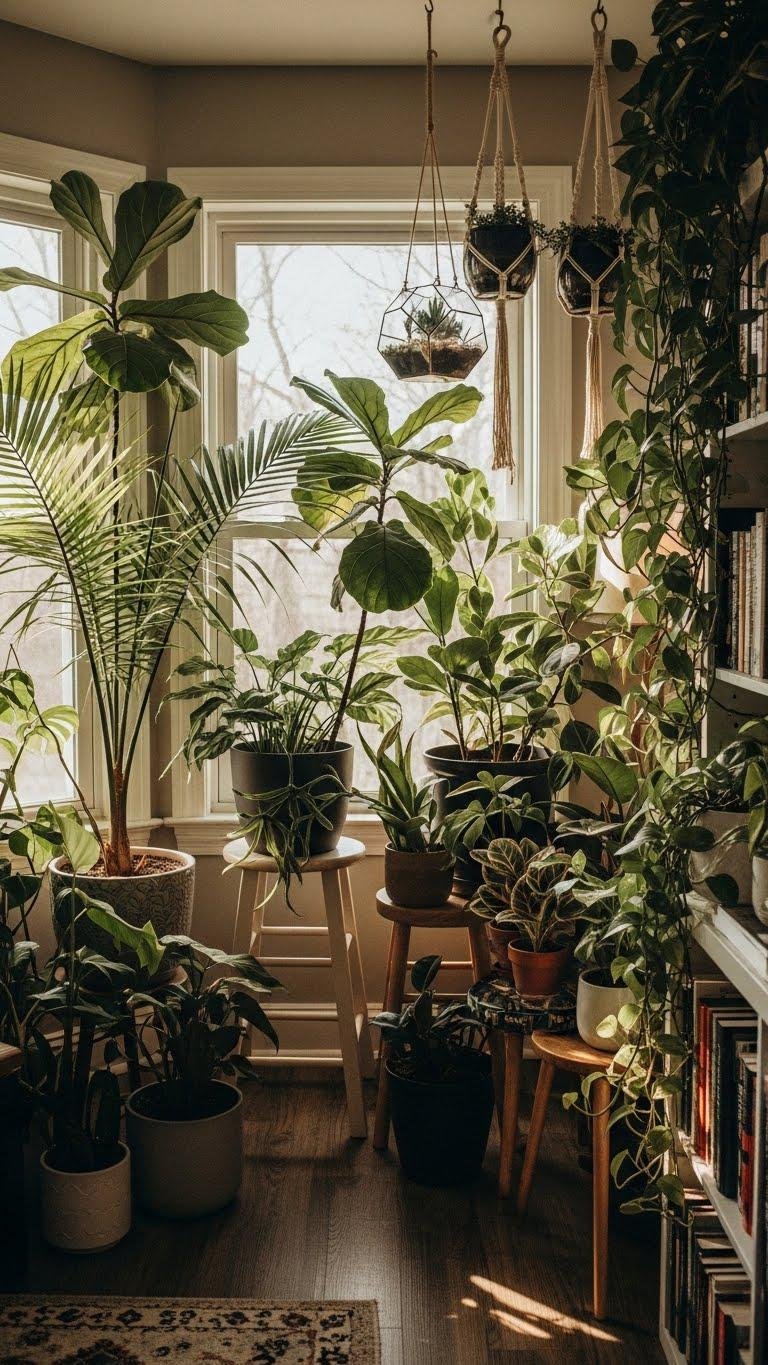
When you introduce plants at multiple heights, you instantly add depth, movement, and a lived-in warmth to any room.
Layer floor palms, mid-level potted figs, and shelf succulents so sightlines roam. Suspend hanging terrariums for airiness and let trailing pothos spill down bookcases. You’ll create rhythm, visual freedom, and easy-care greenery that feels curated, relaxed, and utterly intentional.
Add Candles and Scents for Ambience

Layered greenery sets the scene; now bring in scent and soft flame to complete the mood. You’ll use scent layering—combine a base diffuser, a linen spray, and soy candles—to craft a signature atmosphere. Choose clean, natural fragrances that reflect your freedom: citrus, cedar, or herbal blends.
Vary intensity by room and time, and let warm candlelight finish the feeling.
Create a Practical, Welcoming Entryway
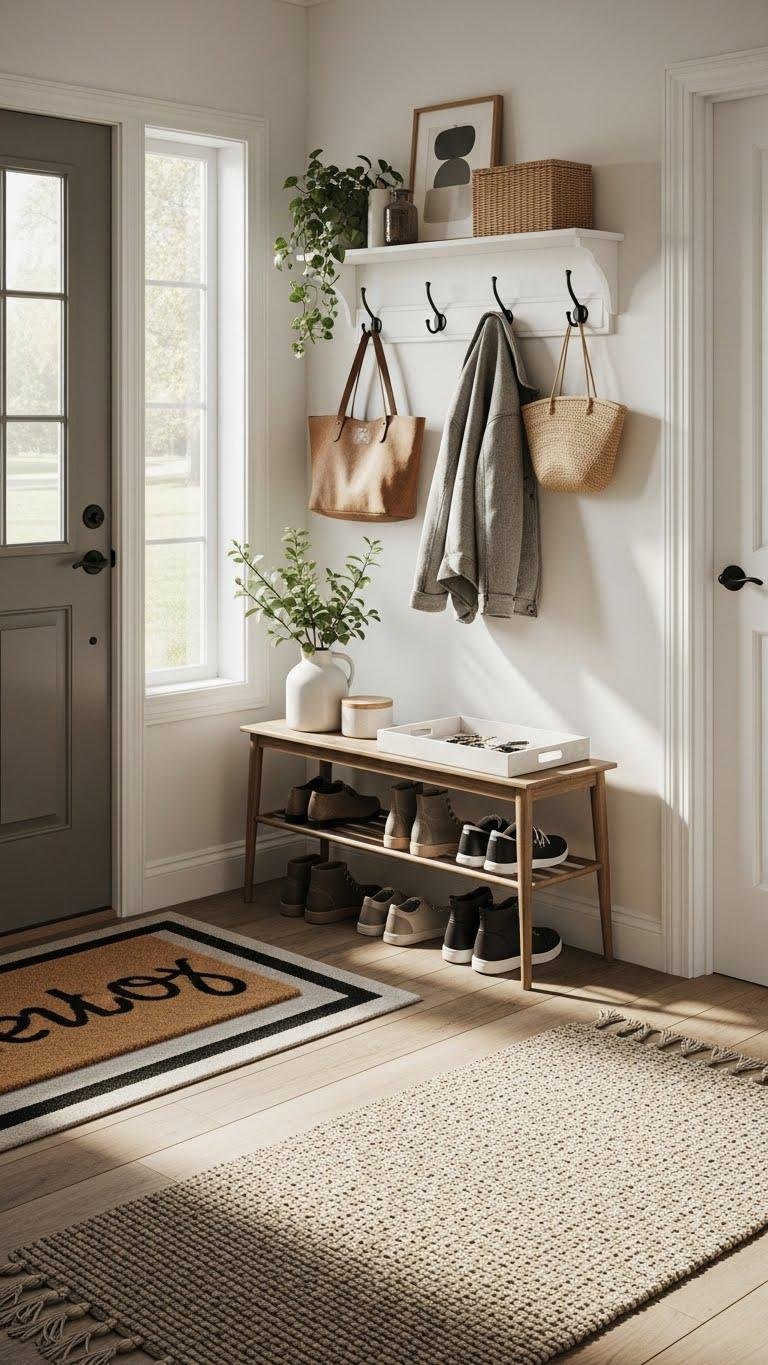
Because your entryway is the first thing guests — and you — see every day, make it both useful and inviting with a few smart, stylish touches. Add streamlined shoe storage, a bench that doubles as a drop spot, hooks for bags and jackets, and a seasonal mat to anchor the space. Keep color and texture minimal so the flow feels effortless and free.
Upgrade Hardware and Fixtures for Cohesion

Once your entryway feels organized and welcoming, tie everything together by upgrading hardware and fixtures for a cohesive look. Swap dated knobs, faucets, and polished switchplates to a unified finish. Choose coordinated towelbars and matching cabinet pulls to extend the palette through bathrooms and kitchen.
You’ll create a liberated, intentional home where details resonate and every touchpoint feels considered.
Plan Textile and Surface Maintenance Routines

While smart styling makes a room feel finished, practical maintenance keeps it that way—so set routines for textiles and surfaces that fit your life.
You’ll schedule seasonal rotation for cushions, rugs and curtains, spot-clean spills immediately, and apply fabric protection where needed. Create a simple weekly wipe-down and quarterly deep-clean plan that frees you from constant upkeep while preserving your style.
Maintain Scale and Proportion With Clearances
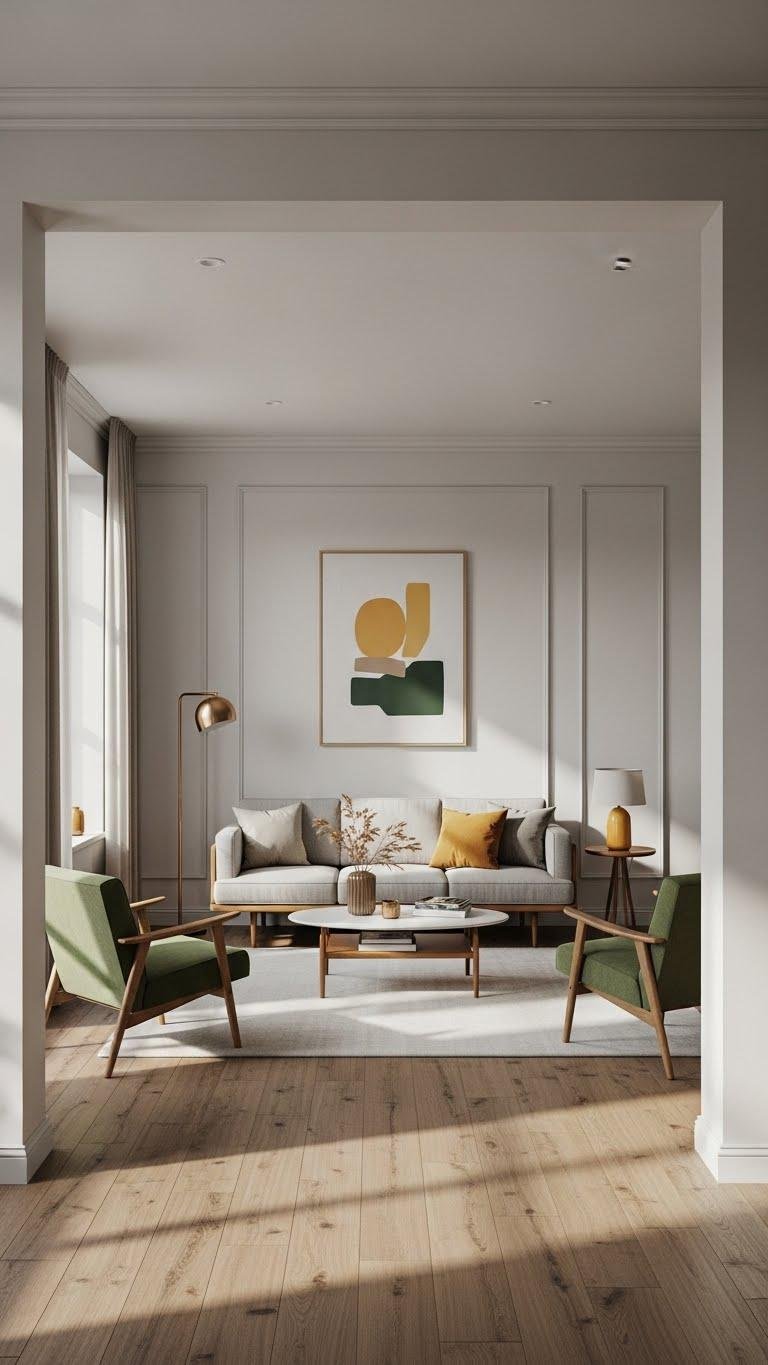
Keeping textiles and surfaces tidy makes room for the next step: preserving visual balance through proper clearances.
You’ll set confident furniture spacing so pieces breathe, respect traffic flow and avoid crowding. Measure walkways, leave proportional gaps around focal items, and choose scale that complements your architecture. That restraint lets rooms feel liberated, intentional and effortlessly complete.
Apply a Cohesive Style Thread Across Rooms
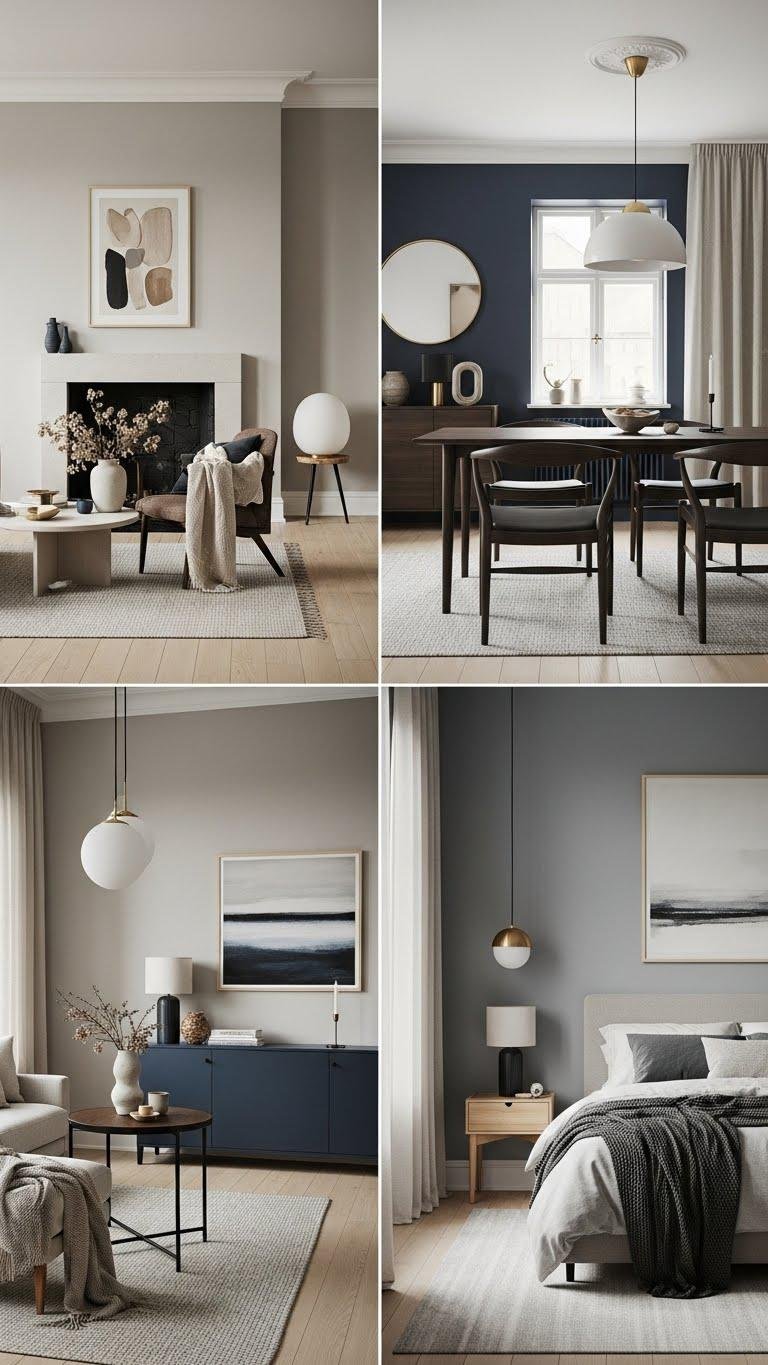
Because each room should feel like a chapter in the same story, tie spaces together with a few consistent elements — a shared color palette, recurring materials, and one or two signature finishes — so your home reads as a unified collection rather than separate vignettes. You’ll enforce color continuity, use motif repetition sparingly, and let rhythm and restraint give each room freedom while keeping the whole coherent.
Finish With Thoughtful Decorative Details

Once your rooms speak the same visual language, small curated details will pull the story together and give each space its personality.
You’ll choose seasonal accents that shift mood without overhauling style, layer tactile throws and art to invite touch, and carve out heirloom corners that honor memory.
These intentional touches let your home feel lived-in, free, and fully yours.