
You’ll find coffee table styling is less about filling space and more about thoughtful editing: stack a few oversized books, add a sculptural object or tray, and balance heights and textures for an effortless look. Think warm neutrals, mixed materials, and soft directional light to make each vignette feel curated rather than staged. Keep exploring these simple setups—there’s a striking combination that will suit your space.
Layered Book Stacks With a Statement Object
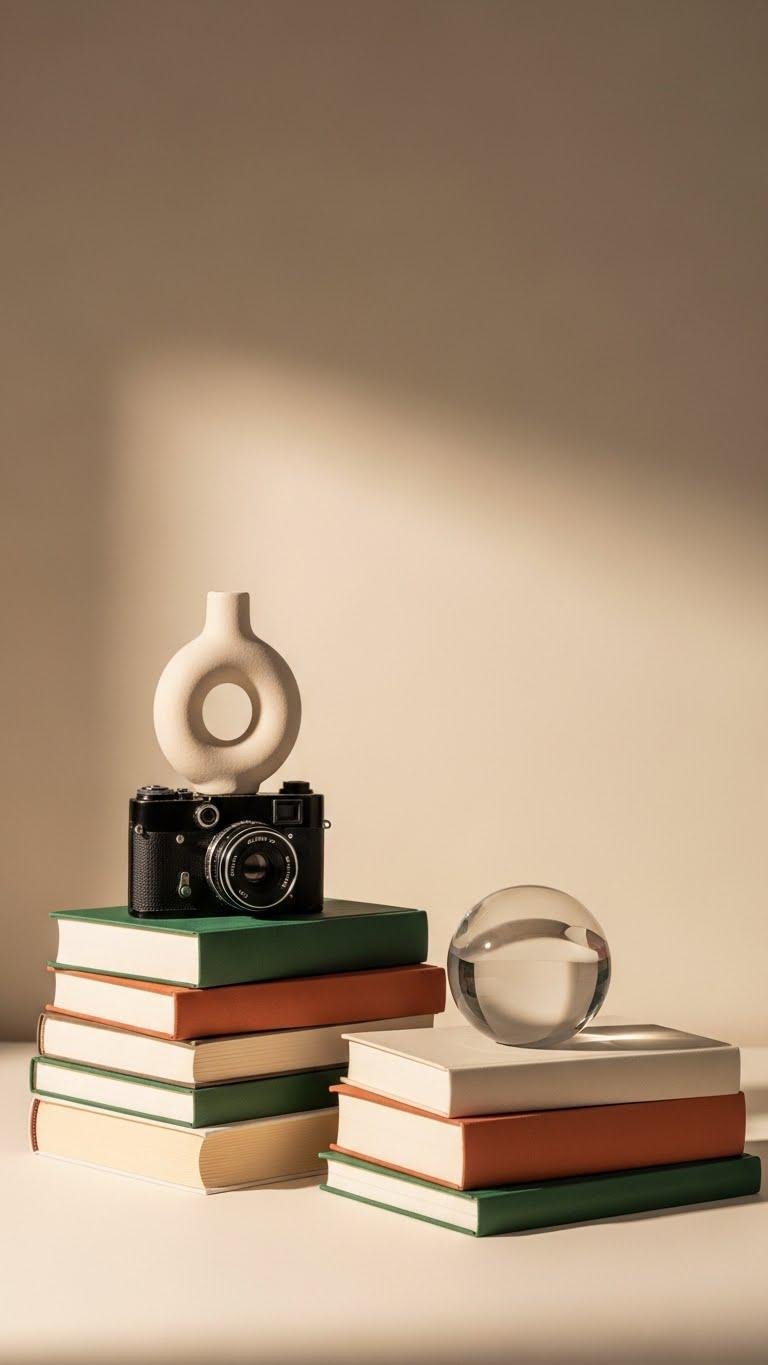
Start by arranging two or three small stacks of books to create varied heights, then top one stack with a single statement object—think a sculptural ceramic, a vintage camera, or a bold glass orb. You’ll favor staggered heights and textured covers, letting negative space and color anchor each vignette.
Edit ruthlessly: one focal piece, clean lines, and room to breathe for a liberated look.
Tray Anchor With Candles and Greenery
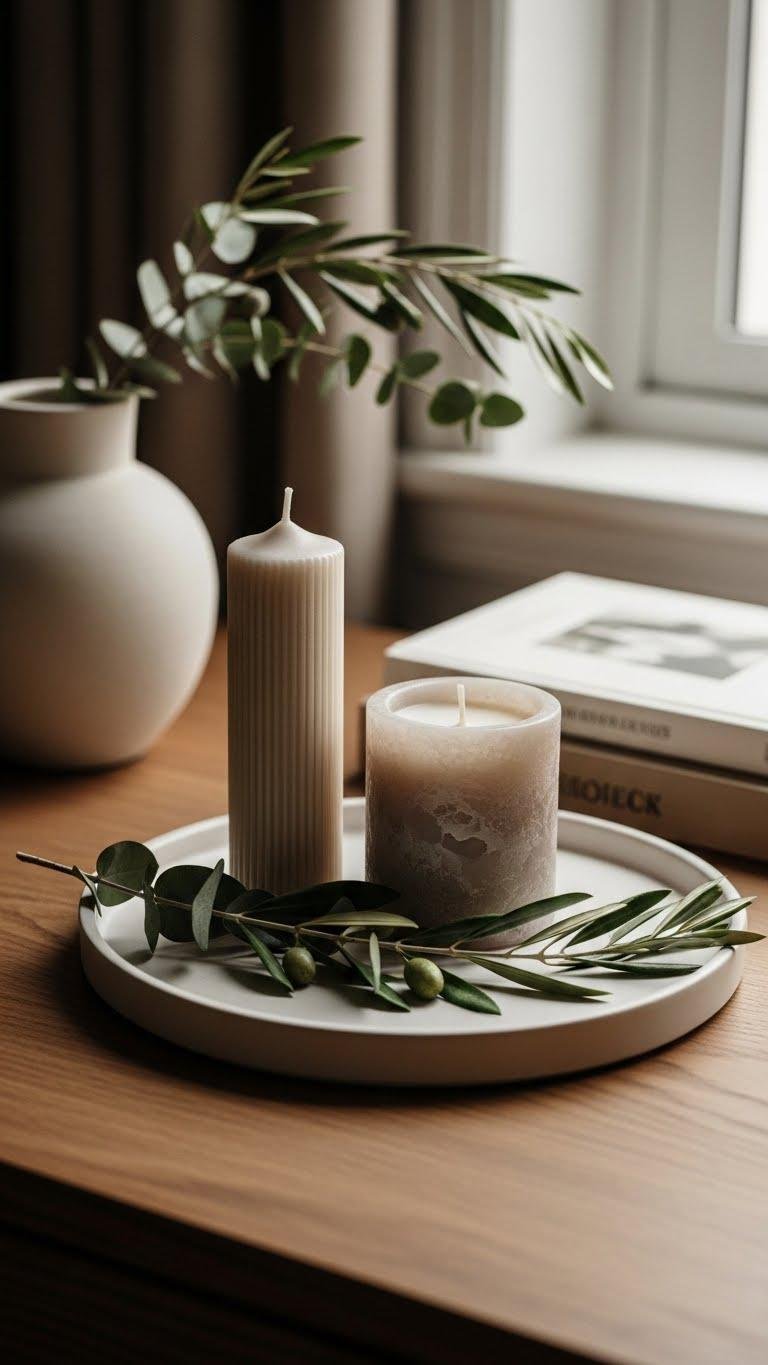
After you’ve pared books down to a single statement object, shift focus to a low-profile tray to ground a softer, more organic vignette. Choose mixed candles — a textured taper, a squat pillar — and tuck sprigs of greenery for movement.
You’ll create scent layering with complementary fragrances, control scale, and keep the look curated yet free, easy to refresh as seasons shift.
Single Sculptural Centerpiece

Choose one standout object and let it do the talking: a single sculptural centerpiece—think a hand-thrown ceramic vessel, a folded brass form, or a blown-glass orb—creates a clean, powerful focal point that reads like art rather than clutter. You’ll place it simply, enjoy its organic silhouette and subtle stone texture, and let negative space amplify presence so your table feels liberated, curated, intentional.
Mixed-Height Vase Grouping With Blooms

If one sculptural object feels like a quiet gallery piece, a mixed-height vase grouping invites a more conversational arrangement that still reads as carefully curated.
You’ll place a bud vase beside taller forms, using staggered heights to guide the eye. Choose seasonal blooms in a muted palette, let stems breathe, and arrange with effortless precision so the display feels liberated, intentional, and lively.
Round Tray on Square Table Play

Set a round tray at the center of a square table to create an intentional focal point that softens the geometry and organizes small objects. You’ll embrace contrast geometry and tactile juxtaposition by layering metallic, glass, or ceramic pieces—each chosen for scale and touch. Rotate elements, leave breathing room, and let the tray guide placement so the arrangement feels curated, liberated, and effortlessly balanced.
Natural Materials Mix: Wood, Wicker, and Linen

Around natural materials, you’ll create warmth and texture by pairing raw wood, woven wicker, and soft linen—each piece chosen for grain, weave, and drape.
You’ll layer trays, bowls, and folded throws to highlight earthy textures and woven contrasts, favoring uneven edges and muted tones.
Edit boldly: remove anything forced, keep pieces that invite touch and easy movement.
Symmetrical Pairing for Formal Balance
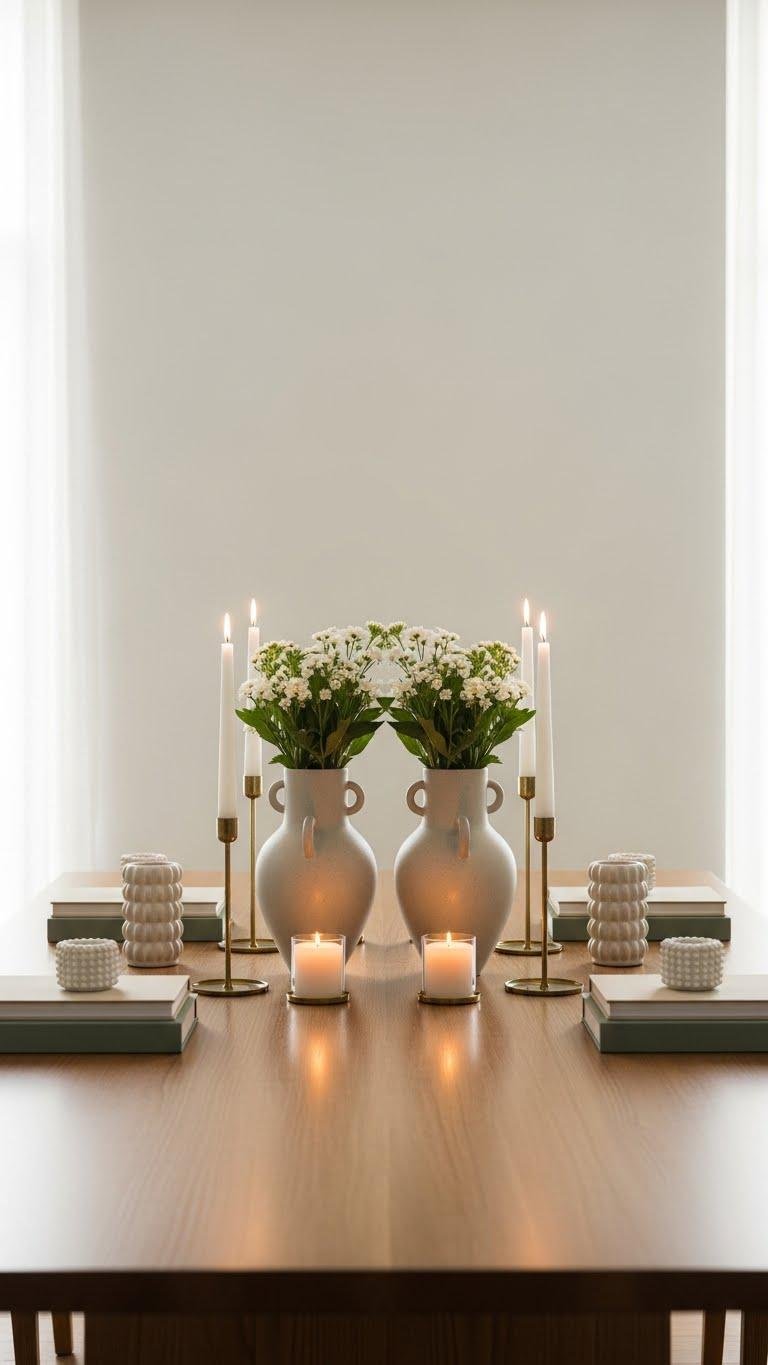
You’ve warmed the surface with natural textures; now bring formal balance by pairing identical or mirrored objects on either side of the table’s centerline. You’ll place twin candles, matching books, or vases with formal florals to create mirror symmetry that reads composed, intentional. Keep negative space crisp, repeat material or color, and let symmetry free the room while feeling disciplined.
Eclectic Curiosities in a Glass Box
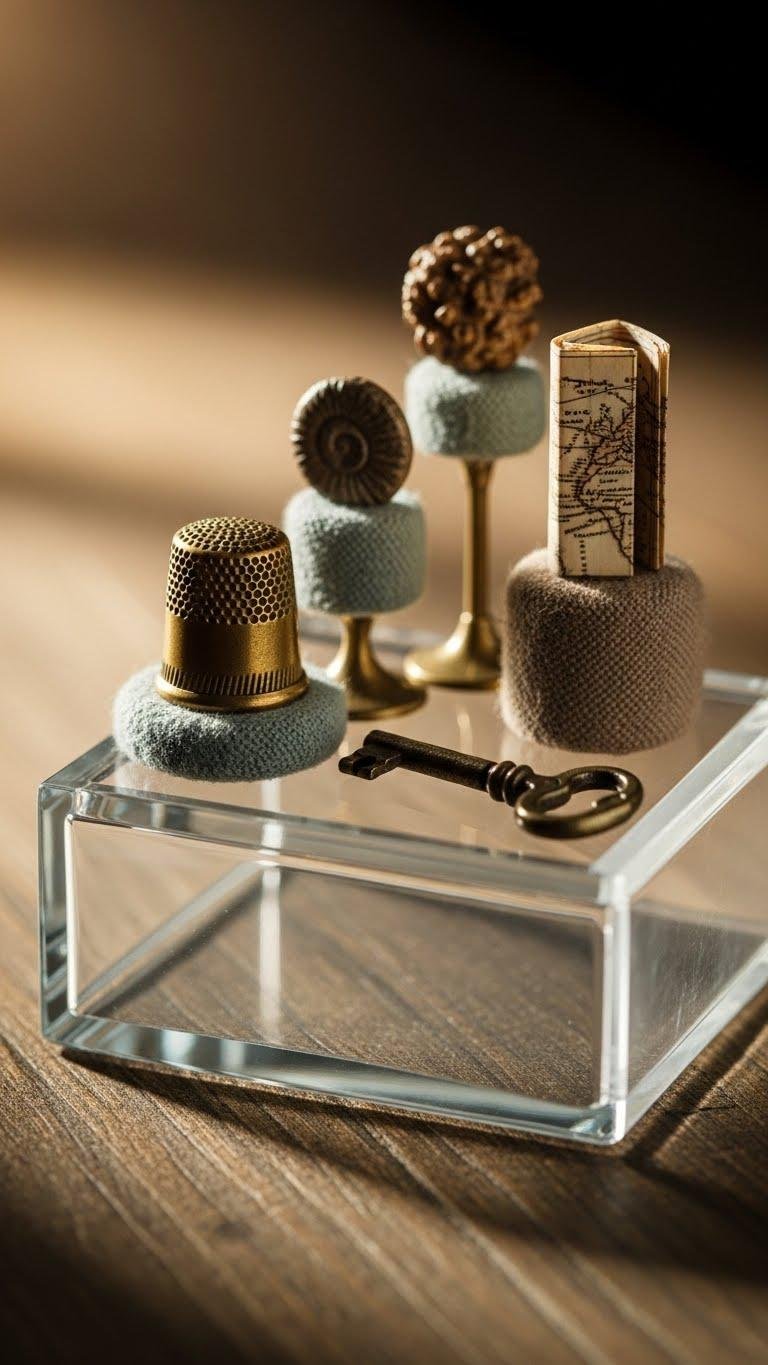
When you tuck a curated mix of small, unexpected objects into a clear glass box, they gain focus and a miniaturized narrative—think a brass thimble beside a fossil, a folded map, and a vintage key arranged at varying heights. You’ll arrange miniature curiosities and scraps of vintage ephemera with intention, leaving negative space, varied textures, and snap decisions that reveal your roaming, unruly taste.
Low Bowl With Seasonal Elements

After the glass box gathers small stories, anchor a coffee table with a low, wide bowl that stages the season at scale.
You’ll arrange seasonal fruit with sprigs, shells or seed pods, letting color lead.
Add a bed of textured moss for contrast and softness.
Keep compositions open and changeable so you can remix, roam, and claim each table as your small, seasonal landscape.
Mirrored Surfaces and Metallic Accents

While low bowls and natural textures ground your table, mirrored surfaces and metallic accents lift the whole composition, catching light and adding a crisp, reflective counterpoint.
You’ll place an antique mercury coaster or tray to deepen patina, then offset it with satin gold candleholders or a slim tray. Keep pieces few, varied in scale, and positioned to let reflections breathe.
Stacked Books Topped With a Ceramic Heirloom
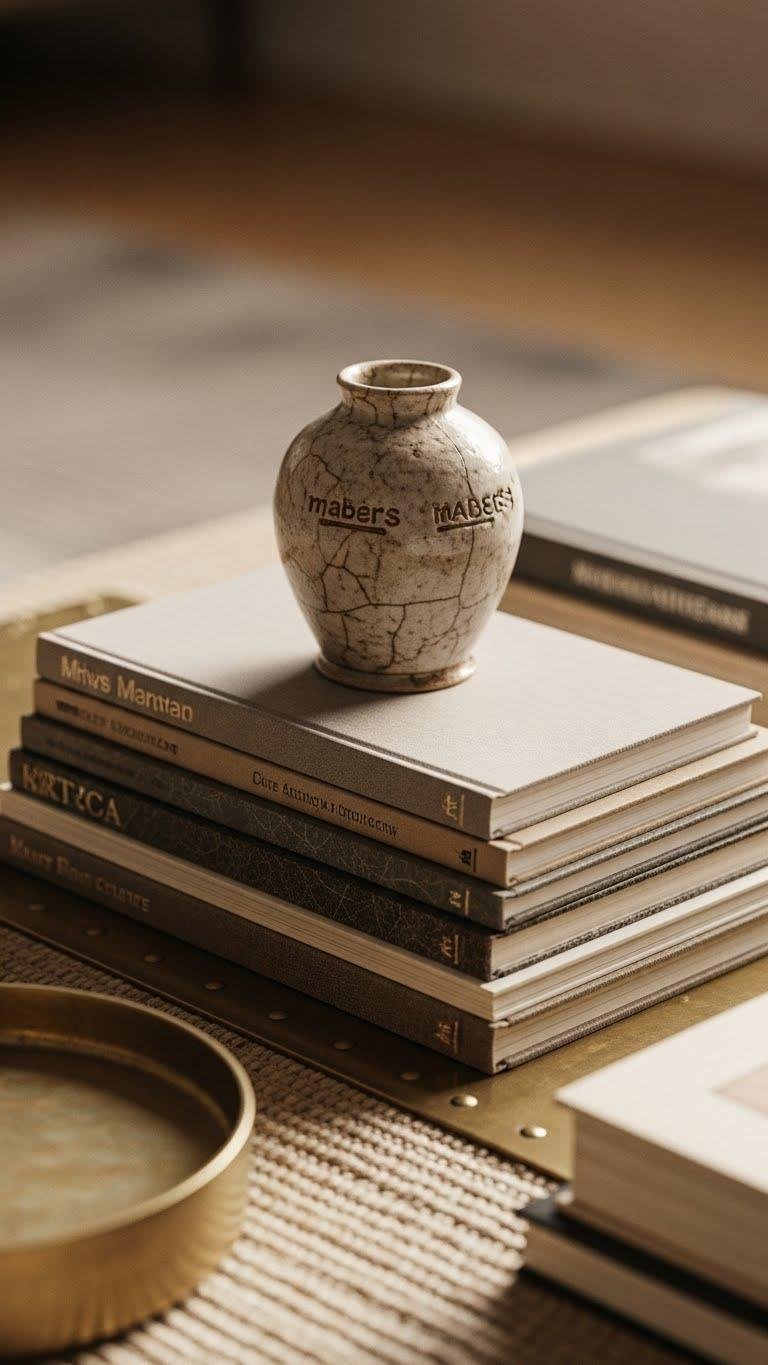
Carry the reflective energy of metallics into a softer, more grounded vignette by anchoring a small stack of books and crowning them with a ceramic heirloom. You’ll curate stacked narratives that feel intentional: mix slim art tomes, display heritage ceramics atop pages, and let tactile patina invite touch. Choose pieces with clear heirloom provenance so your coffee table reads like a liberated, personal museum.
Terrarium or Succulent Cluster

Often a terrarium or a tight cluster of succulents becomes the fresh, textural counterpoint your coffee table needs.
You’ll choose a mini greenhouse or shallow bowl, edit shapes and heights, and place a drought tolerant arrangement to last. Let stone, glass, and muted ceramic anchors frame vibrant rosettes. It’s an intentional, low-maintenance focal point that feels free and curated.
High-To-Low Arrangement With Four Points of Interest

If you want a dynamic, gallery-ready coffee table composition, build it from high to low with four distinct points of interest: a tall anchor piece, two mid-level elements, and a low, textural finish. You’ll use contrast heights to guide the eye, layer materials and colors, and leave intentional negative space so the arrangement breathes. Edit boldly; freedom comes from restraint.
Minimalist Single-Item Focus With Negative Space

Silence becomes style when you let a single object command the table: pick one piece with strong form or texture—a sculptural vase, a bold ceramic bowl, or an artful book—and give it generous breathing room so every angle reads.
You’ll create a minimalist vignette that frees the room; use negative space balance to make the object feel intentional, calm, and unapologetically yours.
Layered Textures: Marble, Brass, and Wood

When you layer cool marble, warm brass, and textured wood, each material amplifies the others—marble’s sleek vein, brass’s soft gleam, and wood’s tactile grain create a compact, museum-like vignette. You’ll use calacatta contrast to anchor pieces, let brass accents punctuate, and stage tactile juxtaposition with rough and polished planes. Edit tightly; let freedom guide your curated, effortless arrangement.
Color-Pop Florals Against Neutral Layers

Why not let a single bouquet do the talking against a backdrop of neutral layers? You’ll place bold petals atop muted stems, a liberated accent within tonal layering. Choose contrasting vases to punctuate shape and color, keep surrounding surfaces spare, and let that single floral statement steer the mood — fresh, decisive, and effortlessly free.
Functional Styling With Space for Coffee Cups

If you want your coffee table to look styled and still invite real-life use, leave deliberate open space for mugs and saucers amid curated objects.
You’ll balance artful stacks, a low vase, and a book with spill friendly surfaces and visible coaster storage.
Keep zones uncluttered so you can set drinks down freely, enjoy the scene, and reset quickly.
Oval Tray for Rectangular Tables
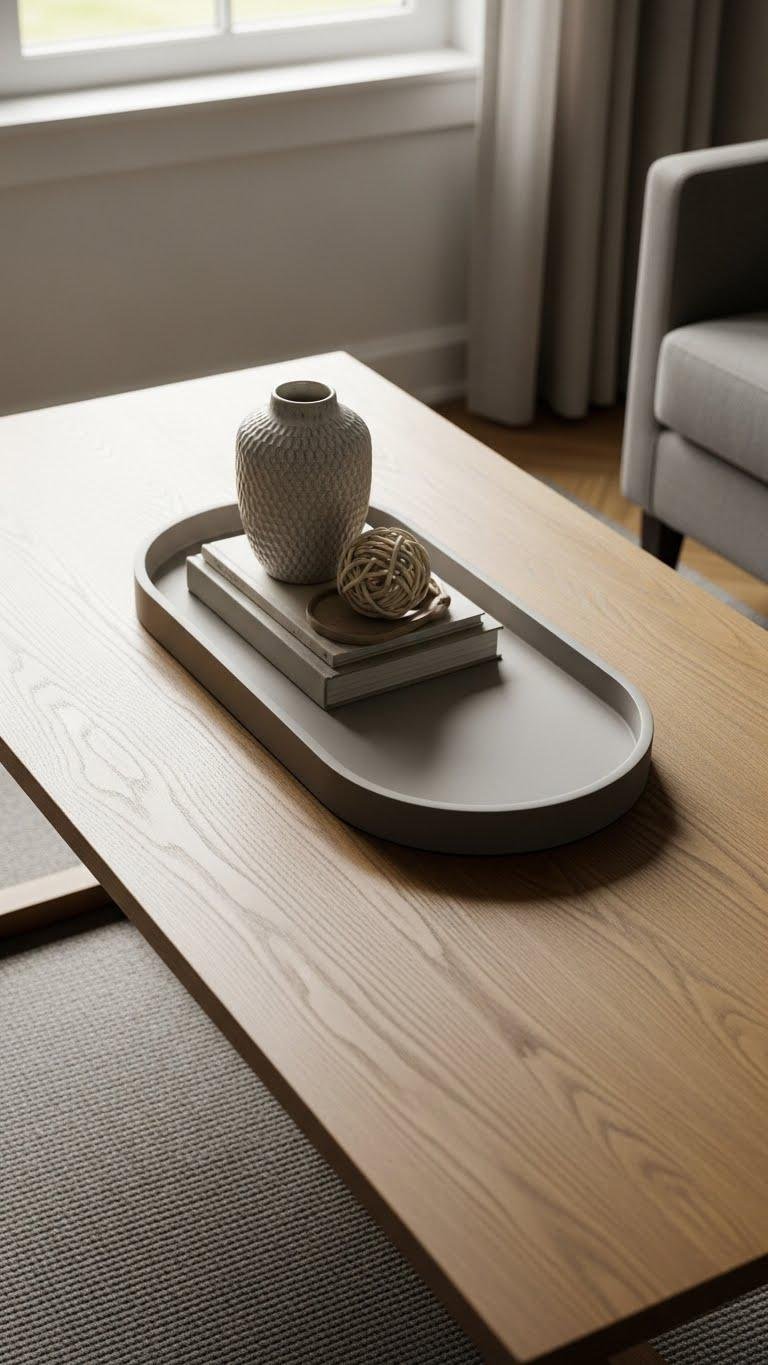
Think of an oval tray as the finishing stroke for a rectangular coffee table—you’ll soften hard lines, create a central anchor, and guide the eye without crowding the surface. Choose a tray sized for scale contrast: small objects feel intentional, large trays read sculptural. Maintain edge alignment with the table’s long sides, leave breathing room, and curate a few tactile pieces that let the space feel freely lived-in.
Moody Candlescape With Reflective Objects
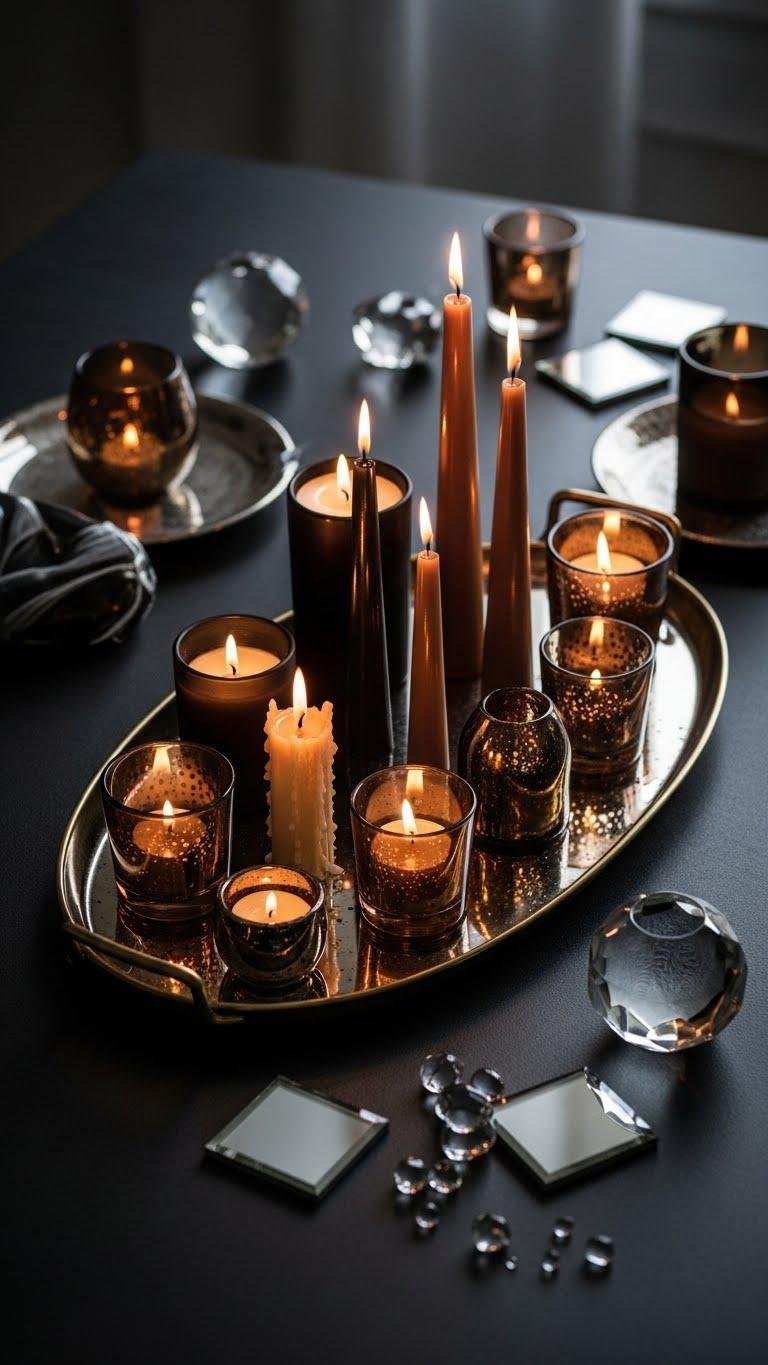
Move the soft geometry of an oval tray into richer, moodier territory by arranging candles and reflective objects to amplify warmth and depth. You’ll place varying heights of tapered and votive candles in a dimly lit vignette, pair smoky scents with mercury glass accents, and layer reflective surfaces to catch flicker. Curate restraint: negative space lets each gleam and shadow breathe.
Playful Mix of Shapes: Round, Square, and Organic

Mix rounds, squares, and organic forms to create a lively, curated coffee table that feels deliberate rather than cluttered.
You’ll balance curvy rectilinear contrast by placing a round bowl beside a square book and an irregular ceramic piece. Let tactile shape pairing guide touch and sight; keep negative space, vary heights, and choose a restrained palette so each form breathes and invites playful exploration.
Curated Grouping on a Tray With Everyday Items
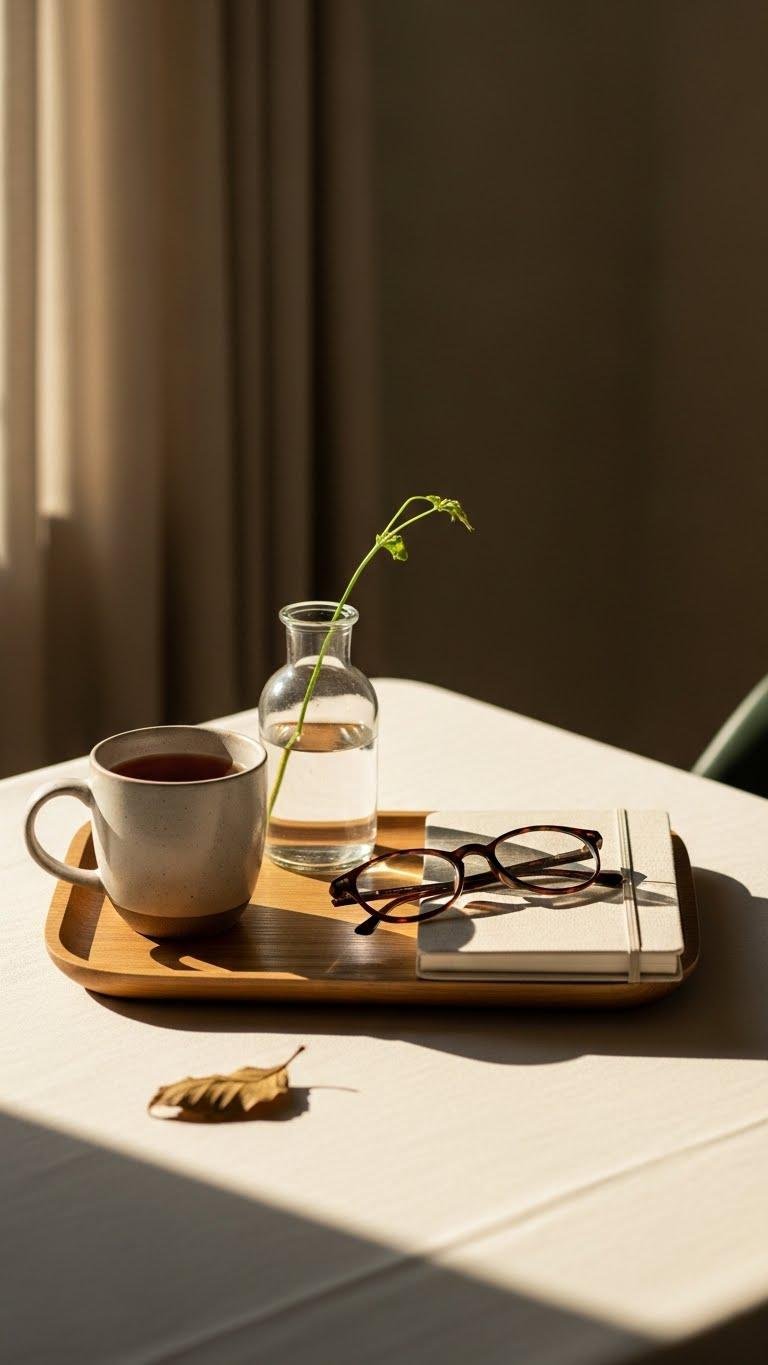
Start with a shallow tray as the stage and arrange a few everyday items—your mug, a small vase, a pair of reading glasses, and a notebook—so each piece has room to breathe. You’ll craft everyday vignettes that feel effortless: cluster three items, vary heights, leave negative space, and swap pieces seasonally. These casual curations let you play, edit, and relax in your space.